






















Gjør som tusenvis av andre bokelskere
Abonner på vårt nyhetsbrev og få rabatter og inspirasjon til din neste leseopplevelse.
Ved å abonnere godtar du vår personvernerklæring.Du kan når som helst melde deg av våre nyhetsbrev.

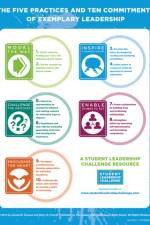
In this updated and expanded second edition of The Student Leadership Challenge, James Kouzes and Barry Posner apply their extensive research and expertise to demonstrate that anyone can be a leader, regardless of age or experience.
Helps you examine strategic management with the market-leading text that sets the standard for the practical, analysis of strategic management. This book combines the research and strategic management trends with ideas from some of the prominent scholars.
It is estimated that in India 75% of cancers of oral cavity are attributable to tobacco chewing, smoking and alcohol drinking. So the purpose of this book is to present the correlations of these premalignant disorders microscopically with in tobacco users and alcohol drinkers.
Cancer may be regarded as a group of diseases characterized by an (i) abnormal growth of cells (ii) ability to invade adjacent tissue and even distant organs and(iii) the eventual death of the affected patient if the tumor has progressed beyond that stage when it can be successfully removed.
In this book, we focus on HRM and how modern technology is helping in ensuring the effectiveness of HR functions. This would indicate that HRIS was viewed rather favorably as an administrative tool, but not a strategic one. This volume covers all these aspects.
Through state-of-the-art CSR research, theories and models, the theoretical platform for sustainable business and CSR is presented in this book. Each chapter is supplemented with practical case examples explaining the way in which different companies and their managers have integrated sustainable business in their strategy and across different functions.
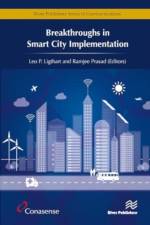
Breakthroughs in Smart City Implementation should give answers on a wide variety of present social, political and technological problems.
The book looks to contribute to the exchange of experiences and perspectives about the state of the research related to CSR, as well as the future direction of this field of research.
Over the past few decades, wireless access networks have evolved extensively to support the tremendous growth of consumer traffic. This superlative growth of data consumption has come about due to several reasons, such as evolution of the consumer devices, the types of telephone and smartphone being used, convergence of services, digitisation of economic transactions, tele-education, telemedicine, m-commerce, virtual reality office, social media, e-governance, e-security, to name but a few.Not only has the society transformed to a digital world, but also the expectations from the services provided have increased many folds. The last mile/meters of delivery of all e-services is now required to be wireless. It has always been known that wireless links are the bottleneck to providing high data rates and high quality of service. Several wireless signalling and performance analysis techniques to overcome the hurdles of wireless channels have been developed over the last decade, and these are fuelling the evolution of 4G towards 5G. Evolution of Air Interface Towards 5G attempts to bring out some of the important developments that are contributing towards such growth.
Over recent years, many new technologies have been introduced to drive the digital transformation in the building maintenance industry. The current trend in digital evolution involves data-driven decision making which opens new opportunities for an energy centered maintenance model. Artificial Intelligence and Machine Learning are helping the maintenance team to get to the next level of maintenance intelligence to provide real-time early warning of abnormal equipment performance.This edition follows the same methodology as the First. It provides detailed descriptions of the latest technologies associated with Artificial Intelligence and Machine Learning which enable data-driven decision-making processes about the equipment's operation and maintenance. Technical topics discussed in the book include: Different Maintenance Types and The Need for Energy Centered MaintenanceThe Centered Maintenance ModelEnergy Centered Maintenance Process Measures of Equipment and Maintenance Efficiency and EffectivenessData-Driven Energy Centered Maintenance Model:Digitally Enabled Energy Centered Maintenance TasksArtificial Intelligence and Machine Learning in Energy Centered MaintenanceModel Capabilities and Analytics RulesBuilding Management System SchematicsThe book contains a detailed description of the digital transformation process of most of the maintenance inspection tasks as they move away from being manually triggered. The book is aimed at building operators as well as those building automation companies who are working continuously to digitalize building operation and maintenance procedures. The benefits are reductions in the equipment failure rate, improvements in equipment reliability, increases in equipment efficiency and extended equipment lifespan.
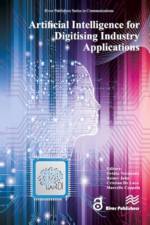
This book provides in-depth insights into use cases implementing artificial intelligence (AI) applications at the edge. It covers new ideas, concepts, research, and innovation to enable the development and deployment of AI, the industrial internet of things (IIoT), edge computing, and digital twin technologies in industrial environments.
This book provides a simple, easily followed process for auditing building operations to identify and reduce energy consumption that leads to measurable carbon reduction. The crucial steps of this process involve assessing the facility's current conditions, understanding, and analyzing the operational and cost-based opportunities that increase carbon output. Taking this information to report the findings and then document a multiyear energy and carbon reduction plan. The book discusses the full scope of building components and systems, including how each system affects energy efficiency. It describes the operational energy efficiencies that are gained by implementing no-cost changes or alternative maintenance activities already funded. The book includes the process for identifying capital improvement opportunities, along with evaluating return on investment and life cycle replacement options for equipment. The four-step process described in this book will serve as a valuable tool for every building operator seeking to improve energy performance and reduce carbon output.
With the increased interest in climate impacts, sustainability, and efficiency, more responsibility is being placed on boiler operators to help improve performance and reduce emissions. This third edition of the Boiler Operator's Handbook is intended to help such operators in the quest for improved operability and performance of their boilers and their plants. The theme of this book is to "e;operate wisely"e;. The goal is to instill not only "e;know how"e; but "e;know why"e;. The main details have been provided by the original author, Mr. Ken Heselton. This updated version has been somewhat expanded to include a wider range of examples and some of the more recent environmental requirements.To illustrate these points, topics include multi boiler operations, understanding the plant load, maintenance issues, and controls. Every plant is different. However, it is hoped that with the information provided in this book, the wise operator will be able to address the various unique issues posed by the specific plant and provide timely solutions to meet the present-day requirements.
This book aims to cover a new emerging need in designing digital phase shifter for modern communication systems. With the advancement of new generation mobile communication systems, directed beams of antenna arrays save a substantial amount of power as well as improve the communication quality. In this regard, beam-forming circuits, such as digital phase shifters (DPS) constitute essential parts of the antenna array systems. Therefore, this book is devoted to the design of digital phase shifters for various communications systems. Nowadays, phase array systems demand compact phase shifters suitable for chip implementation with wide phase-range and broad frequency band. Each chapter of this book is organized as stand-alone in such a way that the reader requires no specific background acquired from the other chapters. For each phase shifter topology introduced in this book, the reader is furnished with explicit design equations to construct the circuit under consideration. Furthermore, design equations are programmed using MATLAB to assess the electrical performance of the phase shifters with ideal and lossy components. MATLAB design programs are given at the and of each chapter as appendices and provided as soft copy on the web page of the book. In chapters 12 and 14, MMIC layouts for the lattice and T-section based DPS are provided for the readers. It is hoped that an interested reader can immediately identifies the "e;optimum phase shifter topology"e; for the need under consideration with its estimated electric performance.
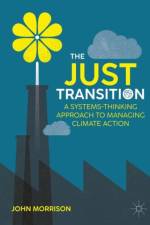
Managing the climate transition will be one of the biggest challenges ever faced by business and government.While the technical and financial elements of climate transition are vast, the social challenges are even greater. If local populations and workers feel the transitions are not ¿just¿ they will resist, and that social opposition now represents one of the greatest barriers to reaching Net Zero by 2050. While the phrase ¿Just Transition¿ was in the preamble to the 2015 Paris Climate Agreement, it is only now that business, finance and governments are starting to discuss what this might mean in practice.Thousands of companies are now starting to develop transition plans alongside those of governments. This book shows how all managers can best integrate social elements into these plans, consult with the people most affected by the transition out of the high carbon economy, and ensure that what looks good on paper works in practice. It takes a systems-thinking approach, focusing on the interconnections and interdependence of environmental, social and governance issues.The challenge is immense, and the changes will need to be profound. Each chapter in the book will look at the main domains in which management and policy challenges will be faced. From massively increasing the extraction of rare earth metals, most of which sit below, or adjacent to, indigenous land, to building the infrastructure needed to generate and distribute green energy, possibly over ¿Not in My Back Yard¿ objections, the task of business and government in ensuring that these changes are fair, and perceived as fair, is immense.This book provides the roadmap for how to get there. Managing the social impacts of the climate transition will be one of the biggest challenges ever faced by business and government.
Abonner på vårt nyhetsbrev og få rabatter og inspirasjon til din neste leseopplevelse.
Ved å abonnere godtar du vår personvernerklæring.