



















Gjør som tusenvis av andre bokelskere
Abonner på vårt nyhetsbrev og få rabatter og inspirasjon til din neste leseopplevelse.
Ved å abonnere godtar du vår personvernerklæring.Du kan når som helst melde deg av våre nyhetsbrev.

6G-enabled IoT and AI for Smart Healthcare: Challenges, Impact, and Analysis offers the fundamentals, history, reality, and challenges faced in the smart healthcare industry today. It discusses the concepts, tools, and techniques of smart healthcare as well as the analysis used.
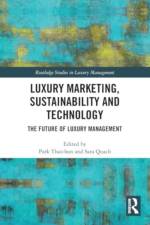
Luxury Marketing, Sustainability and Technology explores how new technologies, sustainability and relationship marketing impact and change the future of luxury brand management.
This book presents different tools and techniques used for Decision Support Systems (DSS) including decision tree and table, and their modifications, multi-criteria decision analysis techniques, network tools of decision support and various case-based reasoning methods supported by examples and case studies.
This book explores young Cambodians' perceptions of their place in today's society and how they interact with the country's arts and culture scene.
Digital Transformation in Retail Supply Chain Management for Logistics 5.0 explains how these technologies are reshaping retail supply chain management. The book elucidates on the digital tools and strategies organizations can employ to optimize their retail supply chain management, minimize costs, enhance customer satisfaction, and achieve sustainability objectives through industry 5.0-enabled technologies. It innovatively blends the details of recent advancements across retail supply chains and supply chain-related digital transformations. Its cutting-edge perspective makes it an invaluable asset for industry professionals, policymakers, business owners, managers, researchers, practitioners, academicians, instructors, and students in retail, logistics supply chain management, digital business, and innovation.The book explores the nuances of the Supply Network 5.0, discussing the synergy between humans and machines, especially in the context of robotic process automation systems and artificial intelligence tools in the "new normal" of retail supply chain management. In addition, it specifically addresses textile products, FMCG, online products, construction, food and beverages, the shoe industry, SMEs, and other manufacturing sectors. Other sections delves into the often-overlooked environmental sustainability ramifications of the Fifth Industrial Revolution.
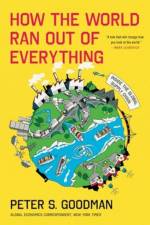
By the New York Times's Global Economics Correspondent, an extraordinary journey to understand the worldwide supply chain--exposing both the fascinating pathways of manufacturing and transportation that bring products to your doorstep, and the ruthless business logic that has left local communities at the mercy of a complex and fragile network for their basic necessities."A tale that will change how you look at the world." --Mark LeibovichOne of Foreign Policy's "Most Anticipated Books of 2024"How does the wealthiest country on earth run out of protective gear in the middle of a public health catastrophe? How do its parents find themselves unable to locate crucially needed infant formula? How do its largest companies spend billions of dollars making cars that no one can drive for a lack of chips?The last few years have radically highlighted the intricacy and fragility of the global supply chain. Enormous ships were stuck at sea, warehouses overflowed, and delivery trucks stalled. The result was a scarcity of everything from breakfast cereal to medical devices, from frivolous goods to lifesaving necessities. And while the scale of the pandemic shock was unprecedented, it underscored the troubling reality that the system was fundamentally at risk of descending into chaos all along. And it still is. Sabotaged by financial interests, loss of transparency in markets, and worsening working conditions for the people tasked with keeping the gears turning, our global supply chain has become perpetually on the brink of collapse.In How the World Ran Out of Everything, award-winning journalist Peter S. Goodman reveals the fascinating innerworkings of our supply chain and the factors that have led to its constant, dangerous vulnerability. His reporting takes readers deep into the elaborate system, showcasing the triumphs and struggles of the human players who operate it--from factories in Asia and an almond grower in Northern California, to a group of striking railroad workers in Texas, to a truck driver who Goodman accompanies across hundreds of miles of the Great Plains. Through their stories, Goodman weaves a powerful argument for reforming a supply chain to become truly reliable and resilient, demanding a radical redrawing of the bargain between labor and shareholders, and deeper attention paid to how we get the things we need.From one of the most respected economic journalists working today, How the World Ran Out of Everything is a fiercely smart, deeply informative look at how our supply chain operates, and why its reform is crucial--not only to avoid dysfunction in our day to day lives, but to protect the fate of our global fortunes.
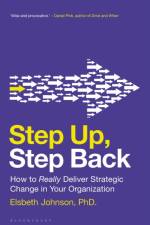
A new look at change management, bringing in new theories on what leaders really need to do to ensure that their change management programmes are effective, meaningful for their teams, and also long-lasting.
Effective leadership and organizational performance are concepts that continue to receive widespread attention in the business world. This book explores the importance of strategic leadership and the value it adds to organizations.
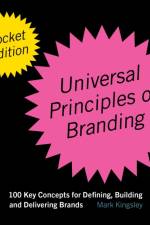
This pocket-size version of Universal Principles of Branding presents 100 concepts, theories, and guidelines that are critical for creating brands today in a handy, condensed take-along format.*Winner of the 2023 American Graphic Design Award for Book Design from Graphic Design USA*Richly illustrated and easy to navigate, this comprehensive reference pairs clear one-page explanations of each principle with visual examples of it applied in practice on the facing page. By considering these concepts and examples, you can learn to make more informed, and ultimately better, branding decisions.Featured principles are as diverse as:AuthenticitySocial ResponsibilityWorld BuildingGatekeepersRituals and routineEach principle is presented in a two-page format. The left-hand page contains a succinct definition, a full description of the principle, examples of its use, and guidelines for use. Sidenotes appear to the right of the text, and provide elaborations and references. The right-hand page contains visual examples and related graphics to support a deeper understanding of the principle.The titles in the Rockport Universal series offer comprehensive and authoritative information and edifying and inspiring visual examples on multidisciplinary subjects for designers, architects, engineers, students, and anyone who is interested in expanding and enriching their design knowledge.
How do companies achieve the transformation into an agile, innovative, digital business and work environment? This question concerns not only IT managers but also strategic players, the enterprise architects. They must bridge the gap between strategic planning and dealing with increasing speed and growing uncertainty. Holistic enterprise development in the digital future means developing digital ecosystems and complex IT landscapes. This book presents methods and concepts from the agile world, semiotics, and neuropsychology that can help enterprise architects in their practical everyday work. Starting from a positive view of humanity, it is possible to harness the potential of individuals and teams for digital transformation with fundamental knowledge. The book is primarily aimed at IT managers, enterprise architects, and managers involved in large-scale software development processes.Many practical examples illustrate the theoretically presented connections and provide broader access to enterprise architecture management.
Taking care to distinguish individuals and functions, creators and beneficiaries of revenues, this book examines the respective places of both entrepreneurs and capitalists within the organization. The book will be of great interest to readers of economic organization, corporate governance and entrepreneurship.
This book shares observations and conclusions from contemporary research and analyses, as well as from personal experiences in creating and implementing anti-crisis solutions in economies and enterprises caused by the COVID-19 pandemic on the economy and its entities.
Bestselling author, leading sociologist and economist Juliet Schor makes the case for a four-day work week, persuasively showing how this model can address major challenges such as burnout, AI and the climate crisis, and how employees, companies, and governments can work together to make it a reality. Around the world, long hours and intense pressure are taking their toll. When the pandemic hit in 2020, work-induced stress and burnout skyrocketed. Many reached a breaking point. Now, three-quarters of the world's employees are disengaged and struggling, including in the US and Canada, where half are experiencing high levels of daily stress. Our current work culture ,the five-day, forty-hours-a-week model-which has gone unchanged for nearly a century-is failing. But a remedial countertrend has emerged: the four-day work week. Kickstarter, Bolt, Basecamp, ThredUp, and hundreds of other employers have eliminated the fifth day of work, successfully figuring out how to maintain productivity while seeing remarkable improvements in employee well-being. Hiring is easier and fewer people are quitting. These results are global. Working a four-day week, people feel energized, capable, and more optimistic about their lives-and their jobs. Four Days a Week is the first large-scale study of this trend. Juliet Schor-an expert who has researched and written about work for more than four decades, beginning with her New York Times bestseller The Overworked American in 1992-shares her pioneering analysis of the benefits of a shorter work week, how companies can achieve them, why the concept has taken so long to emerge and gain acceptance, and why doing so will help a company's employees and its bottom line. The book is a blueprint for implementing a change that once seemed radical, but is now within reach.
There is currently no comprehensive scientific study that addresses the problem of financing projects using Distributed Ledger (blockchain) Technology (DLT) that are not themselves embedded in the blockchain ecosystem, particularly in the context of long-term and capital-intensive investments. This book fills this gap.
Covering nearly all facets of Knowledge Capital, the book details the evolution and provides a clear depiction of fundamental theories, leading to the latest trends in integrating Artificial Intelligence with KM practices.
When Leadership Fails is a critical examination of the worst workplace experiences for the purpose of individual, group and organizational learning. Professionals from various industries unpack personal encounters associated with a range of toxic leadership behaviors, using theory, these examples are turned into critical lessons.
Tahir Nisar presents a cogent, compelling account of recent developments and disruptions within the digital economy, and particularly within the industrial and service sectors. Through an original, overarching framework rooted in the concept of personalization and its antecedents, Nisar identifies radically new forms of relationships, both economic and social, among firms and customers. These new relationships are driving major changes in commercial and industrial firms' policies and practices, and in turn, in the entire market economy. E-commerce trading, user-generated content, virtual communities, co-creation, influencer movements, FinTech, and sharing economies have strengthened the hands of consumers and have encouraged developments in cognitive technologies such as AI automation, which in turn create new ways of working and disruptions to traditional capital-labour relations. Ultimately, what emerges from this study is a picture of how digital technologies unleash forces of change that are creating new forms of social and economic sharing arrangements and new forms of social organization.For its empirical depth and and theoretical rigor, this book is essential reading for researchers and students interested in emerging, alternative forms of economics, business, and management, and particularly those interested in the digital economy and the state and future of capitalist markets.
Between Brexit, efforts to 'Make America great again' and ongoing appeals for patriotic consumption to boost economies, the intersection between national identity, marketing campaigns, and consumer choices has been brought to the fore. This book argues that the history of 'Made in' can be used to shed light on society at large.
Embracing listening as a useful tool for strengthening organization-publics and organization-employee relationships, this book offers theoretical and practical insights for listening across myriad strategic communication contexts.
Abonner på vårt nyhetsbrev og få rabatter og inspirasjon til din neste leseopplevelse.
Ved å abonnere godtar du vår personvernerklæring.