



























Gjør som tusenvis av andre bokelskere
Abonner på vårt nyhetsbrev og få rabatter og inspirasjon til din neste leseopplevelse.
Ved å abonnere godtar du vår personvernerklæring.Du kan når som helst melde deg av våre nyhetsbrev.

The globalized economy depends on local and context-specific factors. This edited volume addresses local-global nexuses via case studies of global interactions in developed and developing areas, and of particular firms' approaches to these issues. The chapters build up a prospectus on how best to create globally capable localities.
Guide on business start-up and growth
The present book covers major Livestock entrepreneurship skills in simple and lucid form. The first of the book focuses on concept of entrepreneurship, personal skills of entrepreneur such as innovation, risk taking, accepting challenges and responsibilities. The second of the book covers the different enterprising opportunities in livestock sector. In subsequent s forms of Livestock business, several factors to initiate a livestock business, bank support for entrepreneurship, entrepreneurial training, preparation of livestock entrepreneurial projects, project appraisals, financial management, sales and marketing communication, business acumen and communication have been covered. The textbook has been designed based on latest guidelines of Veterinary council of India and is extremely useful to graduates of veterinary science who otherwise have least exposure to principles of entrepreneurship. This book is also beneficial to undergraduate and postgraduate students of Veterinary Science, animal husbandry who wish to pursue livestock based entrepreneurship.
Understanding the Born Global Firm, combines the many different theoretical perspectives on born globals that have been previously researched, providing a unified framework to connect the antecedents, types and outcomes of entrepreneurial activities pursued by such new ventures. A central case study of an international fashion firm which operates in over nine countries, runs through the text, highlighting the formation and success of born-globals and the importance of cultural competence.
In this book he brings together a vast amount of experience to show the, 'best practices' of the most successful and long-lasting families in business. This is the most comprehensive book on sustaining the family business and contains international examples and cases and essential tools and checklists of best practice.
Today's views of leadership and management have significantly expanded to incorporate a variety of elements such as rewards, visions, and worker participation.
Selected papers update readers on the entrepreneurship environment and reveal aspects of newly identified issues such as innovation for entrepreneurship educators, globalization, entrepreneurship thinking and traits, aspects of a knowledge society, Islamic entrepreneurship, green entrepreneurship and internationalization strategies.
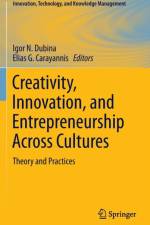
The aim of this volume is to further develop the relationship between culture and manifold phenomena of creativity, innovation and entrepreneurship in order to promote further and better understanding how, why, and when these phenomena are manifested themselves across different cultures.Currently, cross-cultural research is one of the most dynamically and rapidly growing areas. At the same time, creativity, inventiveness, innovation, and entrepreneurship are championed in the literature as the critical element that is vital not just for companies, but also for the development of societies. A sizable body of research demonstrates that cultural differences may foster or inhibit creative, inventive, innovative and entrepreneurial activities; and each culture has its own strengths and weaknesses in these regards. Better understanding of cultural diversity in these phenomena can help to build on strengths and overcome weaknesses.Cross-cultural studies in this field represent a comparatively new class of interdisciplinary research. This is a field where cultural, sociological, psychological, historical, economic, management, technology and business studies closely intersect. In this book, a global team of researchers representing Europe, Asia, and the Americas review, analyze, structure, systematize and discuss various concepts, assumptions, speculations, theories, and empirical research which focus on the effect of national cultures on creativity, invention, innovation, and entrepreneurship. They argue that national culture is not only an extremely important determinant of innovation and business development, but also demonstrate that some aspects relating to these phenomena may be universal among all cultures, thereby identifying those factors that may easily be transferred across cultures from those that are unique to their specific context.
Former McKinsey and Company consultant Shu Hattori shares 47 strategies for becoming a top corporate leader
This book examines education in entrepreneurship through an action-learning environment that uses educational innovation tools. Thus, developing an action-learning environment with educational innovation tools, technology tools and pedagogical methods is becoming increasingly important to universities.
Addressing the wide-ranging challenges of global entrepreneurship and innovation faced by both East and West, this edited volume provides a multi-faceted overview of the complexity facing entrepreneurial firms within global value chains.
There is much more to small island survival than subsistence farming, aid, remittances and public sector workfare. Entrepreneurship in Small Island States and Territories explores the 'creative' side of enterprise in small island states and territories.
Too many people fail to take control of their lives, allowing themselves to fall victim and accept whatever happens. When you choose to dream―and defy the naysayers all around―you can change direction and accomplish nearly anything you set out to achieve.In "Changing Direction," Mary Miller lays out 10 choices anyone can make to impact his or her dreams. By concentrating on improving the future, you become a new, happier and more energized person.Miller describes how she first seized control of her life in 1987 as a then-30-year-old twice-divorced single mother of three. She explains how she later found the fortitude―and support―to buck conventional wisdom and change the direction of the family business she led with her third husband, Tony.To address their biggest obstacle―turnover―they began encouraging people to achieve their dreams and developed the Dream Manager program, a world-renowned initiative helping employees identify dreams, set goals and work to reach a better future.Miller explains that there are few things worse than having no control. You may feel lost. You may feel desperate. You may feel despair, but it does not have to be this way. "Changing Direction" weaves Miller's amazing personal story of triumph and transformation with 10 practical choices you can make today in order to move from victim to victor. To get started, all you have to do is dream.
This volume aims to outline the fundamental principles behind leadership, innovation and entrepreneurship and show how the interrelations between them promote business and trade practices in the global economy. Derived from the 2016 International Conference on Leadership, Innovation, and Entrepreneurship (ICLIE), this volume showcases original papers presenting current research, discoveries and innovations across disciplines such as business, social sciences, engineering, health sciences and medicine.The pace of globalization is increasing at a rapid rate and is primarily driven by increasing volume of trade, accelerating pace of competition among nations, freer flows of capital and increased level of cooperation among trading partners. Leadership, innovation, and entrepreneurship are key driving forces in enhancing this phenomenon and are among the major catalysts for contemporary businesses trading in the global economy. This conference and the enclosed papers provides a platform in which to disseminate and exchange ideas to promote a better understanding of current issues and solutions to challenges in the globalized economy in relation to the fields of entrepreneurship, business and economics, technology management, and Islamic finance and management. Thus, the theories, research, innovations, methods and practices presented in this book will be of use to researchers, practitioners, student and policy makers across the globe.
Critical Perspectives on Entrepreneurship questions the accepted norms and dominant assumptions of entrepreneurship scholarship. It explores how entrepreneurship study tends to privilege certain forms of economic action, while implying other more collective forms of organization and exchange are somehow problematic. Deconstructing assumptions and providing space for alternative visions, this book engages openly with the contradictions, and tensions at the heart of entrepreneurship. It will be of interest to entrepreneurship researchers, advanced students and policy-makers as well as scholars of critical management studies.
Understand the challenges and rewards of social enterprise with this inspiring collection of case studies from social innovators around the world.
Empirical evidence from cutting-edge research into the experiences and challenges of entrepreneurial activities and small business issues within China.
This book presents conceptual, methodoligcal and empircal insights into the nature of youth-entrepeneurship in sub-Saharan Africa. It draws on qualitative and quantitative research to highlight the opportunities and challenges young people face in setting up and runing businesses. The book explores the nature of youth entrepensurship at the national level, in both urban and rural areas, in separate sectors, and the key factors that can affect youth entrepensurship, such as education, captial and networks. New inisghts are provided into the multi-faceted nature of youth entrepreneurship and the situation faced by many African youth today.
This bookprovides an unparalleled comparative analysis of two "hot topics" inthe field of antitrust and unfair competition laws with regard to a number ofkey countries.The first partof the book examines the consistency and compatibility of transactionalresolutions of antitrust proceedings (such as settlement procedures, leniencyprogrammes and commitments) with due process and the fundamental rights of theparties. This is a particularly important topic, given the widespread adoptionof these procedures by anti-trust authorities worldwide. The individual chaptersconsider how the leniency, settlement and commitments procedures have developedacross a range of jurisdictions, and discuss the extent to which checks andbalances have been applied in those national procedures in order to safeguardthe fundamental rights of the parties involved. A detailed international reportidentifies general trends and highlights the differences between and most interestingfeatures of national regulations.The second partof the book gathers contributions from various jurisdictions on the unfaircompetition-related question of the online exhaustion of IP rights. As commerceis increasingly moving online, the respective chapters consider the extent towhich exhaustion and similar concepts have adapted to these rapid changes. Thecomprehensive and insightful international report brings together thesereflections by comparing various national positions.The book alsoincludes the resolutions passed by the General Assembly of the LIDC following adebate on each of these topics, which include proposed solutions andrecommendations. The internationalLeague of Competition Law (LIDC) is a long-standing international associationthat focuses on the interface between competition law and intellectual propertylaw, including unfair competition issues.
Entrepreneurship: Theory in Practice 3e is a comprehensive text on entrepreneurship which will equip students with the sound theory needed to not only establish a business but also succeed in a new venture. The book is academically sound, offering theory
Code is the "how" of human productive activity. The advance of code has constituted the infrastructure of human progress from Neolithic simplicity to modern complexity. From the production of Stone Age axes to the experience of Burning Man, The Code Economy describes how we work, and who we are.
Impact investing is gaining global attention from society, governments and businesses. Increasingly, it is seen as a new paradigm to deal with the economic crisis and curtailed public budgets, an answer to the diversified needs of society.
Inventors at Work: The Minds and Motivation Behind Modern Inventions is a collection of interviews with inventors of famous products, innovations, and technologies that have made life easier or even changed the way we live. All of these scientists, engineers, wild-eyed geniuses, and amateur technologists have dedicated their lives to the pursuit of that singular Eureka! moment in their laboratories or garages. Each has altered the modern world as we know it in some significant way. The conversations will show budding tinkerers, professional inventors,  educators, and onlookers how the top minds in the field come up with ideas and manage the first steps of inspiration, how they experiment productively, how they “sell” ideas to others and secure funding, how they execute the final product, and how they commercialize and protect their work. All inventors will learn from these conversations, whether they are exploring new chemical compounds in million-dollar labs or perfecting a household gadget or toy in a basement workshop. Author Brett Stern, an inventor himself, explores with each inventor the nature of creativity and intuition, the skill set needed, and the force, motivation, or desire that must be summoned to spend endless hours searching for an answer to a question that no one else has asked or solving a problem most think has no solution. The book is required reading for all technical and creative individuals to better understand the innovation process and the logistics of following through on an idea that has the potential to change society. This book offers: Interviews with inventors of world-changing products and technologies An outline of the steps required in the creative/inventing process whether the goal is a civilization-changing process or a device meant to impress friends and family and perhaps earn license fees.  An instructive overview of how to solve problems in innovation—and how to use failures as stepping stones to successful inventions
In this book, written by educators for educators, scholars from a variety of academic disciplines at Babson College share their experiences in inspiring the next generation of entrepreneurs. It offers unique insights into how self and contextual awareness is created and delivered.
For the want-to-be entrepreneur thinking about taking the leap, the boot-strapped entrepreneur trying to energize a business three or four years in, and the venture-backed entrepreneur trying to scale, Why Startups Fail shows you the key mistakes new ventures make-and how to avoid them.
Product Development Strategy provides a concise theoretical and analytical discussion relating to the theory and practice of strategy, innovation capacity, and entrepreneurial performance. The book discusses an innovative perspective which provides a practical insight into the field of product development strategy.
Examining the patterns of business development in backward economies, this book demonstrates, the rate and character of business development in Brazil were to a large extent determined by its degree of backwardness, intellectual climate and natural potentialities, and accordingly the course of development of the Brazilian economy differed considerably from processes observed in more advanced countries. In addition, comparison between Minas Gerais, Sao Paulo and Rio de Janeiro shows important differences among the three most important economies in Brazil.
Drawing on original empirical research, the contributions describe the different aspects of the business development and innovation process, including the creation and development of technology-based enterprises, the growth of the firm, different types of networking activities, and various development strategies when the firm is established.
Abonner på vårt nyhetsbrev og få rabatter og inspirasjon til din neste leseopplevelse.
Ved å abonnere godtar du vår personvernerklæring.