

























Gjør som tusenvis av andre bokelskere
Abonner på vårt nyhetsbrev og få rabatter og inspirasjon til din neste leseopplevelse.
Ved å abonnere godtar du vår personvernerklæring.Du kan når som helst melde deg av våre nyhetsbrev.

Along with the growing use of 360-degree feedback in organizations today, there is much disagreement over how it should be employed: strictly to help the manager develop or also to help those who work with the manager decide such issues as pay and promotion? This publication features the insights of a group of experienced professionals on both sides of the issue. To set the stage, George P. Hollenbeck, a management psychologist and adjunct faculty member at Boston University's Graduate School of Management, discusses the popularity of 360-degree feedback today.
Entrepreneurship from Creativity to Innovation is a unique guide for students, potential entrepreneurs and inventors, business managers, team leaders, or anyone seeking to become a more successful problem solver and innovator. It focuses on the thinking and problem solving skills needed to succeed in our rapidly changing, high-tech world. Entrepreneurial thinking will enable you to cope with uncertainty and behave with greater flexibility in your professional and personal life -- these skills are for everyone! Learning is reinforced through application to communication, teamwork, and entrepreneurship, which in turn will enhance your understanding of innovation -- a valuable skill sought by employers who recognize the ability to innovate as a key for remaining competitive in the global marketplace. Also, at a time when traditional jobs are disappearing, you will be more likely to recognize and profit from new opportunities. Part One of this book presents a holistic view of entrepreneurship and its links to creativity and innovation. You will be introduced to the Herrmann thinking styles model, the creative problem solving model and the Pugh method for developing optimized solutions. In Part Two, you will learn to apply these thinking tools to the product development process, from finding a consumer need and then synthesizing creative ideas down to a "best" concept or solution which can be protected with a patent. Part Three shows how you can apply these tools to business development -- it also provides an overview of resources that are available to entrepreneurs for business startup. Part Four discusses leadership and management strategies for a startup enterprise. It presents the four crucial pillars needed to sustain organizational innovation for growth and profitability: development of everyone's thinking skills; their application by cross-functional teams at the project level; their integration at the organizational level by management; with open communication linking everyone in the enterprise.
This work states that immigrant entrepreneurship rose dramatically in the 20th century and has had a huge impact on urban life. Not only has immigrant business revitalized derelict shopping streets, but it has also introduced "exotic" products of social cohesion.
Links the success in Italy of small, rurally based manufacturing businesses to the processes of transformation of parts of the Italian countryside. This book argues that the involvement of peasant families with both agricultural and industrial employment produced an entrepreneurial spirit that was reflected in the development of rural industries.
The lure of entrepreneurial freedom and wealth compels many adventurous individuals to try to beat the odds-to become the one in four business start-ups in the U.S. that survives the first four years. And now, with corporate downsizing and deteriorating economic conditions, more than 550,000 new businesses are launched in the U.S. every year. So how does one identify the challenges that await the new business owner, and more importantly, how can you boost your odds for success? Learn from others who have "been there, done that." In Ten Successful Startups, you''ll discover how these common, everyday people built their businesses into multimillion dollar companies that will sustain them in the future. Let their lessons be your guide as you travel your own entrepreneurial path.
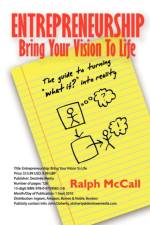
What are God-given your dreams and desires? What is your vision for the world? How do you want to make a difference? . . . Perhaps you have an inspiration to start a new humanitarian organization, or a new ministry? Or maybe you have an idea to start a new commercial enterprise? It¿s time to get your ideas off the ground! This book invites you on a twenty-five day journey that takes an idea, refines it, and makes it into a reality. Throughout the journey, you will come to understand the motivational and spiritual aspects of starting a new enterprise and bringing your vision to life.
This volume presents papers offering perspectives on the theme of women entrepreneurs. It is part of a series focusing on research in entrepreneurship and management.
A discussion of technology and entrepreneurship. The papers are divided into three sections which focus on: the context of technological entrepreneurship; venture capital in technological entrepreneurship; and case studies in technological entrepreneurship - managing in turbulent environments.
A discussion of technology and entrepreneurship. The papers are divided into three sections which focus on: the context of technological entrepreneurship; venture capital in technological entrepreneurship; and case studies in technological entrepreneurship - managing in turbulent environments.
Abonner på vårt nyhetsbrev og få rabatter og inspirasjon til din neste leseopplevelse.
Ved å abonnere godtar du vår personvernerklæring.