
























Gjør som tusenvis av andre bokelskere
Abonner på vårt nyhetsbrev og få rabatter og inspirasjon til din neste leseopplevelse.
Ved å abonnere godtar du vår personvernerklæring.Du kan når som helst melde deg av våre nyhetsbrev.

The microenterprise strategy -helping people start small businesses -has generated attention among policymakers and the media as a way to create jobs and help lift people out of poverty.
Shows that the contribution that psychology can make to our understanding of the merger phenomena - how it affects organizational performance, and how it affects the managers and employees involved. Intended as a guide to successful organizational marriage, this work places emphasis on the issue of cultural compatibility.
In this book, the authors, who have both bought and sold several businesses, reveal creative and low cost ways to do your own diligence in investigating entrepreneurial opportunities. The book covers all the basics, including market, products, insurance, facilities, assets, short and long-term liabilities and much more.
Disasters such as Hillsborough have concentrated managers' minds on public safety and crowd control at all major events. This book provides the advice and guidance for all such managers. It is a source of learning for the international world of public assembly facilities management.
Entrepreneurship is the engine that drives any successful industry or economy, including hospitality, tourism and leisure sector. This book aims to develop a greater understanding of the process and context for entrepreneurship, and provides key concepts which will enable the reader to become more entrepreneurial themselves.
John Maynard Keynes's seminal The General Theory of Employment, Interest and Money remains central to economic debate over sixty years after its publication. This book shows how Keynes's masterpiece is best understood not as an attempt to tackle the immediate policy issues of this age but to extend the range of thought available to economists.
In this book F. M. L. Thompson, with his typical blend of elegance and erudition, makes an incisive contribution to the longstanding debate over gentrification and entrepreneurialism in Britain. Professor Thompson provides an expert analysis of the links between economic performance and the penetration of industrial wealth into landed society.
This work looks at who uses computer contractors and why and considers what it takes to become a contract worker. The author explains how to find the first contract and how to keep skills abreast of the rapid developments in computing.
A popular account of the early evolution of markets, this title features a large number of cases, which are woven into a general narrative that highlights the unusual features of how very young markets evolve, and provides a straightforward and non-technical explanation of why things typically happen this way.
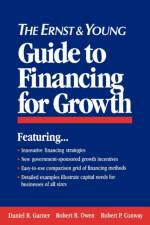
This guide discusses the many ways that capital can be raised in order to finance business ventures. It contains sections on regulations and strategies, US state and federal funding programmes, and international financing. Case studies help readers to grasp the basic facts and figures.
Widely considered as the most informed work ever written on the social effects of advanced capitalism, this remarkable volume holds its own as one of the most significant books of the twentieth century.
This book introduces upper-level undergraduates, graduate students, and researchers to the latest developments in network economics. The book conveys the essential features of how strategic interactions between firms are affected by network activity, as well as covering social interaction and its influence on consumers' choices of products and services.
Love him or hate him, Bill Gates has single-handedly shaped the technological future of the twenty-first century. Created through the independent research of bestselling author Janet Lowe, Bill Gates Speaks documents the life and ambitions of one of the world's most unique business and cultural leaders.
This study spans fifteen years of research in several developing countries on the street food industry. The author discusses Public Policy issues of nutritional standards, sanitation, and regulation that effect this business.
The family business has a far reaching influence on economies throughout the world.
`A major contribution of this exciting book is the perspective of the subsidiary manager operating network.... With exceptional clarity of thought and writing, Julian Birkinshaw stakes out the ground as a major new thinker in the fields of international business and strategic management' - Alan Rugman, Templeton College, University of Oxford
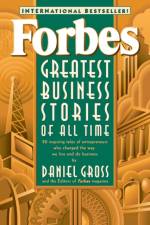
What do Bill Gates, Henry Ford, J.P. Morgan, Mary Kay Ash, and Walt Disney all have in common? Uncompromising vision, a willingness to take risks, and exceptional business acumen. Not only did these individuals amass great fortunes, they revolutionized the business world and helped shape society as we know it.
An examination of the culture of London's East End and its relationship with the Criminal Investigation Department of the Metropolitan Police, concentrating on entrepreneurship, crime and delinquency, and the history of detective work in London.
Market-Oriented Product Innovation differs from most other titles, written either from a marketing or technical perspective, by giving a holistic view of the product innovation process.
This text tells the story of the birth and explosion of cellular and wireless communications as seen through the eyes of one of the industry's pioneers, Sam Ginn. As deregulation and privatisation swept the globe, Ginn and his team at Air Touch Communications won licenses on several continents.
An exploration of the experiences of women entrepreneurs amidst the contradictions of a free-wheeling commercial culture set within the patriarchal constraints of contemporary Taiwan. The book focuses on the voices and perspectives of the women themselves.
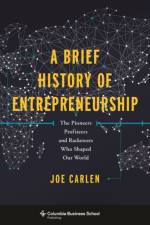
A Brief History of Entrepreneurship charts how the pursuit of profit by private individuals has been a prime mover in revolutionizing civilization. Entrepreneurs often butt up against processes, technologies, social conventions, and even laws. So they circumvent, innovate, and violate to obtain what they want. This creative destruction has brought about overland and overseas trade, colonization, and a host of revolutionary technologies-from caffeinated beverages to the personal computer-that have transformed society.Consulting rich archival sources, including some that have never before been translated, Carlen maps the course of human history through nine episodes when entrepreneurship reshaped our world. Highlighting the most colorful characters of each era, he discusses Mesopotamian merchants' creation of the urban market economy; Phoenician merchant-sailors intercontinental trade, which came to connect Africa, Asia, and Europe; Chinese tea traders' invention of paper money; the colonization of the Americas; and the current "e;flattening"e; of the world's economic playing field. Yet the pursuit of profit hasn't always moved us forward. From slavery to organized crime, Carlen explores how entrepreneurship can sometimes work at the expense of others. He also discusses the new entrepreneurs who, through the nascent space tourism industry, are leading humanity to a multiplanetary future. By exploring all sides of this legacy, Carlen brings much-needed detail to the role of entrepreneurship in revolutionizing civilization.
Entrepreneurialism and Tourism in Contemporary Vietnam examines the intersection of entrepreneurialism and the tourism industry in modern-day Vietnam and uses case studies from tourism operators in Ho Chi Minh City to understand the effects of market reforms on Vietnam's society. The primary argument undertaken in this study is that in order to understand changes to the Vietnamese economy, one must take an approach that combines the ';cultural' with the ';economic.' The tourism case studies presented here collectively demonstrate that there is no easy analytic distinction between the cultural and economic dimensions of the Vietnamese tourism industry. The empirical material is primarily drawn from interviews with private tour operators and participant observation on tours. This book also examines the collaboration between the private sector and the Vietnamese government in the tourism industry. These coordinative entrepreneurial relationships between two unlikely bedfellows are shaped by the interpersonal exchanges that produce the tourism cultural-economy. Lastly, there are links between entrepreneurialism, tourism, and other case studies in urban Southeast Asia illustrated in the conclusion.
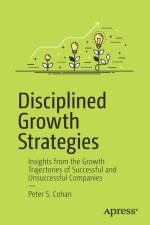
Accelerate your company's growth in a disciplined fashion. This book provides leaders of large and small companies a proven comprehensive framework to think systematically about growth options and to yield practical strategies that produce faster growth.Drawing insights from case studies of successful and unsuccessful companies, strategy teacher and venture capitalist Peter Cohan models his systematic approach to brainstorming, evaluating, and implementing growth strategies across five dimensions: Customers, Geography, Products, Capabilities, Culture. He examines each of these five growth dimensions in turn, selecting and organizing his cases to compare the growth strategies deployed successfully and unsuccessfully by large and small companies along the given dimension. In each of his five dimensional chapters, the author derives from his case analyses the key principles and processes for creating and achieving faster growth.Professor Cohan draws on a network of hundreds of founders, CEOs, and investors developed through his decades of consulting, authorship of 11 books, and over five years as a Forbes columnist. He shows through many compelling stories how leaders craft effective growth strategies.Business leaders will learn the following lessons from this book:Achieving rapid but sustainable growth is a business leader's most important responsibility - and leaders must approach this challenge with a mixture of vision, intellectual humility, and a willingness to experiment and learn from failure.The growth challenges facing companies that are currently growing quickly differ from the ones that stagnating or shrinking companies must overcome.Companies can achieve growth along one or more of the dimensions simultaneously - and they often expand geographically to customers in the same segments.Useful insights can emerge from comparing case studies of successful and unsuccessful companies pursuing similar growth strategies.Companies should select a growth strategy based on three factors: the attractiveness of the growth opportunity, the company's capabilities to provide superior value to customers in the selected market, and the expected return on investment in the growth vector.Companies should select a growth strategy that best fits their capabilities and culture and they must enhance both to adapt to new growth opportunities.Who This Book Is ForThe people in companies who are responsible for growth: chief executive officers, chief marketing officers, chief product officers, heads of business development, product managers, sales people, and human resources managers
Businesses often find themselves trapped in a competitive dogfight, scratching and clawing for market share with products consumers view as largely undifferentiated. Conventional wisdom suggests that dogfights are to be expected as marketplaces mature, giving rise to the notion that there are "e;bad"e; industries where it is unlikely that any company can succeed. But there are notable exceptions in which enlightened executives have changed the rules to grasp the holy grail of business: long-term profitable growth. Rather than joining the dogfights raging within their industry, companies such as Apple, FedEx, and Starbucks have chosen to become metaphorical cats, continuously renewing their distinctive strategies to compete on their own terms.In If You're in a Dogfight, Become a Cat, Leonard Sherman draws on four decades of experience in management consulting, venture capital, and teaching business strategy at Columbia Business School to share practical advice on two of the most vexing issues facing business executives: why is it so hard to achieve long-term profitable growth, and what can companies do to break away from the pack?Sherman takes the reader on a provocative journey through the building blocks of business strategy by challenging conventional wisdom on a number of questions that will redefine management best practices:* What should be the overarching purpose of your business?* Do you really know what your strategy is?* Is there such a thing as a bad industry?* Where do great ideas come from and how do I find them?* What makes products meaningfully different?* What makes and breaks great brands?* How and when should I disrupt my own company?* What are the imperatives to achieving long-term profitable growth?Filled with dozens of illustrative examples of inspiring successes and dispiriting falls from grace, this book provides deep insights on how to become the cat in a dogfight, whether you are a CEO, mid-level manager, aspiring business school student, or curious observer interested in achieving sustained profitable growth.
The venture capital world is often intimidating and hard to navigate, even for the most seasoned entrepreneurs. But it doesnt have to be. Entrepreneurs who run effective fundraising processes dont do it by accident. With this book, youll learn what it takes to successfully raise a round of funding for your company.Author Katherine Hague explains how the venture capital industry works, and walks you through each step necessary to plan, execute, and optimize your own fundraising round. Packed full of exercises, checklists, and templates, this book guides you through the process from start to finish. Its ideal for entrepreneurs raising later rounds of capital, as well as those just starting out.Gain an understanding of core venture capital concepts and standardsLearn how to develop and hone an investor pitchCome away with a plan to hit the fundraising trail for your companyDevelop the confidence you need to negotiate key terms in a funding dealUnderstand best practices in fundraising, and learn how to avoid the top 10 fundraising mistakes
Standing out in today's crowded markets is a huge challenge for entrepreneurs, small businesses and non-profits vying for attention from consumers, clients and donors who are bombarded by thousands of messages every day. In TWIST: How Fresh Perspectives Build Breakthrough Brands, Julie Cottineau, former vice president of brand for Virgin and a global authority on impactful and effective branding, shares her proven tools and tips for building a brand that shines and delivers tangible results. She uses easy-to-follow insight and engaging examples of actual small businesses that have produced big results by following her methodology. Don't waste another minute on "e;me-too"e; marketing until you read this book and build your own TWIST.
A fundamental paradigm shift has occurred in marketing and branding. Today the most successful CEOs, executives, entrepreneurs and enterprises set their sites on developing a long-term platform instead of a short-term strategy that supports and builds buzz for their personal or business brand. Thats really the key to the new business mindset the recognition that branding and marketing are an ongoing, steady stream of small efforts, not a series of gigantic pushes. Social media, blogging and other business development activities both online and off are about the persistent, ongoing process of building a platform, creating credibility and increasing the number of people that you funnel into your potential client and network pipeline.Converting those people into clients or fans may take a month, a year or two years, but the new mindset leads you to strategies that will keep that pipeline full. In short, you need to start a bunch of small fires to keep your brand burning hot. How can todays CEOs, executives and entrepreneurs keep these fires going and powerfully get their messages across, motivate others to action and be authentic all while simultaneously shepherding initiatives from creation to implementation in high-demand markets?CEO, executive and team branding are key factors that enable effective leaders to achieve peak performance, gain greater influence in their industries and generate increased engagement within their companies. By creating a brand (business or personal) by design instead of default, leaders and companies bring their brand promise into every interaction across the board.A personal, team or business brand is not just a single statement or a clever quip but a multilayered, congruent narrative told across multiple channels online and off within the organization and to the business community at large. The power is in knowing how to tell the story.The book will introduce CEOs and executives in Fortune 500 companies and entrepreneurs in SMBs to the SMG Brand Mapping Process, a process that willguide them in creating personal, team and business brands that work in harmony and parallel with each other.
A comprehensive history of fraud in America, from the early nineteenth century to the subprime mortgage crisisThe United States has always proved an inviting home for boosters, sharp dealers, and outright swindlers. Worship of entrepreneurial freedom has complicated the task of distinguishing aggressive salesmanship from unacceptable deceit, especially on the frontiers of innovation. At the same time, competitive pressures have often nudged respectable firms to embrace deception. As a result, fraud has been a key feature of American business since its beginnings. In this sweeping narrative, Edward Balleisen traces the history of fraud in America-and the evolving efforts to combat it-from the age of P. T. Barnum through the eras of Charles Ponzi and Bernie Madoff.Starting with an early nineteenth-century American legal world of "e;buyer beware,"e; this unprecedented account describes the slow, piecemeal construction of modern regulatory institutions to protect consumers and investors, from the Gilded Age through the New Deal and the Great Society. It concludes with the more recent era of deregulation, which has brought with it a spate of costly frauds, including the savings and loan crisis, corporate accounting scandals, and the recent mortgage-marketing debacle.By tracing how Americans have struggled to foster a vibrant economy without enabling a corrosive level of fraud, this book reminds us that American capitalism rests on an uneasy foundation of social trust.
Abonner på vårt nyhetsbrev og få rabatter og inspirasjon til din neste leseopplevelse.
Ved å abonnere godtar du vår personvernerklæring.