



























Gjør som tusenvis av andre bokelskere
Abonner på vårt nyhetsbrev og få rabatter og inspirasjon til din neste leseopplevelse.
Ved å abonnere godtar du vår personvernerklæring.Du kan når som helst melde deg av våre nyhetsbrev.

Presents emerging perspectives on the theoretical and practical aspects of data analysis tools and techniques within business applications. The book provides concrete examples and case studies of successful uses of data-driven projects as well as the challenges and opportunities of generating value from data using analytics.
Explains why people leave Africa, what they encounter, interactions with the host community, strategies of inclusion, and perceived exclusions from the mainstream of British society. The book also provides information on the social changes and policies that African countries are adopting to negotiate immigration and emigration processes.
This book explores the relevance of new sources, dimensions, and characteristics of knowledge for supporting creative and cultural organizations and initiatives. Special emphasis is placed on cultural heritage, participatory approaches, and entrepreneurship in the cultural and creative sector.
Skill development is important because it enhances productivity at the individual, industry and national levels. In India, skill formation is broadly ensured through general educationconsidered as a provider of generic skills. Other than general education, skill formation efforts consist of vocational education and training and sector-specific programmes for better employability in industry. National Policy for Skill Development and Entrepreneurship, 2015 aims to bring the world of education and training closer to the world of work to build a strong India. It provides clarity and coherence on how skill development efforts across the country can be aligned within the existing institutional arrangements. The Policy links skill development to improved employability and productivity. India had declared 2010-20 as the Decade of Innovation. The Government has stressed the need to enunciate a policy to synergize science, technology and innovation and has also established the National Innovation Council (NInC). Entrepreneurship is the quality of being an entrepreneur, i.e. one who undertakes an enterprise. The term puts emphasis on the risk and effort taken by individuals who own and manage a business. This book provides a comprehensive account of policies and programmes for skill development, innovations and entrepreneurship in India. It is spread over 16 chapters which have been organized into 3 theme parts. Part I (chapters 1 to 8) is devoted to policies and programmes for skill development in India. Part II (chapters 9 to 13) covers promotion of science, technology and innovations. Part III (chapters 14 to 16) deals with entrepreneurship development.
Presents research that links social entrepreneurship and social value in order to highlight the importance of social entrepreneurs in emerging economies. While covering topics that include crowdfunding, social enterprise, social entrepreneurship ecosystems, this book seeks to extend the social entrepreneurship contribution to social impact.
Presents research that links social entrepreneurship and social value in order to highlight the importance of social entrepreneurs in emerging economies. While covering topics that include crowdfunding, social enterprise, social entrepreneurship ecosystems, this book seeks to extend the social entrepreneurship contribution to social impact.
A business growth book that helps you get out of whatever business crisis you face, and then it teaches you how to help others by mentoring and public speaking. REBUILDING YOUR BUSINESS WHEN IT ALL HEADS SOUTH
'Wilfred's sheer ambition is an inspiration. We can all learn from it.' - Peter Bazalgette'Based on my career, Wilfred Emmanuel-Jones' approach to risk can produce huge dividends' - Nigel Travis, chairman of Dunkin' Brands and author of The Challenge CultureJeopardy is the single greatest catalyst for making things happen in life.In Jeopardy, award-winning entrepreneur Wilfred Emmanuel-Jones argues that our natural instinct for caution is one of the greatest barriers to making progress in life, and shows how embracing jeopardy is essential if you want to succeed.Drawing on a life that has taken him from a deprived childhood in inner-city Birmingham to becoming one of the nation's most famous farmers, he demonstrates how we can all go further in life by learning to escape the fears that stop us from achieving our ambitions.Wilfred Emmanuel-Jones is no stranger to jeopardy: he remortgaged his house in 2005 to launch his brand 'The Black Farmer' from nothing. Its products are now stocked in all major supermarkets and the business has an annual turnover of several million. In this book, he shows that only by embracing jeopardy, and liberating ourselves from the shackles of uncertainty and self-doubt, can we realise our full potential.What could you achieve, if you decided to stop letting fear hold you back?
What will unfold in Your Next Chapter?Angela Raspass knows from first-hand experience that self-doubt can be the greatest obstacle preventing us from achieving our true capabilities. Now an experienced business mentor and women's coach, Angela has helped hundreds of women ditch their doubt and create their own exciting new business chapters.In 'Your Next Chapter', Angela now offers inspiration, guidance and simple tools to help you navigate doubt, anchor into your true worth and access your courage, confidence and creativity. She also shares her own raw stories of recovery from addiction, and transition through three major work-life changes to the business that sustains her soul today.In this book you will be guided through her proven Next Chapter Change Cycle framework, to help you:¿ Travel away from DISCONTENT¿ DECIDE to go after what you DESIRE¿ Hurdle your DOUBT¿ And confidently DESIGN and DELIVER your ideas in a business that's perfect for the woman you have become By blending your skills, experience and values into a sustainable model of contribution, fulfilment and financial reward, you'll absolutely love life in Your Next Chapter.
An up close and personal look at the many components that go into the sale of a business including what to do and what not to do.
This book will serve as a key reference and resource for teachers, researchers, students, experts, policy makers, journalists and those who want to acquire a broad understanding of the social enterprise and social entrepreneurship phenomena as they emerge and develop across Western Europe.
The global economy is predominantly driven by family businesses that provide the largest source of long-term employment in most countries.
There has been significant interest in role of entrepreneurs and entrepreneurial activities in driving global economic growth and also in responding to changing social and environmental conditions that are affecting societies globally.
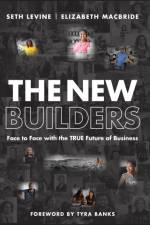
Despite popular belief to the contrary, entrepreneurship in the United States is dying. It has been since before the Great Recession of 2008, and the negative trend in American entrepreneurship has been accelerated by the Covid pandemic. New firms are being started at a slower rate, are employing fewer workers, and are being formed disproportionately in just a few major cities in the U.S. At the same time, large chains are opening more locations. Companies such as Amazon with their "deliver everything and anything" are rapidly displacing Main Street businesses.In The New Builders, we tell the stories of the next generation of entrepreneurs -- and argue for the future of American entrepreneurship. That future lies in surprising places -- and will in particular rely on the success of women, black and brown entrepreneurs. Our country hasn't yet even recognized the identities of the New Builders, let alone developed strategies to support them.Our misunderstanding is driven by a core misperception. Consider a "typical" American entrepreneur. Think about the entrepreneur who appears on TV, the business leader making headlines during the pandemic. Think of the type of businesses she or he is building, the college or business school they attended, the place they grew up.The image you probably conjured is that of a young, white male starting a technology business. He's likely in Silicon Valley. Possibly New York or Boston. He's self-confident, versed in the ins and outs of business funding and has an extensive (Ivy League?) network of peers and mentors eager to help his business thrive, grow and make millions, if not billions.You'd think entrepreneurship is thriving, and helping the United States maintain its economic power.You'd be almost completely wrong.The dominant image of an entrepreneur as a young white man starting a tech business on the coasts isn't correct at all. Today's American entrepreneurs, the people who drive critical parts of our economy, are more likely to be female and non-white. In fact, the number of women-owned businesses has increased 31 times between 1972 and 2018 according to the Kauffman Foundation (in 1972, women-owned businesses accounted for just 4.6% of all firms; in 2018 that figure was 40%). The fastest-growing group of female entrepreneurs are women of color, who are responsible for 64% of new women-owned businesses being created.In a few years, we believe women will make up more than half of the entrepreneurs in America.The age of the average American entrepreneur also belies conventional wisdom: It's 42. The average age of the most successful entrepreneurs -- those in the top .01% in terms of their company's growth in the first five years -- is 45.These are the New Builders. Women, people of color, immigrants and people over 40.We're failing them. And by doing so, we are failing ourselves.In this book, you'll learn:* How the definition of business success in America today has grown corporate and around the concepts of growth, size, and consumption.* Why and how our collective understanding of "entrepreneurship" has dangerously narrowed. Once a broad term including people starting businesses of all types, entrepreneurship has come to describe only the brash technology founders on the way to becoming big.* Who are the fastest growing groups of entrepreneurs? What are they working on? What drives them?* The real engine that drove Silicon Valley's entrepreneurs. The government had a much bigger role than is widely known* The extent to which entrepreneurs and small businesses are woven through our history, and the ways we have forgotten women and people of color who owned small businesses in the past.* How we're increasingly afraid to fail* The role small businesses are playing saving the wilderness, small towns and redlined communitiesWhat we can do to turn the decline in entrepreneurship around, especially be supporting the people who are courageously starting small companies today.
Whether you know it or not, the seeds of success are already within you, so instead of endlessly putting off your dreams, dive in and get started now.
Abonner på vårt nyhetsbrev og få rabatter og inspirasjon til din neste leseopplevelse.
Ved å abonnere godtar du vår personvernerklæring.