


























Gjør som tusenvis av andre bokelskere
Abonner på vårt nyhetsbrev og få rabatter og inspirasjon til din neste leseopplevelse.
Ved å abonnere godtar du vår personvernerklæring.Du kan når som helst melde deg av våre nyhetsbrev.

International Entrepreneurship in Emerging Markets: Contexts, Behaviours, and Successful Entry aims to provide a comprehensive understanding of international entrepreneurship in emerging markets.
God in the Details provides timeless advice and encouragement for the Christian "womanpreneur." Readers will learn what trips up their brand and witness and how to honor God in business and stay true to their mission.
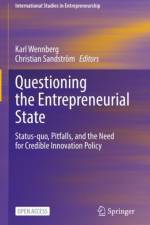
The 2008 financial crisis and the COVID-19 pandemic have made the authorities to increasingly turn inward and use ethnocentrism, protectionism, and top-down approaches to guide policy on trade, competition, and industrial development. The continuing aftereffects of such policies range from the rise and seeming success of authoritarian states, rise of populist and protectionist trends, and evolving academic agendas inspiring the reemergence of top-down industrial policies across the world.This open access edited volume contains contributions from over 30 scholars with expertise in economics, innovation, management, and economic history. The chapters offer unique theoretical and empirical contributions discussing topics such as how industrial policies affect risk, incentives, and information for investments. They also address the policy perspectives on new technologies such as AI and its implications for market entry, the role for independent entrepreneurship in increasingly regulated markets, and whether governments should focus on market interventions or institutional capacity-building. Questioning the Entrepreneurial State initiates a much sought-after debate on the notion of an Entrepreneurial State. It discusses the dangers of top-down approaches to industrial policy, examines lessons from such approaches for future policy design, and calls attention to the progress of open and contestable markets in a sound economy and society. "Creative destruction, innovation and entrepreneurship are at the core of economic growth. The government has a clear role, to provide the basic fabric of a dynamic society, but industrial policy and state-owned companies are the boulevard of broken dreams and unrealized visions. This important message is convincingly stated in Questioning the Entrepreneurial State."Anders Borg, former Minister of Finance, Sweden"Misreading the dynamism of American entrepreneurship, European intellectuals and policy makers have embraced a dangerous fantasy: catching up requires constructing an entrepreneurial state. This book provides a vital antidote: The entrepreneur comes first: The state may support. It cannot lead."Amar Bhidé, Thomas Schmidheiny Professor of International Business, Tufts University "This important new book subjects the emergence of the entrepreneurial state, which reflects a shift in the locus of entrepreneurship from the individual to the public sector, to the scrutiny of rigorous analysis. The resulting concerns, flaws and biases inherent in the entrepreneurial state exposed are both alarming and sobering. The skill and scholarly craftsmanship brought to bear in this crucial analysis is evident throughout the book, along with the even, but ultimately consequential thinking of the authors. A must read for researchers and thought leaders in business and policy."David Audtretsch, Distinguished Professor, Ameritech Chair of Economic Development, Indiana University
The 2008 financial crisis and the COVID-19 pandemic have made the authorities to increasingly turn inward and use ethnocentrism, protectionism, and top-down approaches to guide policy on trade, competition, and industrial development. The continuing aftereffects of such policies range from the rise and seeming success of authoritarian states, rise of populist and protectionist trends, and evolving academic agendas inspiring the reemergence of top-down industrial policies across the world.This open access edited volume contains contributions from over 30 scholars with expertise in economics, innovation, management, and economic history. The chapters offer unique theoretical and empirical contributions discussing topics such as how industrial policies affect risk, incentives, and information for investments. They also address the policy perspectives on new technologies such as AI and its implications for market entry, the role for independent entrepreneurship in increasingly regulated markets, and whether governments should focus on market interventions or institutional capacity-building. Questioning the Entrepreneurial State initiates a much sought-after debate on the notion of an Entrepreneurial State. It discusses the dangers of top-down approaches to industrial policy, examines lessons from such approaches for future policy design, and calls attention to the progress of open and contestable markets in a sound economy and society. "Creative destruction, innovation and entrepreneurship are at the core of economic growth. The government has a clear role, to provide the basic fabric of a dynamic society, but industrial policy and state-owned companies are the boulevard of broken dreams and unrealized visions. This important message is convincingly stated in Questioning the Entrepreneurial State."Anders Borg, former Minister of Finance, Sweden"Misreading the dynamism of American entrepreneurship, European intellectuals and policy makers have embraced a dangerous fantasy: catching up requires constructing an entrepreneurial state. This book provides a vital antidote: The entrepreneur comes first: The state may support. It cannot lead."Amar Bhidé, Thomas Schmidheiny Professor of International Business, Tufts University "This important new book subjects the emergence of the entrepreneurial state, which reflects a shift in the locus of entrepreneurship from the individual to the public sector, to the scrutiny of rigorous analysis. The resulting concerns, flaws and biases inherent in the entrepreneurial state exposed are both alarming and sobering. The skill and scholarly craftsmanship brought to bear in this crucial analysis is evident throughout the book, along with the even, but ultimately consequential thinking of the authors. A must read for researchers and thought leaders in business and policy."David Audtretsch, Distinguished Professor, Ameritech Chair of Economic Development, Indiana University
Business credit simply allows your company to have LEVERAGE.Business Credit is a separate credit system from personal credit that's strictly scored based upon your business.By establishing business credit, you can get large amounts of funding that you wouldn't qualify for with only using your personal credit. You can get funding for your business through banks, alternate lenders and the government by establishing your business credit. You will learn step by step how to build business credit tied NOT to your social security number but with your federal employer identification number. Understanding everything from beginning vendors to revolving credit and how to use business credit for startups, vehicle financing, marketing, and every business expense you have or may have.You will also learn:- Step by step on how to set up your business professionally for lenders- How to get a D-U-N-S number- How to start establishing business credit- A breakdown of how business credit is scored- A list of vendor/trade accounts to use to start building your business credit- How to qualify for funding for lenders & more!*Disclaimer* This book is for educational purposes only. Information provided is based upon my personal acquired knowledge. You are solely responsible for any actions taken on your behalf. Always consult a financial advisor and tax specialist for your needs as I am not a financial advisor or tax expert.Results will vary.
This book points out patterns of approaches leading to entrepreneurial activities, implemented by the immigrants from the Far East: China, Vietnam, South Korea, India, and Philippines.
Entrepreneurial ecosystems enhance economic activities and growth in emerging economies. Such ecosystems sustain entrepreneurial ventures that provide a great push to the economic engine of an economy towards growth trajectory. The COVID-19 pandemic placed huge pressure on the survival capacity of entrepreneurial ventures and tested their resilience. Considering the special case of emerging economies, institutions play a substantial role in explaining the preferences of the business. Understanding the role of institutions and resilience capability of entrepreneurial ventures in emerging economies can provide suitable insights and contributions towards entrepreneurial ventures. Institutions, Resilience, and Dynamic Capabilities of Entrepreneurial Ecosystems in Emerging Economies presents innovative research that helps entrepreneurs to understand emerging economies in a better way and to gain meaningful insights. It describes entrepreneurship as a way to achieve the Sustainable Development Goals and overcome institutional barriers and voids. Covering topics such as government initiatives, sustainable entrepreneurship, and economic growth, this premier reference source is an essential resource for entrepreneurs, business leaders, managers, economists, government officials, policymakers, libraries, students and faculty of higher education, researchers, and academicians.
Social entrepreneurship is construed an innovative activity that addresses or mitigates social issues based on self-sufficiency and financial stability. It offers the potential to shift civil society through innovative social ventures that pursue profit and purpose. It is gaining international attention due to the intent of social entrepreneurs to change and to see the world as it can be, not as it is. These changemakers blend lessons from business with the diversity and complexity of social values and in the process pursue opportunities for change. International Perspectives on Value Creation and Sustainability Through Social Entrepreneurship explores various issues and ideas about social entrepreneurship through the lens of theoretical, practical, and empirical research. It provides an international outlook of social entrepreneurship, focusing primarily on value creation and sustainability. Covering topics such as entrepreneurship education, post-COVID perspectives, and private wealth, this premier reference source is an essential resource for entrepreneurs, business leaders, managers, government officials, policymakers, libraries, students and faculty of higher education, researchers, and academicians.
Obwohl sich Journalismus und Unternehmenskommunikation in Funktion und Selbstverständnis immer noch deutlich voneinander unterscheiden, hat die digitale Transformation für eine zunehmende Konvergenz beider Berufsfelder gesorgt. Die Frage, wie und unter welchen Voraussetzungen Öffentlichkeit erzeugt wird, stellt sich angesichts eines tiefgreifenden Medienwandels mit zunehmender Dringlichkeit. Dieses Buch beschreibt das Spannungsverhältnis zwischen beiden Feldern mit Blick auf technologische, ökonomische und praktische Aspekte. Expert*innen aus Journalismus, Unternehmen und Forschung erläutern ¿ wissenschaftlich fundiert und anhand von zahlreichen Praxisbeispielen ¿, wie sich das neue Miteinander gestaltet: von den jeweils berufsspezifischen Umbrüchen über Wissensvermittlung, -transfer und Netzwerkarbeit bis hin zu neuen Businessmodellen und -strategien für beide Berufsfelder.Ein Buch für Journalist*innen, journalistische Unternehmer*innen, Kommunikationsverantwortliche in Unternehmen, Studierende und praxisorientierte Wissenschaftler*innen.Mit Beiträgen von:¿ Dr. Matthias Albisser, Hochschule Luzern¿ Prof. Dr. Christopher Buschow, Bauhaus-Universität Weimar¿ Prof. Dr. Matthias Degen, Westfälische Hochschule¿ Prof. Dr. Alexander Godulla, Universität Leipzig¿ M.A. Benjamin Held, Westfälische Hochschule¿ Dr. Constanze Jecker, Hochschule Luzern¿ Prof. Dr. Florian Meißner, Hochschule Macromedia¿ M.A. Megan Neumann, Ostfalia Hochschule für angewandte Wissenschaften¿ Prof. Dr. Marc-Christian Ollrog, Ostfalia Hochschule für angewandte Wissenschaften¿ Rosanna Planer, Universität Leipzig¿ Prof. Dr. Lars Rademacher, Hochschule Darmstadt¿ Prof. Dr. Christoph Raetzsch, School of Communication and Culture¿ Dr. Jonas Schützeneder, Katholische Universität Eichstätt-Ingolstadt¿ Prof. Dr. René Seidenglanz, Quadriga Hochschule¿ M.A. Hauke Serger, Bauhaus-Universität Weimar¿ Dr. Klaus Spachmann, Universität Hohenheim¿ B.A. Karoline Steinbock, Ostfalia Hochschule für angewandte Wissenschaften¿ M.A. Maike Suhr, Bauhaus-Universität Weimar¿ Dr. Daniel Vogel, fög ¿ Forschungszentrum Öffentlichkeit und Gesellschaft¿ Prof. Dr. Stefan Weinacht, Westfälische Hochschule¿ Prof. Dr. Cornelia Wolf, Universität Leipzig
Bringing much needed clarity and definition to the term 'minority entrepreneur,' this authoritative and timely handbook explores the distinctive challenges that minority communities face when founding and managing new ventures. The handbook is inclusive of any community who might be considered disadvantaged or under-represented in terms of entrepreneurial activity and included are women, youths, seniors, disabled, immigrants, Indigenous peoples, LBGTQ+, ex-offenders, Roma, refugees and many others. Chapters highlight the idiosyncratic nature of the many communities examined before offering frameworks and models that draw together the various findings. With a cast of international contributors, this scholarly handbook discusses the surrounding literature of minority entrepreneurship and takes an all-encompassing approach to its interpretation. It also addresses the sorely under-researched area of entrepreneurial behaviour among minorities and disadvantaged groups. This is particularly important for policymakers tasked with designing and delivering initiatives that are appropriate for the needs of these communities. Ultimately this handbook contributes to existing knowledge by:¿ providing a current understanding of the literature for each of the communities;¿ investigating the uniqueness of the entrepreneurial behaviour within the communities; ¿ offering new frameworks/models from which future researchers can build new knowledge.The handbook provides a comprehensive account of an important and fast emerging field of entrepreneurship, and is an invaluable resource for students, researchers and policymakers.
Discover a short yet powerful philosophy that will help you stand out as the best in your business.Combined with Jason Miller's proven system, The Trinity of Success, you will soon learn how to quickly grow and scale your business.The Strategic Advisor Board is a business mentorship company that helps small businesses build and scale their companies.Based in Boulder, CO, and operating nationwide, Strategic Advisor Board consists of a board of ten CEO members who collectively advise and mentor clients.Leveraging the power of powerful industry connections, their goal is to have their client dream bigger, achieve the highest possible profit for their company, and create a working system that will allow their business to not only grow but thrive.Reinvigorating small businesses is a priority of the Strategic Advisor Board.We focus on smarter business growth through community effort that helps the local economy.Our communities fuel our country's economy and allow us to grow and thrive as a nation.We help businesses create smart strategies that tie into the community effort to support the economy in a more holistic way.Buy this book today and start leveraging the Power of 10 in your business.
Art for Money offers hard-won insights and practical tools any creative freelancer can apply to make a living and significantly grow their business. Direct and heartfelt, this slim book of under 100 pages is an instant classic that may be the most worthwhile book you buy this year. This print edition includes lifetime digital access, tools and spreadsheets, and future updates at Holloway.com."I reached out to Mike for help ...Then he sent over the book you're about to read. After that, my income tripled." -Angela FinkYou might be a photographer, engineer, writer, designer, makeup artist, or any kind of freelance worker, contractor, or consultant. Or maybe you have a company job but dream of working on your own. Chances are you're interested in creating and a little unsure about billing, proposals, invoices, calendar management, how to set up an LLC-and if you can do it all yourself. Have you ever wished creatives like you had a coach, companion, or career center to turn to? In ten chapters, each topic is explained simply and with kindness, honesty, real examples, and no fluff.Michael Ardelean packs 13 years of creative and business experience into this book, distilling what he's learned about thriving financially as an artist: The benefits of freelancing and how to know if establishing a business is right for youHow to know what you're worthHow to price your work-and how not to under-charge or feel guilty about charging clients what you're worthHow to write a professional proposalHow to build fantastic client relationships-and what to do when relationships are difficultHow to invoice and get paid on timeHow to network and grow your businessArt for Money is approachable, actionable, and written for creatives by a creative who's seen it all.You've already figured out how to be great at what you do. If you're ready to become financially successful, too, the time you spend with this small book might be the best investment you've ever made in yourself.
Enriches existing definitions of a blue economy with inputs from a multidisciplinary lens and provides measures for evaluating blue economy progression and compliance. The book coversa wide range of topics, including economics, natural resource development, social equity, and sustainability.
Enriches existing definitions of a blue economy with inputs from a multidisciplinary lens and provides measures for evaluating blue economy progression and compliance. The book coversa wide range of topics, including economics, natural resource development, social equity, and sustainability.
Managers often isolate their innovation teams, but wouldn¿t it be better to engage all the workers in innovation? This book describes a framework that makes innovation a daily consideration for all. It involves allowing a knowledge network to develop naturally which complements the existing organizational structure making it more organic. It fosters more extensive collaboration amongst workers to produce more imaginative solutions that maximize value. The workers are encouraged to consult one another spontaneously across their organization and beyond its traditional boundaries. Insightful and constructive exchanges stimulate their thinking making them creative partners. Unsuspected capabilities, ideas and value are revealed. Philippe Davidson describes creative deliberation techniques designed to maximize stakeholder value. The framework also makes organizations nimbler and more resilient to market changes. They become more sustainable in ever-changing conditions because learning and change become the norm. Innovation champions will find powerful arguments for introducing democratized innovation in their organizations. A wealth of practical techniques and handy tips for participative work-based training will help organizational trainers and facilitators to democratize innovation. Management consultants will find invaluable insights to advise their clients on innovation. Your workers are your organization¿s best agents of change - unleash their natural creativity!
Abonner på vårt nyhetsbrev og få rabatter og inspirasjon til din neste leseopplevelse.
Ved å abonnere godtar du vår personvernerklæring.