






Gjør som tusenvis av andre bokelskere
Abonner på vårt nyhetsbrev og få rabatter og inspirasjon til din neste leseopplevelse.
Ved å abonnere godtar du vår personvernerklæring.Du kan når som helst melde deg av våre nyhetsbrev.

Discover a fun new hobby with helpful possibilities Get directions, talk to folks overseas, or find out whether the fish are biting Want to check out the morning news in London, help out in emergencies, or tune in to the big race? Two-way radios open up a world of possibilities - literally.
An introduction to the Microsoft .NET Framework - the technology of choice for building components on Windows platforms. From this book's lessons, tips, and guidelines, readers will learn how to use the .NET Framework to program reusable, maintainable, and robust components.
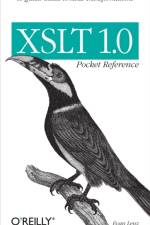
XSLT is an essential tool for converting XML into other kinds of documents: HTML, PDF file, and many others. It's a critical technology for XML-based platforms such as Microsoft .NET, Sun Microsystems' Sun One, as well as for most web browsers and authoring tools. As useful as XSLT is, however, most people have a difficult time getting used to its peculiar characteristics. The ability to use advanced techniques depends on a clear and exact understanding of how XSLT templates work and interact.The XSLT 1.0 Pocket Reference from O'Reilly wants to make sure you achieve that level of understanding. With its concise approach, this handy pocket guide quickly gets you up to speed on XSLT 1.0 so you can covert XML like a seasoned pro. In addition to covering the basics of stylesheet structure, it also explains how to:use template rulescreate a result treeapply conditional processingtransform multiple source documentsemploy number formattingThanks to their convenient, quick-reference format, O'Reilly's Pocket References spare you from having to hunt through larger books for answers. They deliver just what you need to get the job done in a timely fashion. And the XSLT 1.0 Pocket Reference is no different--it's the ideal companion to have at your desk when you need an answer fast.
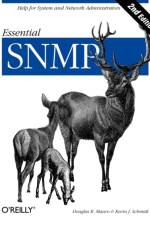
Provides an introduction that shows how to install, configure, and manage Simple Network Management Protocol (SNMP). Written for network and system administrators, this book introduces the basics of SNMP and then offers a technical background on how to use it. It explores commercial and open source packages, and elements like OIDs, MIBs, and more.
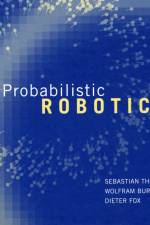
An introduction to the techniques and algorithms of the newest field in robotics.Probabilistic robotics is a new and growing area in robotics, concerned with perception and control in the face of uncertainty. Building on the field of mathematical statistics, probabilistic robotics endows robots with a new level of robustness in real-world situations. This book introduces the reader to a wealth of techniques and algorithms in the field. All algorithms are based on a single overarching mathematical foundation. Each chapter provides example implementations in pseudo code, detailed mathematical derivations, discussions from a practitioner's perspective, and extensive lists of exercises and class projects. The book's Web site, www.probabilistic-robotics.org, has additional material. The book is relevant for anyone involved in robotic software development and scientific research. It will also be of interest to applied statisticians and engineers dealing with real-world sensor data.
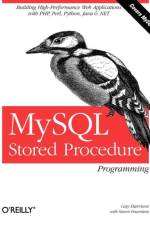
The implementation of stored procedures in MySQL 5.0 a hugemilestone -- one that is expected to lead to widespread enterprise adoption ofthe already extremely popular MySQL database. If you are serious aboutbuilding the web-based database applications of the future, you need toget up to speed quickly on how stored procedures work -- and how tobuild them the right way. This book, destined to be the bible of storedprocedure development, is a resource that no real MySQL programmer canafford to do without.In the decade since MySQL burst on the scene, it has become thedominant open source database, with capabilities and performancerivaling those of commercial RDBMS offerings like Oracle and SQLServer. Along with Linux and PHP, MySQL is at the heart of millions ofapplications. And now, with support for stored procedures, functions,and triggers in MySQL 5.0, MySQL offers the programming power neededfor true enterprise use.MySQL's new procedural language has a straightforward syntax, making iteasy to write simple programs. But it's not so easy to write secure,easily maintained, high-performance, and bug-free programs. Few in theMySQL world have substantial experience yet with stored procedures, butGuy Harrison and Steven Feuerstein have decades of combined expertise.In MySQL Stored Procedure Programming, they putthat hard-won experience to good use. Packed with code examples and coveringeverything from language basics to application building to advancedtuning and best practices, this highly readable book is the one-stopguide to MySQL development. It consists of four major sections:MySQL stored programming fundamentals -- tutorial, basicstatements, SQL in stored programs, and error handlingBuilding MySQL stored programs -- transaction handling,built-in functions, stored functions, and triggersMySQL stored programs in applications -- using storedprograms with PHP, Java, Perl, Python, and .NET (C# and VB.NET)Optimizing MySQL stored programs -- security, basic andadvanced SQL tuning, optimizing stored program code, and programmingbest practicesA companion web site contains many thousands of lines of code, that youcan put to use immediately.Guy Harrison is Chief Architect of Database Solutions at Quest Softwareand a frequent speaker and writer on MySQL topics. Steven Feuerstein isthe author of Oracle PL/SQL Programming, the classic reference for Oracle stored programming for more than ten years. Both have decades of experience as database developers, and between them they have authored a dozen books.
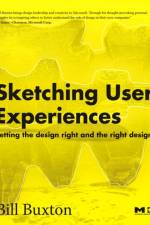
Explains design and design thinking as something distinct that needs to be better understood - by both designers and the people with whom they need to work - in order to achieve success with different products and systems. This title covers sketching and early prototyping design methods suitable for dynamic product capabilities.
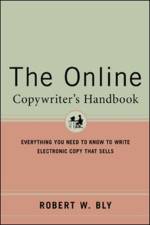
Shows you how to grab attention and drive sales with customer-focused, results-based Web copy. This book applies persuasive techniques to the interactive capabilities and unique possibilities of the Web. It includes insider tips on how to write a copy for: Websites; Home pages; Internet direct mail; Banner ads; Landing pages; and E-zines.
Why program Excel? For solving complex calculations and presenting results, Excel is amazingly complete with every imaginable feature already in place. But programming Excel isn't about adding new features as much as it's about combining existing features to solve particular problems. With a few modifications, you can transform Excel into a task-specific piece of software that will quickly and precisely serve your needs. In other words, Excel is an ideal platform for probably millions of small spreadsheet-based software solutions.The best part is, you can program Excel with no additional tools. A variant of the Visual Basic programming language, VB for Applications (VBA) is built into Excel to facilitate its use as a platform. With VBA, you can create macros and templates, manipulate user interface features such as menus and toolbars, and work with custom user forms or dialog boxes. VBA is relatively easy to use, but if you've never programmed before, Programming Excel with VBA and .NET is a great way to learn a lot very quickly. If you're an experienced Excel user or a Visual Basic programmer, you'll pick up a lot of valuable new tricks. Developers looking forward to .NET development will also find discussion of how the Excel object model works with .NET tools, including Visual Studio Tools for Office (VSTO).This book teaches you how to use Excel VBA by explaining concepts clearly and concisely in plain English, and provides plenty of downloadable samples so you can learn by doing. You'll be exposed to a wide range of tasks most commonly performed with Excel, arranged into chapters according to subject, with those subjects corresponding to one or more Excel objects. With both the samples and important reference information for each object included right in the chapters, instead of tucked away in separate sections, Programming Excel with VBA and .NET covers the entire Excel object library. For those just starting out, it also lays down the basic rules common to all programming languages. With this single-source reference and how-to guide, you'll learn to use the complete range of Excel programming tasks to solve problems, no matter what you're experience level.
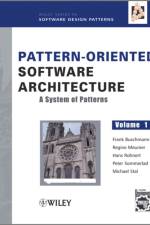
Both a tutorial and a reference guide, this manual presents a number of techniques for solving recurring software design problems in a comprehensive manner which includes many guidelines and constraints regarding practical applications.
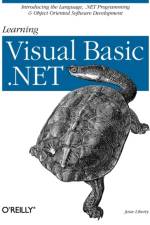
Most Visual Basic .NET books are written for experienced object-oriented programmers, but many programmers jumping on the .NET bandwagon are coming from non-object-oriented languages, such as Visual Basic 6.0 or from script programming, such as JavaScript. These programmers, and those who are adopting VB.NET as their first programming language, have been out of luck when it comes to finding a high-quality introduction to the language that helps them get started.That's why Jesse Liberty, author of the best-selling books Programming C# and Programming ASP.NET, has written an entry-level guide to Visual Basic .NET. Written in a warm and friendly manner, this book assumes no prior programming experience, and provides an easy introduction to Microsoft's most popular .NET language.Learning Visual Basic .NET is a complete introduction to VB.NET and object-oriented programming. This book will help you build a solid foundation in .NET, and show how to apply your skills by using hundreds of examples to help you become productive quickly. Learning Visual Basic .NET introduces fundamentals like Visual Studio .NET, a tool set for building Windows and Web applications. You'll learn about the syntax and structure of the Visual Basic .NET language, including operators, classes and interfaces, structs, arrays, and strings. Liberty then demonstrates how to develop various kinds of applications--including those that work with databases--and web services.By the time you've finished Learning Visual Basic .NET, you'll be ready to move on to a more advanced programming guide that will help you create large-scale web and Windows applications.Whether you have a little object-oriented programming experience or you are new to programming altogether, Visual Basic .NET will set you firmly on your way to mastering the essentials of the VB.NET language.
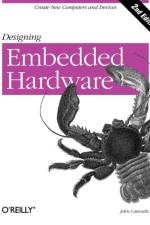
'Designing Embedded Hardware' steers a course between those books dedicated to writing code for particular microprocessors, and those that stress the philosophy of embedded system design without providing any practical information. With real examples, the book also provides a roadmap to the pitfalls and traps to avoid.
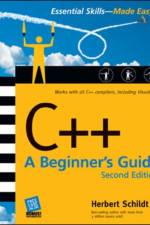
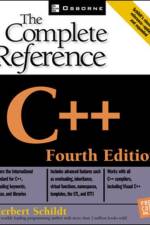
Designed to deliver the single best introduction to C++, this book is optimized for the new programmer.
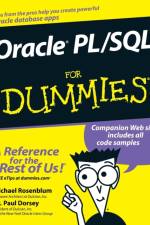
Shows how to integrate SQL and PL/SQL. This book helps you to use fresh features introduced in Oracle 9i and 10g.
He then uses the perspective of ergodic aesthetics to reexamine literary theories of narrative, semiotics, and rhetoric and to explore the implications of applying these theories to materials for which they were not intended.
According to Rosalind Picard, if we want computers to be genuinely intelligent and to interact naturally with us, we must give computers the ability to recognize, understand, even to have and express emotions.
The SUPERMEN "After a rare speech at the National Center for Atmospheric Research in Boulder, Colorado, in 1976, programmers in the audience had suddenly fallen silent when Cray offered to answer questions. He stood there for several minutes, waiting for their queries, but none came.
The key to successful database development is accurate and appropriate modelling of the real-world system that will be placed on the computer. This guide describes two popular modelling methods, the entity-relationship model and the semantic object model.
The notion that "thinking about computing is one of the most exciting things the human mind can do" sets both The Little Schemer (formerly known as The Little LISPer) and its new companion volume, The Seasoned Schemer, apart from other books on LISP. The authors' enthusiasm for their subject is compelling as they present abstract concepts in a humorous and easy-to-grasp fashion. Together, these books will open new doors of thought to anyone who wants to find out what computing is really about. The Little Schemer introduces computing as an extension of arithmetic and algebra; things that everyone studies in grade school and high school. It introduces programs as recursive functions and briefly discusses the limits of what computers can do. The authors use the programming language Scheme, and interesting foods to illustrate these abstract ideas. The Seasoned Schemer informs the reader about additional dimensions of computing: functions as values, change of state, and exceptional cases. The Little LISPer has been a popular introduction to LISP for many years. It had appeared in French and Japanese. The Little Schemer and The Seasoned Schemer are worthy successors and will prove equally popular as textbooks for Scheme courses as well as companion texts for any complete introductory course in Computer Science.
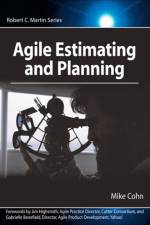
Contains techniques for estimating and planning any agile project. This is the practical guide to estimating and planning agile projects. It discusses the philosophy of agile estimating and planning and shows you how to get the job done, with real-world examples and case studies. It supports agile, semiagile, or iterative process.
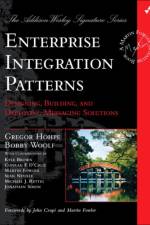
Provides a catalog of sixty-five patterns, with real-world solutions that demonstrate the formidable of messaging and help design effective messaging solutions for an enterprise. This book includes examples covering a variety of different integration technologies, and explores the advantages and limitations of asynchronous messaging architectures.
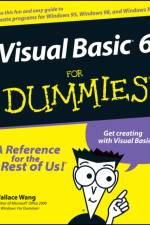
Explaining the popular language in terms that non-programmers can understand. Highlights features and functions new to the latest version of Visual Basic and covers the integration of Visual Basic applications with other tools in the suite. Includes a CD with author-created sample Visual Basic programs and code.
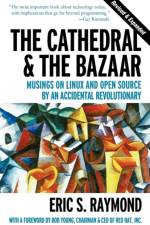
This volume contains the essays, originally published online, that led to Netscape's decision to release their browser as open source, and helped Linux to rock the world of commercial software.
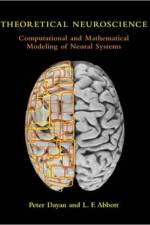
The work reviewed in this book represents the synthesis of two important developments in modelling of complex stochastic phenomena. The book gives a thorough and rigorous mathematical treatment of the underlying ideas, structures, and algorithms.
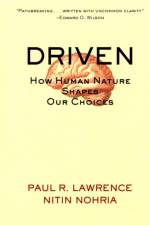
Reveals the way people behave in the workplace. This book aims to bridge the gap between the findings from evolutionary biology and insights about humanity derived from the social sciences.
Directed at intermediate to advanced users, this book delivers full coverage of utilizing C++ with clear instruction that's easy to follow and implement.
Demonstrates that since SQL code may run for 5 to 10 years, and run on different hardware, it must be fast and sound from the start. This book offers SQL best practices and relational theory that force you to focus on strategy rather than specifics.
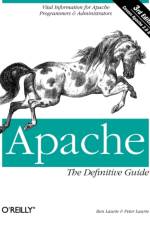
Apache is far and away the most widely used web server platform in the world. This versatile server runs more than half of the world's existing web sites. Apache is both free and rock-solid, running more than 21 million web sites ranging from huge e-commerce operations to corporate intranets and smaller hobby sites.With this new third edition of Apache: The Definitive Guide, web administrators new to Apache will come up to speed quickly, and experienced administrators will find the logically organized, concise reference sections indispensable, and system programmers interested in customizing their servers will rely on the chapters on the API and Apache modules.Updated to cover the changes in Apache's latest release, 2.0, as well as Apache 1.3, this useful guide discusses how to obtain, set up, secure, modify, and troubleshoot the Apache software on both Unix and Windows systems. Dozens of clearly written examples provide the answers to the real-world issues that Apache administrators face everyday. In addition to covering the installation and configuration of mod_perl and Tomcat, the book examines PHP, Cocoon, and other new technologies that are associated with the Apache web server. Additional coverage of security and the Apache 2.0 API make Apache: The Definitive Guide, Third Edition essential documentation for the world's most popular web server.
Abonner på vårt nyhetsbrev og få rabatter og inspirasjon til din neste leseopplevelse.
Ved å abonnere godtar du vår personvernerklæring.