



















Gjør som tusenvis av andre bokelskere
Abonner på vårt nyhetsbrev og få rabatter og inspirasjon til din neste leseopplevelse.
Ved å abonnere godtar du vår personvernerklæring.Du kan når som helst melde deg av våre nyhetsbrev.

How nineteenth-century "e;disciplines of attention"e; anticipated the contemporary concern with mindfulness and being "e;spiritual but not religious"e;Today, we're driven to distraction, our attention overwhelmed by the many demands upon it-most of which emanate from our beeping and blinking digital devices. This may seem like a decidedly twenty-first-century problem, but, as Caleb Smith shows in this elegantly written, meditative work, distraction was also a serious concern in American culture two centuries ago. In Thoreau's Axe, Smith explores the strange, beautiful archives of the nineteenth-century attention revival-from a Protestant minister's warning against frivolous thoughts to Thoreau's reflections on wakefulness at Walden Pond. Smith examines how Americans came to embrace attention, mindfulness, and other ways of being "e;spiritual but not religious,"e; and how older Christian ideas about temptation and spiritual devotion endure in our modern ideas about distraction and attention.Smith explains that nineteenth-century worries over attention developed in response to what were seen as the damaging mental effects of new technologies and economic systems. A "e;wandering mind,"e; once diagnosed, was in need of therapy or rehabilitation. Modeling his text after nineteenth-century books of devotion, Smith offers close readings of twenty-eight short passages about attention. Considering social reformers who designed moral training for the masses, religious leaders who organized Christian revivals, and spiritual seekers like Thoreau who experimented with regimens of simplified living and transcendental mysticism, Smith shows how disciplines of attention became the spiritual exercises of a distracted age.
Triple-Oscar-winning, world-renowned animator - and author of the seminal book The Animator's Survival Kit - Richard Williams' legendary career in the world of animation is brought to the page here for the first time. Written with his wife and collaborator, Imogen Sutton, Adventures in Animation follows the life and career of this pivotal figure in animated features, from the influential moment when, aged five, Williams saw Snow White, right through his career of more than sixty years. Over those decades, Williams created full-length features, short films, title sequences for films and hundreds of commercials - all of which were graced by his characteristically elegant, sinuous lines and magnificent imagination. Williams' place in animation history is assured: he directed the Academy Award-winning 1971 adaptation of A Christmas Carol and perhaps most famously worked as Director of Animation on Who Framed Roger Rabbit, for which he won two Academy Awards. Serving as the linkman between the original creators of the world of Disney (Snow White, Dumbo, The Jungle Book) and the current generation of digital animators (Toy Story, The Incredibles and Ice Age), it is fair to say that his like will not be seen again. Williams' first book, The Animator's Survival Kit, and the masterclasses he ran, saw him pass on his hard-won craft to future generations of animators. In Adventures in Animation, the story of the man behind the images will inspire them all over again, bringing more animators and fans of animation to the life and work of this master of the artform.
Implementation of artificial intelligence (AI) in Radiology is an important topic of discussion. By compiling perspectives from experts from various backgrounds, this book explores the current state of AI efforts in Radiology along with the clinical, financial, technological, and societal perspectives on the role of Radiologists.
Implementation of artificial intelligence (AI) in Radiology is an important topic of discussion. By compiling perspectives from experts from various backgrounds, this book explores the current state of AI efforts in Radiology along with the clinical, financial, technological, and societal perspectives on the role of Radiologists.
System Dynamics covers linearity-based modeling techniques before delving into nonlinear systems. It compares the Bond Graph technique against traditional techniques (Newton's law, Kirchhoff's law, the law of the conservation of energy, and the heat transfer law).
The new approach of brain analysis which may be termed Bioinformatics of the Brain is the main subject of this volume aiming to provide a thorough review on various bioinformatics approaches for analyzing the functioning of the brain and understanding brain diseases.
This book explores the representations of national Asian histories in digital games. Situated at the intersection of regional game studies and historical game studies, this book offers chapters on histories and heritages of Japan, China, Iran, Iraq, Taiwan, South Korea, Indonesia, Singapore, Turkey, and Russia.
The goal of this book is to examine problems, concerns, and solutions for supporting digital twins with Big Data and Artificial Intelligence (AI). The book also explains how to stream real-time big data on an IoT platform using various ways and strategies.
This state-of-the-art handbook provides medical physicists with a comprehensive overview of the field of nuclear medicine.
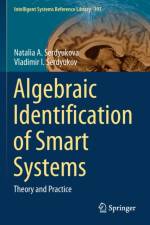
This book is a continuation of our recently published book "Algebraic formalization of smart systems. Maltsev's theory of algebraic systems and the theory of fractals developed by Benoit Mandelbrot, to investigate smart systems in more detail.
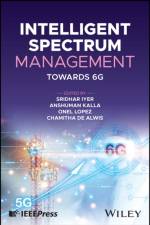
Forward-thinking reference on spectrum sharing and resource management for 5G, B5G, and 6G wireless networks Blockchain and AI-Enabled Intelligent Spectrum Sharing and Infrastructure Management explores various aspects of spectrum sharing and resource management in 5G, beyond 5G, and the envisaged 6G networks. The book offers an in-depth exploration of intelligent and secure sharing of spectrum and resource management in existing and future mobile networks. The book sets the stage by providing an insight to the evolution of mobile networks and highlights the importance of spectrum sharing and resource management in next-generation wireless networks. At the core, the book explores various promising technologies such as cognitive radio, reinforcement learning, deep learning, reconfigurable intelligent surfaces, and blockchain technology towards efficient, intelligent, and secure sharing of spectrum and resource management. Moreover, the book presents dynamic and decentralized resource management techniques, including, network slicing, game theory, and blockchain-enabled approaches. Topics covered include: Spectrum, a limited and scarce resource, and why it must be utilized optimally and transparentlyFuture applications envisioned with 6G, such as digital twins, Industry 5.0, holographic telepresence, and Extended Reality (XR)Challenges when Dynamic Spectrum Management (DSM) is enabled through Machine Learning (ML) techniques, including the complexity of received signals and the difficulty in obtaining accurate network data such as channel state informationReinforcement learning and deep learning assisted spectrum managementSynergy between Artificial Intelligence (AI) and blockchain technology for spectrum managementPrivate networks, including their prospects, architecture, enabling concepts, and techniques for efficient operation In essence, various innovative technologies and approaches that can be leveraged to enhance spectrum utilization and efficiently manage network resources are discussed in Blockchain and AI-Enabled Intelligent Spectrum Sharing and Infrastructure Management. The book is a potential reference for researchers, academics, and professionals in the wireless service provider industry, as well as regulators and officials.
Concepts are how we classify things in the world and organize our knowledge about them. But concepts also lead us astray, driving lazy overgeneralizations and housing unpleasant prejudices. This book draws on the latest scientific research to construct a philosophical theory of how concepts do the job of structuring the way we see the world.
The book begins with exploring the research and innovation in the field of Artificial Intelligence and Information Technologies including secure transaction, monitoring, real time assistance and security for advanced stage learners, researchers and academicians has been presented.
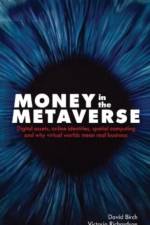
The book sets out the potential for financial services in metaverses and the 'always-on' immersive internet, beginning with a look at the technologies needed to make these metaverses useful for business. It describes the ways in which new markets will function and the digital assets that will be exchanged in transactions between online identities.
Can the law keep up with AI? This book examines liability and regulation for artificial intelligence causing serious physical harm, both now and in the future. While AI moves quickly, regulation follows more slowly - an increasing problem for an evolutionary, fast-paced emerging technology. AI has the potential to save lives, but in doing so will have the potential to take them as well. How do we future-proof law and regulation to incentivise life-saving innovation as safely as possible? This book details how to regulate AI in high-risk civil applications (for example, automated vehicles and medicine), addressing both liability and regulatory structure. It highlights crucial liability themes for technology governance; provides tools to bridge the gap between regulators and technologists; examines jurisdictional approaches to AI regulation in the EU, UK, USA, and Singapore; and ultimately suggests a jurisdiction-agnostic blueprint for regulation.
This book is available as open access through the Bloomsbury Open Access programme and is available on www.bloomsburycollections.com. It is funded by The Austrian Science Fund (FWF). Looking afresh at the Anthropocene, this volume investigates how the capitalist engineering of the earth is not only accelerating, but is doing so in parallel with the expansion of digital technological systems, including so-called 'artificial intelligence'. Against the backdrop of new regimes of data positivism, algorithmic classification and prediction, and even the emergence of unexpected forms of collective intelligence, Incomputable Earth addresses the crucial need to rethink the meaning and inter-relationality of such terms as 'extraction', 'computation', and 'planetarity'. Beyond the theory, it also asks what cognitive and political capacities we need to grapple with the implications of this parallel intensification of datafication and the Anthropocene. Examining new forms of subjectivity and resistance, this timely volume tackles a range of urgent topics, from the racialized politics of climate change to feminist ecologies and planetary financialization. In an original, hybrid format that reflects the interdisciplinary nature of these debates, Incomputable Earth is made up of scholarly essays, striking artistic contributions, and a glossary of emerging concepts in the humanities. Bringing together international scholars, artists, grassroots collectives, and environmental organisations, this is a vital intervention into the past, present, and future of computation and its inescapable impact upon our social, political, and planetary life.This book emerges from the artistic research project "The Incomputable-Art in the Age of Algorithms," instigated at the Institute for Contemporary Art, Graz University of Technology, and funded by the Austrian Science Fund FWF, the Austrian Federal Ministry of Arts, Culture, Civil Service and Sport, and the StyrianProvincial GovernmentDepartment of Economy, Tourism, Science and Research.
Technical theory, key technologies, and practical applications for consortium blockchains, with a solution to the CAP trilemma problem Principles and Applications of Blockchain Systems provides a comprehensive introduction to consortium blockchains, including the physical, network, consensus, and contract layers, covering technical theory, key technologies, and practical applications. Beyond the technical side, this book visually showcases the application potential of consortium blockchains, with information on implementation cases in network management (Multi-Identifier System) and secure storage (Mimic Distributed Storage System). This book thoroughly addresses the CAP trilemma problem for consortium blockchains, a major barrier to scalability, by presenting a novel quantifiable impossibility triangle with a solution. Additionally, optimization techniques in consortium blockchains, such as P2P protocols for future networks and consensus algorithms, are discussed in detail. Written by two highly qualified academics with significant experience in the field, Principles and Applications of Blockchain Systems discusses sample topics such as: Peer-to-peer networks in consortium blockchains, covering P2P network architecture and node discovery, data synchronization, and gossip protocols Basic concepts of distributed consistency, including the SMR model in blockchain systems, assumptions for distributed networks, and the Byzantine general's problem Consensus mechanisms evolution process from voting-based, including PBFT, RPCA, SCP, and CoT; to proof-based including PoW, PoS, and PoX; finally optimized by fusion both voting-based and proof-based, including PoV, PPoV, HotStuff. Types of vulnerability for smart contracts, covering solidity code, EVM execution, and blockchain system layers Historical trend of upgrade from electronic consensus to quantum consensus. With highly comprehensive coverage of the subject, Principles and Applications of Blockchain Systems serves as an ideal textbook for blockchain students and researchers, and a valuable reference book for engineers and business leaders involved in developing real-world blockchain systems.
With many real-world examples, this book shows how to apply the powerful methods of smoothing splines in practice. It covers basic smoothing spline models as well as more advanced models, such as spline smoothing with correlated random errors. It also presents methods for model selection and inference. The author makes the advanced smoothing spl
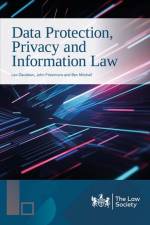
This book is an essential guide for all solicitors and compliance officers working in this specialised and ever-evolving area of law.
Engineering Analysis with SOLIDWORKS Simulation 2024 goes beyond the standard software manual. Its unique approach concurrently introduces you to the SOLIDWORKS Simulation 2024 software and the fundamentals of Finite Element Analysis (FEA) through hands-on exercises.
Prepare for Microsoft Exam AZ-104 and demonstrate your real-world mastery and knowledge of Microsoft Azure administration. Designed for working Azure administrators, this Exam Ref focuses on the critical thinking and decision-making acumen needed for success at the Microsoft Certified Solutions Associate level. Focus on the expertise measured by these objectives: Manage Azure identities and governance Implement and manage storage Deploy and manage Azure compute resources Implement and manage virtual networking Monitor and maintain Azure resources This Microsoft Exam Ref: Organizes its coverage by the Skills Measured list published for the exam Features strategic, what-if scenarios to challenge you Assumes you want to validate and demonstrate your command of managing Microsoft Azure cloud environments About the Exam Exam AZ-104 focuses on knowledge needed to manage Microsoft Entra ID, RBAC, subscriptions, and governance; manage storage accounts and Azure Storage data; configure Azure files and blob storage; configure VMs for high availability and scalability; automate VM deployment and configuration; create and configure VMs, containers, and Web Apps; implement, manage, secure, monitor, and troubleshoot virtual networking; configure name resolution and load balancing; integrate on-premises networks; monitor resources with Azure Monitor; implement backup and recovery. About Microsoft Certification Passing this exam fulfills your requirements for the Microsoft Certified: Azure Administrator Associate credential, demonstrating your readiness to implement, manage, and monitor identity, governance, storage, compute, and virtual networks in a cloud environment, and to provision, size, monitor, and adjust resources as appropriate. See full details at: microsoft.com/learn
Abonner på vårt nyhetsbrev og få rabatter og inspirasjon til din neste leseopplevelse.
Ved å abonnere godtar du vår personvernerklæring.