







Gjør som tusenvis av andre bokelskere
Abonner på vårt nyhetsbrev og få rabatter og inspirasjon til din neste leseopplevelse.
Ved å abonnere godtar du vår personvernerklæring.Du kan når som helst melde deg av våre nyhetsbrev.

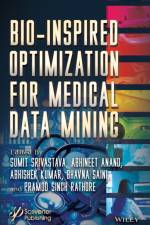
Bio-Inspired Optimization for Medical Data is a groundbreaking book that delves into the convergence of nature's ingenious algorithms and cutting-edge healthcare technology. Through a comprehensive exploration of state-of-the-art algorithms and practical case studies, readers gain unparalleled insights into optimizing medical data processing, enabling more precise diagnosis, optimizing treatment plans, and ultimately advancing the field of healthcare. Organized into 15 chapters, readers learn about the theoretical foundation of pragmatic implementation strategies and actionable advice. In addition, it addresses current developments in molecular subtyping and how they can enhance clinical care. By bridging the gap between cutting-edge technology and critical healthcare challenges, this book is a pivotal contribution, providing a roadmap for leveraging nature-inspired algorithms. This is an indispensable resource that will drive significant changes in the healthcare sector.
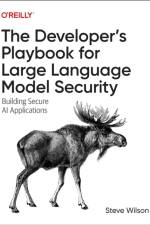
Large language models (LLMs) are not just shaping the trajectory of AI, they're also unveiling a new era of security challenges. This practical book takes you straight to the heart of these threats. Author Steve Wilson, chief product officer at Exabeam, focuses exclusively on LLMs, eschewing generalized AI security to delve into the unique characteristics and vulnerabilities inherent in these models. Complete with collective wisdom gained from the creation of the OWASP Top 10 for LLMs list--a feat accomplished by more than 400 industry experts--this guide delivers real-world guidance and practical strategies to help developers and security teams grapple with the realities of LLM applications. Whether you're architecting a new application or adding AI features to an existing one, this book is your go-to resource for mastering the security landscape of the next frontier in AI. You'll learn: Why LLMs present unique security challenges How to navigate the many risk conditions associated with using LLM technology The threat landscape pertaining to LLMs and the critical trust boundaries that must be maintained How to identify the top risks and vulnerabilities associated with LLMs Methods for deploying defenses to protect against attacks on top vulnerabilities Ways to actively manage critical trust boundaries on your systems to ensure secure execution and risk minimization
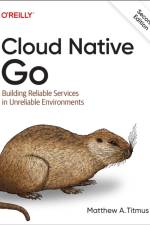
Learn how to use Go's strengths to develop services that are scalable and resilient even in an unpredictable environment. With this book's expanded second edition, Go developers will explore the composition and construction of cloud native applications, from lower-level Go features and mid-level patterns to high-level architectural considerations. Each chapter in this new edition builds on the lessons of the previous chapter, taking intermediate to advanced developers through Go to construct a simple but fully featured distributed key-value store. You'll learn about Go generics, dependability and reliability, memory leaks, and message-oriented middleware. New chapters on security and distributed state delve into critical aspects of developing secure distributed cloud native applications. With this book you will: Learn the features that make Go an ideal language for building cloud native software Understand how Go solves the challenges of designing scalable distributed services Design and implement a reliable cloud native service by leveraging Go's lower-level features such as channels and goroutines Apply patterns, abstractions, and tooling to effectively build and manage complex distributed systems Overcome stumbling blocks when using Go to build and manage a cloud native service
Looking to leverage artificial intelligence in your products? This comprehensive book provides a clear and actionable framework to help product managers build AI-powered products that meet the needs of users and drive business growth. Author Marily Nika guides you through the most popular use cases that AI can solve and describes the technologies you can leverage for each use case. With this book, you'll quickly learn the tools and skill set you need throughout the AI product life cycle, and you'll understand how to create effective roadmaps for the products you're building. By the end of the book, AI product managers will be well-versed in AI and machine learning basics and will learn how to make the right trade-offs, identify the right use cases, and work effectively with research and engineering teams. This guide will help you: Build a framework that identifies opportunities for leveraging AI in products Understand the use cases that AI can help you solve Create a team with the skills and expertise to execute AI-powered products Learn best practices for measuring the success of AI-powered products Understand the ethical and legal considerations that come with building AI products Collaborate with scientists, engineers, and key stakeholders
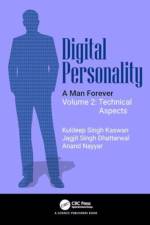
Digital Personality has attracted the interest of academics from a wide range of disciplines, including psychology, human-computer interaction, and character modeling. This book provides an overview of the character dimensions and how technology is aiding this area of study.
By enabling the conversion of traditional manufacturing systems into contemporary digitalized ones, IoT adoption in manufacturing creates huge economic prospects through reshaping industries. But as the use of IoT grows, the amount of created data rises, turning industrial data into Industrial Big Data.
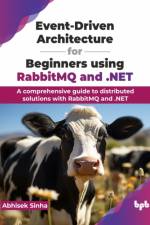
The key to event-driven architecture: A beginner's journey with RabbitMQ and .NET¿DESCRIPTION By using .NET and RabbitMQ, developers can take advantage of the capabilities of both technologies to create event-driven systems that are optimized for performance and maintainability. This book aims to provide a comprehensive guide for individuals who wish to learn the implementation of event-driven architecture using .NET and RabbitMQ, from understanding the core concepts to implementing practical solutions.It covers the fundamental concepts of event-driven architecture, including the publish-subscribe pattern and message queues, as well as practical implementation details such as setting up RabbitMQ and using .NET to build event-driven systems. The book also covers advanced topics such as scalability, reliability, and security, and includes real-world case studies to illustrate the challenges and solutions involved in implementing event-driven architecture.Throughout the book, readers will learn about the concepts, tools, and techniques needed to design, implement and maintain an event-driven system using .NET and RabbitMQ. Additionally, readers will also get an understanding of how to address the challenges that arise while implementing such systems and best practices to overcome them.WHAT YOU WILL LEARN¿ Architect robust event-driven solutions using RabbitMQ and .NET.¿ Implement scalable and efficient distributed systems with confidence.¿ Apply best practices for seamless integration and software development.¿ Navigate complex decision-making processes in distributed solution strategies.¿ Enhance expertise in orchestrating solutions for diverse software development roles.WHO THIS BOOK IS FORThis guide is meticulously crafted to cater to a diverse audience, encompassing solution architects, integration architects, consultants, developers, advisors, CTOs, and other decision-makers.
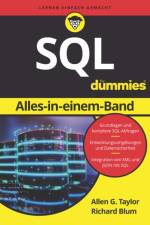
In diesem Buch erfahren Sie alles, was es zu SQL zu wissen gibt. Angefangen mit den Grundlagen, wie Sie Datenbanken erstellen, Daten ordnen und abfragen, lernen Sie auch Entwicklungsumgebungen für die Datenbankenprogrammierung kennen. Auch das Thema Datensicherheit kommt nicht zu kurz: So lernen Sie, wie Sie Ihre Daten und Datenbanken schützen und wie Sie typische Fehler vermeiden. Sie erfahren außerdem, wie Sie andere Sprachen, wie XML und JSON, mit SQL integrieren und wie Sie die Leistung Ihrer Datenbank analysieren und optimieren. Werden Sie zum SQL-Profi.
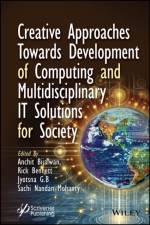
With the fast-moving transformation of technology, our world is seeing the vast development of creative approaches to what we can do with computing and multidisciplinary IT solutions. The pages of this 20-chapter informative text emphasize insights into the future of new technologies and the discovery of innovative approaches. It covers emerging next-generation computing research, developments of computing, and multidisciplinary ICT solutions. This book covers all the niche areas that you can think of regarding creative technological advancements. Read about the seven themes of emerging AI-based research in next-generation computing, like cloud computing, cyber security, and gaming. Continue to learn about the role of artificial intelligence and how it could bring the entertainment gaming industry to a whole new level. Furthermore, gain insights into the future of games inspired by new technologies and the discovery of creative and innovative approaches.
The proposed book entitled Industry 6.0: Technology, Practices, Challenges and Applications determine the ways to create a paradigm shift from conventional to intelligent companies by integrating Industry 6.0 technology with data, identifies limitations, pitfalls, and open research questions in industry 6.0.
Make your next Amazon Web Services deployment secure and private Dive into the world of cloud security with Securing the AWS Cloud: A Guide for Learning to Secure AWS Infrastructure by Brandon Carroll, a comprehensive guide crafted for those eager to fortify their Amazon Web Services (AWS) deployments. Whether you are starting from scratch or looking to enhance an existing setup, this book serves as your essential roadmap to understanding and implementing robust security measures in the AWS environment. The author, a seasoned infrastructure security expert, begins with the basics of cybersecurity and gradually introduces more complex AWS-specific security practices. His structured approach helps you use your existing knowledge to effectively secure your AWS cloud. The book navigates through a series of real-world challenges and provides actionable solutions, equipping you with the skills needed to tackle security issues head-on. You'll: Learn foundational security practices to safeguard your AWS environment right from the start. Master advanced techniques for identity management, threat detection, and data security within AWS. Develop resilience and recovery strategies to maintain robust security and ensure business continuity. Securing the AWS Cloud is the ideal resource for IT professionals, system administrators, and anyone aspiring to specialize in cloud security. It's tailor-made to enhance your ability to deploy secure, reliable, and private AWS solutions consistently. If you're ready to take your AWS security skills to the next level, don't wait. Buy your copy today and start building a safer cloud environment!
Unlock the power of generative AI to transform your enterprise B2B sales and marketing strategies In AI-Driven Value Management: How AI Can Help Bridge the Gap Across the Enterprise to Achieve Customer Success, authors Craig LeGrande and Venkataraman Lakshminarayanan reveal how artificial intelligence can revolutionize B2B value management. This book lays out a first-ever strategic blueprint for cost-effectively scaling value management programs. Value management is the art and science of orchestrating all the business functions in your company to envision and create exceptional value for your customers - and in the process enhance your pipeline, revenue and renewals. It's designed for business leaders who are looking to harness AI to gain a competitive edge and boost pipeline, revenue and expansions, effectively solving the problem of expensive scaling in business-to-business sales and marketing. Dive into the core of AI-empowered Value Management (AI-VM) through a detailed exploration of a comprehensive AI-driven value management blueprint. This guide uses real-world success stories and cutting edge AI technology solutions to illustrate how businesses can combine people, processes, and technology to execute value management at scale, enhancing efficiency and effectiveness. In this book, you'll: Learn from the successes and strategies of leading companies like Salesforce, ServiceNow, and Amazon Web Services Discover the AI-VM Blueprint, an integrated framework that lays out strategic, operational, and technological guidelines for deploying AI-driven value management Equip your team with actionable insights and tools to innovate and implement AI in your sales, marketing and customer success strategies effectively AI-Driven Value Management is essential reading for B2B professionals eager to leverage AI for business growth. If you are a business leader, manager, or professional aiming to integrate AI into your value management practices, this book will provide you with the knowledge and tools you need.
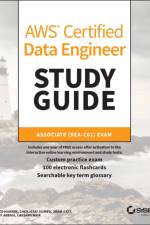
Take the next step in your career by expanding and validating your data engineering skills on the AWS cloud! AWS Certified Data Engineer Study Guide: Associate (DEA-C01) Exam helps you prepare for performing in a data engineering role. This NEW certification validates your ability to implement data pipelines and to monitor, troubleshoot, and optimize cost and performance issues in accordance with best practices. The book focuses on the following concepts: Data Ingestion and Transformation Data Store Management Data Operations and Support Data Security and Governance After reading the Study Guide and working through the exercises and practice questions, you should be able to complete such tasks as ingesting and transforming data, and orchestrating data pipelines while applying programming concepts; choosing an optimal data store, designing data models, cataloging data schemas, and managing data lifecycles; operationalizing, maintaining, and monitoring data pipelines; analyzing data and ensuring data quality; implementing appropriate authentication, authorization, data encryption, privacy, and governance; and enabling logging. You'll also have access to Sybex's superior online interactive learning environment and test bank, including hundreds of practice test questions, electronic flashcards, and a glossary of key terms.
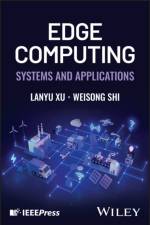
Understand the computing technology that will power a connected future The explosive growth of the Internet of Things (IoT) in recent years has revolutionized virtually every area of technology. It has also driven a drastically increased demand for computing power, as traditional cloud computing proved insufficient in terms of bandwidth, latency, and privacy. Edge computing, in which data is processed at the edge of the network, closer to where it's generated, has emerged as an alternative which meets the new data needs of an increasingly connected world. Edge Computing offers a thorough but accessible overview of this cutting-edge technology. Beginning with the fundamentals of edge computing, including its history, key characteristics, and use cases, it describes the architecture and infrastructure of edge computing and the hardware that enables it. The book also explores edge intelligence, where artificial intelligence is integrated into edge computing to enable smaller, faster, and more autonomous decision-making. The result is an essential tool for any researcher looking to understand this increasingly ubiquitous method for processing data. Edge Computing readers will also find: Real-world applications and case studies drawn from industries including healthcare and urban development Detailed discussion of topics including latency, security, privacy, and scalability A concluding summary of key findings and a look forward at an evolving computing landscape Edge Computing is ideal for students, professionals, and enthusiasts looking to understand one of technology's most exciting new paradigms.
This Cambridge Companion covers the field of Religion and AI comprehensively and provides an authoritative guide to the field. It introduces readers to topics on which there is already a good amount of literature, such as transhumanism, as well as new and emerging fields such as computer simulations of religion.
This Cambridge Companion covers the field of Religion and AI comprehensively and provides an authoritative guide to the field. It introduces readers to topics on which there is already a good amount of literature, such as transhumanism, as well as new and emerging fields such as computer simulations of religion.
The text provides a comprehensive study of the application of advanced artificial intelligence in next-generation wireless communications with a focus on theory, standardization, and core development. It further highlights artificial intelligence-enabled intelligent architecture for 6G networks.
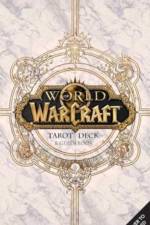
Guide your tarot practice with this beautiful tarot deck and guidebook filled with original, never-before-seen artwork inspired by the massively popular World of Warcraft online role-playing game.
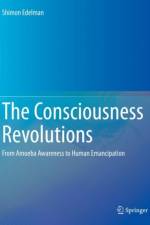
This book is about all things consciousness, great and small. It starts by pointing to the key characteristic of consciousness, without realizing which it cannot be understood: like everything else about the mind, it is fundamentally a kind of computation. Among many other matters, this explains: how it is that we share some aspects of consciousness with bacteria; how it can arise in artificial machines and not just living ones; how the empty cocoon of the self that it spins ends up pretending to be the butterfly; and how consciousness dooms this virtual butterfly to the splendor and the suffering of being awake and aware. Unlike most other books on consciousness, this one includes a discussion of some possible ways whereby we, pinned like butterflies by our species¿ history and socioeconomic circumstances, can awake to our collective predicament and join forces to do something about it. It should be of interest to all readers who care about the nature of our lived experience ¿ andabout our survival, which depends on developing critical consciousness of our dire situation and the social dynamics that shape it.
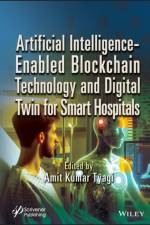
Artificial Intelligence-Enabled Blockchain Technology and Digital Twin for Smart Hospitals provides fundamental information on blockchain and digital twin as effective solutions in smart hospitals. Digital Twin technology enables the creation of real-time virtual replicas of hospital assets and patients, enhancing predictive maintenance, operational efficiency, and patient care. Blockchain technology provides a secure and transparent platform for managing and sharing sensitive data, such as medical records and pharmaceutical supply chains. By combining these technologies, smart hospitals can ensure data security, interoperability, and streamlined operations while providing patient-centered care. The book also explores the impact of collected medical data from real-time systems in smart hospitals, and by making it accessible to all doctors via a smartphone or mobile device.
Comprehensive guide to hybrid communication systems using visible light communication, radio over fiber, and auto channel switching technologies Hybrid Communication Systems for Future 6G and Beyond explores the future of wireless communication and discusses how we can create more efficient and reliable ways to communicate by unlocking the potential of three specific technologies: visible light communication (VLC), radio over fiber (RoF) technology, and auto channel switching. This book begins by exploring the potential of VLC technology, which is currently considered the best alternative to wireless communication. It then moves on to describe how RoF technology can provide a powerful backhaul solution for VLC. Later chapters cover auto channel switching and how it can facilitate data traffic sharing between WiFi and LiFi technologies. Case studies of successful hybrid communication system implementations are included throughout the text to showcase real-world applications and aid in reader comprehension. Written by a highly qualified author with experience in both academia and industry, Hybrid Communication Systems for Future 6G and Beyond includes information on: The evolution, advantages, and disadvantages of hybrid systems, as well as their current limitations and potential solutions to these limitations RoF modulation techniques, including direct and external modulation, and RoF configuration, including intermediate frequency over fiber, baseband over fiber, and millimeter-wave signal generation RoF system level analysis, covering encoding formats, PIN and APD photodiodes, and various experiments and simulations Hybrid communication technology that incorporates wireless Wi-Fi and Visible Light Communication (VLC) such as Li-Fi, to support the upcoming 6G and beyond high-speed communication networks Hybrid Communication Systems for Future 6G and Beyond is an invaluable resource for students, researchers, and professionals in the fields of telecommunications and electronic networking who are interested in designing and implementing hybrid communication systems.
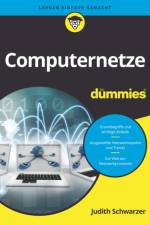
Computernetzwerke sind grundlegend für Kommunikation, Datenaustausch und die gemeinsame Nutzung von Ressourcen. Wie genau das funktioniert, wie Computernetzwerke aufgebaut werden und wie Sie Netzwerkfehler beheben, erfahren Sie in diesem Buch. Judith Schwarzer führt Sie über bekannte Anwendungen an grundsätzliche Modelle und Regelwerke heran, welche die Basis für die Datenkommunikation bilden. Neben den Grundlagen werden auch weiterführende Themen behandelt, die für das tiefgreifende Verständnis der Zusammenhänge nötig sind. Dabei liegt der Fokus immer auf der praktischen Anwendung - mit vielen Beispielen aus aktuellen Netzwerkstrukturen.
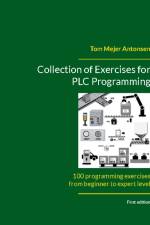
This book contains more than 100 exercises for learning how to program programmable logic controllers (PLCs). At the same time, the exercises provide knowledge of how equipment, machines and small plants can be automated.There are exercises at beginner level with logic, counters, and timers. Then there are exercises with ARRAY, STRUCT, STRING, as well as exercises with mathematics, functions, function blocks, program design, sorting, FIFO, and data collection. Some exercises include selecting sensors, sequence techniques, manual/automatic operation, and data communication to a robot, frequency converter, or vision camera.The exercises start with easy ones and get harder as you go along. You can begin with simple exercises and gradually move on to more challenging ones that require a range of methods and programming skills. The exercises are based on relevant, real-world automation problems.The exercises can be solved in all types of PLCs, regardless of brand, hardware, or model. There are enough exercises for at least 400 hours of homework!The book is designed for use in educational programs or training that include PLC programming, such as automation technician, electrician, automation engineer, or mechatronics engineer. Of course, the exercises can also be used for other educational programs that teach basic programming or automation.The author is an experienced engineer and senior lecturer with over 30 years of experience in software development. He has been teaching PLC programming at the Dania Academy in Denmark for more than seven years.The author has published several books and sold more than 10,000 copies.
Abonner på vårt nyhetsbrev og få rabatter og inspirasjon til din neste leseopplevelse.
Ved å abonnere godtar du vår personvernerklæring.