














Gjør som tusenvis av andre bokelskere
Abonner på vårt nyhetsbrev og få rabatter og inspirasjon til din neste leseopplevelse.
Ved å abonnere godtar du vår personvernerklæring.Du kan når som helst melde deg av våre nyhetsbrev.

The book: "PACKET TRACER FOR YOUNG ADVANCED ADMINS" is a collection of scenarios and network simulations for users who already have at least basic knowledge of computer networks and experience in the work associated with the administration of basic devices, as well as management of network architecture.
The book: "PACKET TRACER FOR YOUNG INTERMEDIATE ADMINS" is designed for people who want to expand their skills and knowledge in the field of managing LAN and WAN networks.
The book: "PACKET TRACER FOR YOUNG BEGINNING ADMINS" provides advice for people who want to learn about the operation of networks and the hardware that makes up today's network architecture. Beginners will learn how to download the simulator software and how to start working with it.
Take a deep dive into the making of Ultraman: Rising with this official comprehensive, lavishly illustrated coffee-table book, featuring exclusive imagery and commentary from the director and co-director.
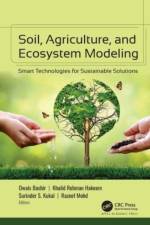
Discusses soil, agriculture, and ecosystem modeling using artificial intelligence technologies for fostering smart sustainable agricultural practices. It provides insight into sustainable agriculture, crop protection and management, soil carbon sequestration, and ecology preservation.
The best-selling author of the Baby Loves Science series levels up with this playful STEM picture book introducing kids–and grown-ups–to the robotics world.Do you want to know a secret? Sometimes grown-ups need YOU to explain things to THEM. Like robotics!In this tongue-in-cheek guide, an in-the-know narrator instructs kid readers in the fine art of explaining robotics to a grown-up. Both children and their adults learn:what makes a robot a robot, who designs and builds robots, and how robots work on their own to get a job done. Fun and fact-filled, the How to Explain Science series will empower kid experts to explore complex scientific concepts with any grown-up who will listen.
This book uses practical lessons learned in applying real-life concepts and tools to help security leaders and their teams craft and implement strategies. These projects deal with a variety of use cases and data types.
The most common form of severe dementia, Alzheimer's disease (AD), is a cumulative neurological disorder.
In the ever-accelerating tapestry of our digital age, the symbiotic relationship between computational intelligence and cyber security has become the linchpin of progress.
In the rapidly evolving landscape of scientific and technological advancements, the "Prospects of Science, Technology, and Applications: A Compendium of Symposium".
This book explores the transformative potential of the ChatGPT tool within education, shedding light on the opportunities that arise through the integration of the ChatGPT tool into various aspects of the learning process.
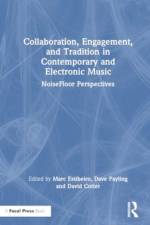
Collaboration, Engagement, and Tradition in Contemporary and Electronic Music offers insights into practices at the forefront of modern music making and is built on a rich collection of concerts and talks, representing over a decade of artistic insight and creative practice showcased at the annual NoiseFloor event.
Collaboration, Engagement, and Tradition in Contemporary and Electronic Music offers insights into practices at the forefront of modern music making and is built on a rich collection of concerts and talks, representing over a decade of artistic insight and creative practice showcased at the annual NoiseFloor event.
This book provides a comprehensive account of Croatian animation history, as well as an analysis of background factors such as political and social circumstances and cultural heritage that influenced the great international success of Croatian animators between the 1960s and 1980s.
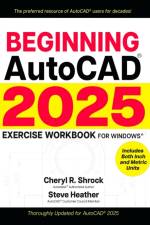
For decades, AutoCAD(R) students, instructors, and professionals have relied on the Exercise Workbook series to develop and hone their use of this exceptionally versatile program. Whether you are an AutoCAD novice, seeking to improve 2D drawing capabilities, or simply looking for a top-notch reference with the very latest updates from Autodesk(R), the bestselling Beginning AutoCAD(R) 2025 Exercise Workbook is the perfect choice. With clear explanations, step-by-step instructions, inside tips, and numerous exercises, AutoCAD experts Shrock and Heather help users make real progress in their drawing capabilities. To quick-start working with drawing commands, users can download preset drawing templates from the provided link, or by visiting Industrial Press's print or eBook website product pages. The new AutoCAD 2025 software builds on the features of previous releases. Notable changes include a smarter help menu and useful revisions to the Hatch tool, making it easier to fill in AutoCAD drawings. As ever, this new version enables efficient creation, precise revision, and collaborative sharing of layouts for myriad projects. New and/or Improved Features in Beginning AutoCAD 2025: Autodesk Assistant--This artificial intelligence (AI) enhanced help system can help answer AutoCAD-related questions. If the Autodesk Assistant cannot provide the needed answer, it links the user to other sources, including a live Autodesk agent. (Included in Lesson 1) Hatch Improvements--The Hatch tool has been enhanced to enable more efficient placement of a hatch pattern without the previous requirement of a closed boundary. (Included in Lesson 15) Global AutoCAD 2025 Updates--New illustrations, detailed explanations, and step-by-step instructions throughout this Exercise Workbook reflect the latest AutoCAD tools, dialog boxes, and key elements.
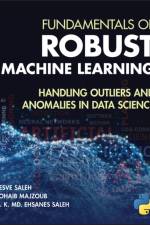
An essential guide for tackling outliers and anomalies in machine learning and data science. In recent years, machine learning (ML) has transformed virtually every area of research and technology, becoming one of the key tools for data scientists. Robust machine learning is a new approach to handling outliers in datasets, which is an often-overlooked aspect of data science. Ignoring outliers can lead to bad business decisions, wrong medical diagnoses, reaching the wrong conclusions or incorrectly assessing feature importance, just to name a few. Fundamentals of Robust Machine Learning offers a thorough but accessible overview of this subject by focusing on the how to properly handle outliers and anomalies in datasets. There are two main approaches described in the book: using outlier-tolerant ML tools, or removing outliers before using standard tools. Balancing theoretical foundations with practical Python code, it provides all the necessary skills to enhance the accuracy, stability and reliability of ML models. Fundamentals of Robust Machine Learning readers will also find: A blend of robust statistics and machine learning principles Detailed discussion of a wide range of robust machine learning methodologies, from robust clustering, regression and classification, to neural networks and anomaly detection Python code with immediate application to data science problems Fundamentals of Robust Machine Learning is ideal for undergraduate or graduate students in data science, machine learning, and related fields, as well as for professionals in the field looking to enhance their understanding of building models in the presence of outliers.
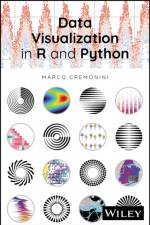
Communicate the data that is powering our changing world with this essential text The advent of machine learning and neural networks in recent years, along with other technologies under the broader umbrella of 'artificial intelligence, ' has produced an explosion in Data Science research and applications. Data Visualization, which combines the technical knowledge of how to work with data and the visual and communication skills required to present it, is an integral part of this subject. The expansion of Data Science is already leading to greater demand for new approaches to Data Visualization, a process that promises only to grow. Data Visualization: Graphics, Dashboards, and Maps with R, Python, and Open Data offers a thorough overview of the key dimensions of this subject. Beginning with the fundamentals of data visualization with Python and R, two key environments for data science, the book proceeds to lay out a range of tools for data visualization and their applications in web dashboards, data science environments, graphics, maps, and more. With an eye towards remarkable recent progress in open-source systems and tools, this book offers a cutting-edge introduction to this rapidly growing area of research and technological development. Data Visualization readers will also find: Coverage suitable for anyone with a foundational knowledge of R and Python Detailed treatment of tools including the Ggplot2, Seaborn, and Altair libraries, Plotly/Dash, Shiny, and others Case studies accompanying each chapter, with full explanations for data operations and logic for each, based on Open Data from many different sources and of different formats Data Visualization is ideal for any student or professional looking to understand the working principles of this key field.
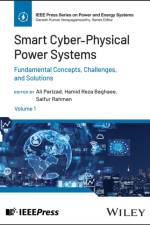
Authoritative and highly comprehensive guide on how emerging technologies can address various challenges in different sectors of smart cyber-physical power systems Smart Cyber-Physical Power Systems explores the transformative role of emerging technologies in addressing the multifaceted challenges within smart cyber-physical power systems. Employing cutting-edge techniques through artificial intelligence (AI), machine learning (ML), big data, blockchain, information theory, quantum computing, IoT, and beyond, this book offers insights into the integration, operation, and optimization of modern power systems, from design of distributed energy resources to stability, reliability, cybersecurity and control. To aid in reader comprehension, hundreds of figures and tables are included throughout. This book begins with an overview of cyber-physical power systems, including fundamentals, challenges, and solutions. It then moves on to explain the basic structure of traditional and smart cyber-physical power systems, their modeling, architecture, and other preliminaries, and how information flow has changed power system structures and presented modern power systems with new challenges. Diving deeper, further chapters meticulously discuss specific applications and case studies. Topics include the operation and control of microgrids, enhancing energy efficiency in smart buildings through IoT integration, and innovative home energy management systems powered by artificial neural networks. The book also ventures into cutting-edge research such as the application of deep learning algorithms for solving optimal power flow problems and the challenges in active distribution networks. With contributions from highly qualified members of the field, Smart Cyber-Physical Power Systems also discusses topics including: Innovative Energy Management and Smart Grids: Chapters cover a range of topics from global demand response strategies to the intricacies of smart city energy infrastructure as a cyber-physical system of systems, managing interconnected microgrid systems, integration of Internet of Energy and smart building technologies as well as the pivotal role of electric vehicles in modern energy ecosystems. Resilience and Security in Power Systems: Discussions on the resilience, reliability, and security of cyber-physical power systems, including cutting-edge solutions for cyber-resiliency, cyber-attack detection, anomaly mitigation, and privacy-preserving measures in modern power systems. Advanced Applications of AI and Machine Learning: Explore the application data science, artificial intelligence, machine learning and quantum computing in optimizing power system operations, solving optimal power flow, addressing protection challenges, enhancing energy trading, and forecasting with chapters dedicated to emerging technologies such as information theory, quantum computing, digital twins and reinforcement learning. Future Trends and Innovations: Delve into emerging technologies and future trends, including the transformative potential of augmented reality (AR), virtual reality (VR), and the Metaverse in modern power systems. Explore the role of blockchain in energy trading, the impact of advanced communications technology, and how development and embedded systems, DevOps, MLOps, and edge computing are revolutionizing the design, operation, and engagement with power systems. Smart Cyber-Physical Power Systems is an ideal resource on the subject for professors, researchers, and graduate students in electrical power engineering, smart grids, and energy fields, as well as professionals in R&D departments of companies and industries related to energy, smart homes/cities, and renewable energy resources. Welcome to the exploration of smart cyber-physical power systems (CPPSs), where challenges are met with innovative solutions, and the future of energy is shaped by the paradigms of AI/ML, big data, blockchain, IoT, quantum computing, information theory, edge computing, Metaverse, DevOps, and more.
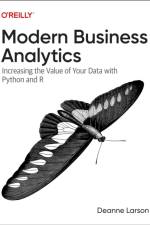
Deriving business value from analytics is a challenging process. Turning data into information requires a business analyst who is adept at multiple technologies including databases, programming tools, and commercial analytics tools. This practical guide shows programmers who understand analysis concepts how to build the skills necessary to achieve business value. Author Deanne Larson, data science practitioner and academic, helps you bridge the technical and business worlds to meet these requirements. You'll focus on developing these skills with R and Python using real-world examples. You'll also learn how to leverage methodologies for successful delivery. Learning methodology combined with open source tools is key to delivering successful business analytics and value. This book shows you how to: Apply business analytics methodologies to achieve successful results Cleanse and transform data using R and Python Use R and Python to complete exploratory data analysis Create predictive models to solve business problems in R and Python Use Python, R, and business analytics tools to handle large volumes of data Commit code to GitHub to collaborate with data engineers and data scientists Measure success in business analytics
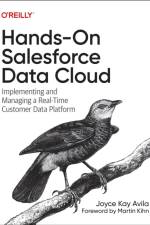
Learn how to implement and manage a modern customer data platform (CDP) through the Salesforce Data Cloud. This practical book provides a comprehensive overview that shows architects, administrators, developers, data engineers, and marketers how to ingest, store, and manage real-time customer data with the Data Cloud. Author Joyce Kay Avila demonstrates how to use Salesforce's native connectors, canonical data model, and built-in trust layer to accelerate your time to value. You'll learn how to leverage Salesforce's no-code / low-code functionality to expertly build a Data Cloud foundation that allows you to utilize AI to its fullest, not only within the Salesforce platform but also with third-party machine learning services like AWS SageMaker and Google Vertex. This book will help you: Develop a plan to execute a CDP project effectively and efficiently Connect Data Cloud to external data sources and build out a Customer 360 Data Model Leverage data sharing capabilities with Snowflake, BigQuery, Databricks, and Azure Use Salesforce Data Cloud capabilities for identity resolution and segmentation Create calculated, streaming, visualization, and predictive insights Use Data Graphs to power Salesforce Einstein capabilities Learn Data Cloud best practices for all phases of the development lifecycle
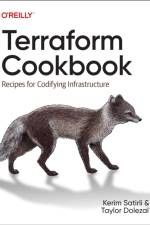
Cloud services and SaaS software permeate every company's IT landscape, requiring a shift from manually provisioned services to a more structured approach, with codification at its core. Terraform provides tools to manage the lifecycle of your IT landscape across thousands of different cloud providers and SaaS platforms. By defining your infrastructure as code you can safely and predictably make changes, modularize crucial building blocks, and create reusable service components. Each recipe in this cookbook addresses a specific problem and prefaces the solution with detailed insights into the "how" and "why". If you're just starting with Terraform and codified infrastructure, this book will help you create a solid foundation, on which you can build for years to come. If you're an advanced user, this guide will help you reaffirm your knowledge and take it to the next level, as you challenge yourself with more complex infrastructure, spread across multiple providers. Recipes include: Strategies on how to use Terraform with Version Control Systems Validation and testing patterns for Terraform-managed infrastructure Methods for importing pre-existing resources Transforming infrastructure services into reusable components Integrating Terraform with other HashiCorp tools Deploying Containerized Workloads
Abonner på vårt nyhetsbrev og få rabatter og inspirasjon til din neste leseopplevelse.
Ved å abonnere godtar du vår personvernerklæring.