







Gjør som tusenvis av andre bokelskere
Abonner på vårt nyhetsbrev og få rabatter og inspirasjon til din neste leseopplevelse.
Ved å abonnere godtar du vår personvernerklæring.Du kan når som helst melde deg av våre nyhetsbrev.

This book explores the representations of Central and Eastern European histories in digital games.
Artificial Intelligence Applications in K-12 offers authentic instances of how AI systems can be integrated into K-12 education today.
Artificial Intelligence Applications in Higher Education offers direct examples of how artificial intelligence systems can be applied in today's higher education contexts.
Artificial Intelligence Applications in K-12 offers authentic instances of how AI systems can be integrated into K-12 education today.
Artificial Intelligence Applications in Higher Education offers direct examples of how artificial intelligence systems can be applied in today's higher education contexts.
This text provides readers with the information needed to understand robotic safety. It includes information about standards and regulations, as well as details of how to effectively use hardware devices (such as light curtains, pressure pads, and new multi-channel lidar sensors), and software algorithms to apply motion control restrictions.
This comprehensive book is aimed at undergraduate and graduate students pursuing courses in computer science and artificial intelligence. It comprises detailed descriptions of a variety of search methods with examples and illustrations. It begins with simple approaches and progresses to more complex algorithms applied to problems.
Unexpected ways that individuals adapt technology to reclaim what matters to them, from working through conflict with smart lights to celebrating gender transition with selfies. We have been warned about the psychological perils of technology: distraction, difficulty empathizing, and loss of the ability (or desire) to carry on a conversation. But our devices and data are woven into our lives. We can't simply reject them. Instead, Margaret Morris argues, we need to adapt technology creatively to our needs and values. In Left to Our Own Devices, Morris offers examples of individuals applying technologies in unexpected ways--uses that go beyond those intended by developers and designers. Morris examines these kinds of personalized life hacks, chronicling the ways that people have adapted technology to strengthen social connection, enhance well-being, and affirm identity.Morris, a clinical psychologist and app creator, shows how people really use technology, drawing on interviews she has conducted as well as computer science and psychology research. She describes how a couple used smart lights to work through conflict; how a woman persuaded herself to eat healthier foods when her photographs of salads garnered "likes" on social media; how a trans woman celebrated her transition with selfies; and how, through augmented reality, a woman changed the way she saw her cancer and herself. These and the many other "off-label" adaptations described by Morris cast technology not just as a temptation that we struggle to resist but as a potential ally as we try to take care of ourselves and others. The stories Morris tells invite us to be more intentional and creative when left to our own devices.
Prepare for success on the 2024 CISA exam and further your career in security and audit with this effective study guide The CISA Certified Systems Auditor Study Guide: Covers 2024 Exam Objectives provides comprehensive and accessible test preparation material for the updated CISA exam, which now consists of 150 questions testing knowledge and ability on real-life job practices leveraged by expert professionals. You'll efficiently and effectively prepare for the exam with online practice tests and flashcards as well as a digital glossary. The concise and easy-to-follow instruction contained in the 2024 CISA Study Guide covers every aspect of the exam. This study guide helps readers prepare for questions across the five domains on the test: Information System Auditing Process; Governance and Management of IT; Information Systems Acquisition, Development, and Implementation; Information Systems Operation and Business Resilience; and Protection of Information Assets. This study guide shows readers how to: Understand principles, best practices, and pitfalls of cybersecurity, which is now prevalent in virtually every information systems role Protect and control information systems and offer conclusions on the state of an organization's IS/IT security, risk, and control solutions Identify critical issues and recommend enterprise-specific practices to support and safeguard the governance of information and related technologies Prove not only competency in IT controls, but also an understanding of how IT relates to business Includes 1 year free access to the Sybex online learning center, with chapter review questions, full-length practice exams, hundreds of electronic flashcards, and a glossary of key terms, all supported by Wiley's support agents who are available 24x7 via email or live chat to assist with access and login questions The CISA Certified Systems Auditor Study Guide: Covers 2024 Exam Objectives is an essential learning resource for all students and professionals preparing for the 2024 version of the CISA exam from ISACA.
This innovative textbook presents material for a course on industrial statistics that incorporates Python as a pedagogical and practical resource. Drawing on many years of teaching and conducting research in various applied and industrial settings, the authors have carefully tailored the text to provide an ideal balance of theory and practical applications. Numerous examples and case studies are incorporated throughout, and comprehensive Python applications are illustrated in detail. A custom Python package is available for download, allowing students to reproduce these examples and explore others.The first chapters of the text focus on the basic tools and principles of process control, methods of statistical process control (SPC), and multivariate SPC. Next, the authors explore the design and analysis of experiments, quality control and the Quality by Design approach, computer experiments, and cyber manufacturing and digital twins. The text then goes on to cover reliability analysis, accelerated life testing, and Bayesian reliability estimation and prediction. A final chapter considers sampling techniques and measures of inspection effectiveness. Each chapter includes exercises, data sets, and applications to supplement learning.Industrial Statistics: A Computer-Based Approach with Python is intended for a one- or two-semester advanced undergraduate or graduate course. In addition, it can be used in focused workshops combining theory, applications, and Python implementations. Researchers, practitioners, and data scientists will also find it to be a useful resource with the numerous applications and case studies that are included.A second, closely related textbook is titled Modern Statistics: A Computer-Based Approach with Python. It covers topics such as probability models and distribution functions, statistical inference and bootstrapping, time series analysis and predictions,and supervised and unsupervised learning. These texts can be used independently or for consecutive courses.The mistat Python package can be accessed at https://gedeck.github.io/mistat-code-solutions/IndustrialStatistics/."This book is part of an impressive and extensive write up enterprise (roughly 1,000 pages!) which led to two books published by Birkhäuser. This book is on Industrial Statistics, an area in which the authors are recognized as major experts. The book combines classical methods (never to be forgotten!) and "hot topics" like cyber manufacturing, digital twins, A/B testing and Bayesian reliability. It is written in a very accessible style, focusing not only on HOW the methods are used, but also on WHY. In particular, the use of Python, throughout the book is highly appreciated. Python is probably the most important programming language used in modern analytics. The authors are warmly thanked for providing such a state-of-the-art book. It provides a comprehensive illustration of methods and examples based on the authors longstanding experience, and accessible code for learning and reusing in classrooms and on-site applications."Professor Fabrizio RuggeriResearch Director at the National Research Council, ItalyPresident of the International Society for Business and Industrial Statistics (ISBIS)Editor-in-Chief of Applied Stochastic Models in Business and Industry (ASMBI)
If you thought data structures and algorithms were all just theory, you're missing out on what they can do for your JavaScript code. Learn to use Big O notation to make your code run faster by orders of magnitude. Choose from data structures such as hash tables, trees, and graphs to increase your code's efficiency exponentially. With simple language and clear diagrams, this book makes this complex topic accessible, no matter your background. Every chapter features practice exercises to give you the hands-on information you need to master data structures and algorithms for your day-to-day work. Algorithms and data structures are much more than abstract concepts. Mastering them enables you to write code that runs faster and more efficiently, which is particularly important for today's web and mobile apps. Take a practical approach to data structures and algorithms, with techniques and real-world scenarios that you can use in your daily production code. The JavaScript edition uses JavaScript exclusively for all code examples, exercises, and solutions. Use Big O notation to measure and articulate the efficiency of your code, and modify your algorithm to make it faster. Find out how your choice of arrays, linked lists, and hash tables can dramatically affect the code you write. Use recursion to solve tricky problems and create algorithms that run exponentially faster than the alternatives. Dig into advanced data structures such as binary trees and graphs to help scale specialized applications such as social networks and mapping software. You'll even encounter a single keyword that can give your code a turbo boost. Practice your new skills with exercises in every chapter, along with detailed solutions. Use these techniques today to make your JavaScript code faster and more scalable. What You Need: Certain code examples take advantage of recently introduced JavaScript features. Therefore, it's important to use a JavaScript environment that supports ECMAScript 6+ or a newer version.
Provides an introduction to and overview of cyber security in e-services and e-governance systems. The volume presents and discusses the most recent innovations, trends, and concerns as well as the practical challenges encountered and solutions adopted in the fields of security and e-services.
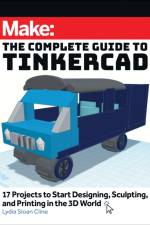
Make: The Complete Guide to Tinkercad embraces the concept of "learn by doing," using 17 fun projects to transform the reader from a novice into a creator of video assets and objects ready for 3D printing. This comprehensive manual teaches the intricacies of the Tinkercad interface, how to model sophisticated objects, and use AI as a tool to solve design challenges. Projects include designing useful and amusing objects such as jewelry, toys, and practical household items. This is not a mere collection of generic online tutorials, but a comprehensive learning experience that will empower the reader to turn their ideas into a physical reality.
How can assessment instruments be designed or selected to best serve the needs of intended users, taking into account their interests, capacities, and limitations? Informed by a socioecological perspective, this timely, state-of-the-art reference and text presents an integrated, user-centered process model for developing assessments guided by user contexts. Madhabi Chatterji provides foundational principles and procedures for designing multi-item tests; behavior-based, product-based, and portfolio-based assessments; and self-report instruments. She demonstrates how to integrate qualitative and quantitative methods to devise tools that meet the quality criteria of usefulness and usability alongside validity and reliability. The book features case study discussions; worked-through examples with diverse, global populations; and sample instruments from a variety of disciplines (education, psychology, health care, and others). Chapter overviews and objectives are tied to within-chapter Recaps and Reflection Breaks to further understanding and class discussion.
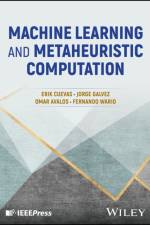
Learn to bridge the gap between machine learning and metaheuristic methods to solve problems in optimization approaches Few areas of technology have greater potential to revolutionize the globe than artificial intelligence. Two key areas of artificial intelligence, machine learning and metaheuristic computation, have an enormous range of individual and combined applications in computer science and technology. To date, these two complementary paradigms have not always been treated together, despite the potential of a combined approach which maximizes the utility and minimizes the drawbacks of both. Machine Learning and Metaheuristic Computation offers an introduction to both of these approaches and their joint applications. Both a reference text and a course, it is built around the popular Python programming language to maximize utility. It guides the reader gradually from an initial understanding of these crucial methods to an advanced understanding of cutting-edge artificial intelligence tools. The text also provides: Treatment suitable for readers with only basic mathematical training Detailed discussion of topics including dimensionality reduction, clustering methods, differential evolution, and more A rigorous but accessible vision of machine learning algorithms and the most popular approaches of metaheuristic optimization Machine Learning and Metaheuristic Computation is ideal for students, researchers, and professionals looking to combine these vital methods to solve problems in optimization approaches.
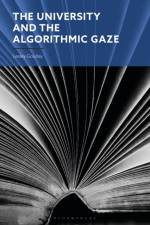
Taking an innovative and critical look at the ways in which digital data and algorithms are changing the face of higher education in multiple ways, this open access book examines their impact at both the macro scale of universities and systems worldwide, but also at the more subtle level of effects on academics and students. In doing so, it focuses on the day-to-day life of the university, examining how the digital is changing the way that we communicate, learn, and create new knowledge.As well as exploring the role of 'big data' and learning analytics, drawing on a cutting-edge set of critical approaches, the book also focuses on areas of academic life not normally considered to be part of datafication. The physical structures of surveillance on campus, for example, and the ways in which systems of 'quality' in research and teaching can morph into regimes of surveillance and algorithmic discipline, with far-reaching effects on marginalised groups, academic subjectivities, textual practices, and what counts as legitimate knowledge. Taking an interdisciplinary and international perspective, the volume interweaves insights from contemporary Applied Linguistics with posthuman perspectives on semiotics and textual practices, New Materialism, Science and Technology Studies, Information Science, and Human Geography. Its wide-ranging analysis generates fresh, critical new insights into the nature of communication, semiosis, textual practices, subjectivities and knowledge practices at this dynamic and fast-moving juncture in the history and development of higher education worldwide, providing a much-needed critical commentary, and set of provocative agendas for anyone interested in the university in the 'algorithmic age'.The ebook editions of this book are available open access under a CC BY-NC-ND 4.0 licence on bloomsburycollections.com. Open access was funded by University College London, UK.
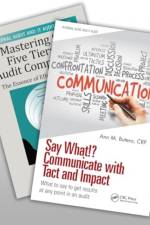
Mastering the Five Tiers of Audit Competency: The Essence of Effective Auditing is an anthology of powerful risk-based auditing practices. Say What!? Communicate with Tact and Impact: What to Say to Get Results at Any Point in an Audit contains an array of practical and time-tested approaches that foster effective communication.
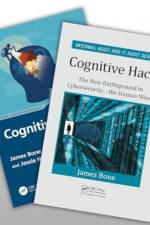
Cognitive Hack explores a broad cross section of research and actual case studies to draw out new insights that may be used to build a benchmark for IT security professionals.Cognitive risks are subconscious and unconscious influence factors on human decision-making: heuristics and biases.
This concise volume serves as a valuable resource on understanding the integration and impact of generative AI (GenAI) and evolving technologies on translation workflows.
Provides in-depth explanations of all topics related to quantitative remote sensing and its applications in terrestrial, biospheric, hydrospheric, and atmospheric studies. Written in an easy-to-follow language, logically organized, and with step-by-step examples, readers deepen their understanding of the theory and cutting-edge research.
The text highlights the role of artificial intelligence in driving innovation, productivity, and efficiency. It further covers applications of artificial intelligence for digital marketing in Industry 5.0 and discusses data security and privacy issues in artificial intelligence, risk assessments, and identification strategies.
Abonner på vårt nyhetsbrev og få rabatter og inspirasjon til din neste leseopplevelse.
Ved å abonnere godtar du vår personvernerklæring.