













Gjør som tusenvis av andre bokelskere
Abonner på vårt nyhetsbrev og få rabatter og inspirasjon til din neste leseopplevelse.
Ved å abonnere godtar du vår personvernerklæring.Du kan når som helst melde deg av våre nyhetsbrev.

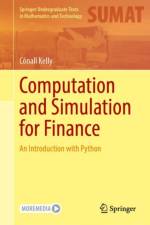
This book offers an up-to-date introductory treatment of computational techniques applied to problems in finance, placing issues such as numerical stability, convergence and error analysis in both deterministic and stochastic settings at its core.The first part provides a welcoming but nonetheless rigorous introduction to the fundamental theory of option pricing, including European, American, and exotic options along with their hedge parameters, and combines a clear treatment of the mathematical framework with practical worked examples in Python. The second part explores the main computational methods for valuing options within the Black-Scholes framework: lattice, Monte Carlo, and finite difference methods. The third and final part covers advanced topics for the simulation of financial processes beyond the standard Black-Scholes setting. Techniques for the analysis and simulation of multidimensional financial data, including copulas, are covered and will be of interest to those studying machine learning for finance. There is also an in-depth treatment of exact and approximate sampling methods for stochastic differential equation models of interest rates and volatilities.Written for advanced undergraduate and masters-level courses, the book assumes some exposure to core mathematical topics such as linear algebra, ordinary differential equations, multivariate calculus, probability, and statistics at an undergraduate level. While familiarity with Python is not required, readers should be comfortable with basic programming constructs such as variables, loops, and conditional statements.
This open access novel uses fantasy and romance to pique readers' interest in understanding how AI technologies can be used for social justice across very different political and social terrains. Can you truly reach out to somebody who is in every aspect the direct opposite of yourself? Gabriel and Tilda, the two protagonists of this futuristic novel, are very different people. They work at a Berlin-based international aid company, and the only thing they can agree on is that the world is in a shambles: Scarce public resources, conflict and crises, inequalities, religious and socio-cultural belief systems that cement social injustice, have created a world as deeply divided and set apart as Gabriel and Tilda. They are sent on company business to recruit international partners for a social development project on global justice, and start travelling the world together. On their adventurous journey through many countries, they learn about the impacts of culture on social welfare systems, while trying to define their own relationship, which is intermingled with generational power games and milieu-specific worldview struggles. In Gabriel and Tildäs attempts to bridge the deep gulf between their personalities, the novel creates a metaphor for finding a cohesive model of global justice using artificial intelligence that can integrate highly contextualized, national value cultures. Gabriel and Tilda are supported by two guardian angels: Assigned to save the planet through interpersonal and intercultural integration, the angels GA and TA team up with English Benedictine monk and mystic guru Bede Griffiths who is very keen to help Tilda and Gabriel in their model pilot of unlikely love.
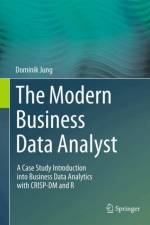
This book illustrates and explains the key concepts of business data analytics from scratch, tackling the day-to-day challenges of a business data analyst. It provides you with all the professional tools you need to predict online shop sales, to conduct A/B tests on marketing campaigns, to generate automated reports with PowerPoint, to extract datasets from Wikipedia, and to create interactive analytics Web apps. Alongside these practical projects, this book provides hands-on coding exercises, case studies, the essential programming tools and the CRISP-DM framework which you'll need to kickstart your career in business data analytics.The different chapters prioritize practical understanding over mathematical theory, using realistic business data and challenges of the Junglivet Whisky Company to intuitively grasp key concepts and ideas. Designed for beginners and intermediates, this book guides you from business data analytics fundamentals to advanced techniques, covering a large number of different techniques and best-practices which you can immediately exploit in your daily work.The book does not assume that you have an academic degree or any experience with business data analytics or data science. All you need is an open mind, willingness to puzzle and think mathematically, and the willingness to write some R code. This book is your all-in-one resource to become proficient in business data analytics with R, equipped with practical skills for the real world.
This book introduces a unified implementation of bond- and state-based peridynamic theory (PD) within a commercial finite element framework, Ansys, utilizing its native elements. It details the implementation of the PD theory and its integration with traditional finite elements. The primary objective is to equip students, researchers, and practicing engineers with both theoretical and practical knowledge of the PD theory, along with the skills necessary for analyzing engineering problems using Ansys.The book demonstrates that, unlike the conventional finite element method (FEM), the PD theory is highly suitable for progressive failure analysis, the multi-scale analysis of materials involving fracture and failure, and multi-physics analysis, including electromigration, corrosion, and electrodeposition. Additionally, it provides a step-by-step illustration of the specific procedures in the pre-processing, solution, and post-processing phases of the analysis through the Graphical User Interface (GUI) for various applications.The book is designed to be introductory and self-contained, minimizing the need for additional reference material.
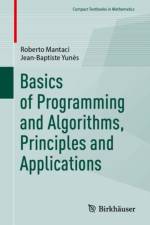
This textbook offers an introduction to topics in algorithms and programming with python. It is originally intended for mathematical students not sufficiently aware about these computer science fields seeking a deeper understanding. It addresses fundamental questions on how to analyze the performance of an algorithm and equips readers with the skills to implement them using python.The textbook is organized in two parts. Part I introduces Python Programming offering a solid foundation to python essentials. Topics covered include first steps in python programming, programs, functions and recursion, data structures. Part II shifts focus to Algorithms and covers topics such as algorithm performance, recursion, the sorting problem, trees as data structures, etc.This book has its origins from several different courses given in the context of thematic schools to diverse audiences in different countries over the years. These countries include Cambodia, Kenya, and Madagascar.
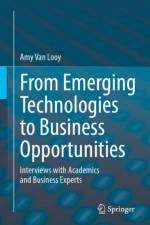
This book provides an up-to-date overview and critical discussion of technologies that shape and influence the digital economy, and especially covers artificial intelligence, Internet of Things, virtual and augmented reality, digital twins, blockchain technology, 3D printing, and biochip technology.After two introductory chapters about the digital economy and digital technologies in general, dedicated chapters explain the basics and foundations of each of the selected technologies as well as their potential for industry and services. To this end, these chapters first introduce the specific digital technology, followed by one interview with an academic expert for further describing and explaining the technology plus a second one with a business expert for illustrating a successful business case. Each chapter ends with a recap of the takeaways, supplemented by links to further readings for those who are eager to delve more into the relative topic as well as a self-test to challenge the reader's understanding.The book mainly targets business professionals and advanced undergraduate students in business and computer science. Business professionals (ranging from employees to managers and executives) will become acquainted with the basic terminology and diverse business aspects related to emerging digital technologies. They will benefit from descriptions by academic leaders in the field along with information and advice from industry people. Students will get an overview of the most important technologies which may also help them in selecting the most promising topics in their further education.
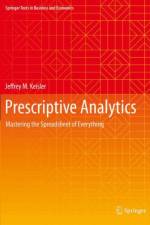
This book combines the quantitative decision-informing techniques of management science and operations research with the data-centric techniques found throughout the world of analytics. The material uses only standard Excel spreadsheet features and functions for creating models. Using a step-by-step approach, readers learn a unified architecture for sensitivity, scenario, simulation, decision, and optimization analysis. Spreadsheets with numerous screenshots support visual, hands-on learning (and provide some surprising innovations). Special influence diagrams and non-intimidating but accurate terminology help explain the logic of the models and calculations. Well-structured chapters include guideposts, enrichment, and curated links to valuable external resources. Readers are encouraged to own their learning and think about future trajectories for themselves and the field. This book helps all readers quickly learn tools and concepts to use right away and to expand throughout a career.The companion website for the workbooks and other materials will be available soon.
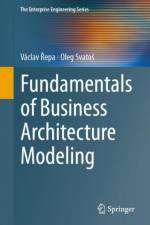
This textbook covers business architecture modeling in all its essential aspects. Based on the MMABP Philosophical Framework for Business System Modelling it provides a comprehensive overview of four basic dimensions of the business system model together with their essential relationships. The methods, techniques, and tools are described and explained for every model type with examples. Special attention is paid to integrating all dimensions using the Business System Consistency Framework.The book is divided into six chapters. Chapter 1 introduces business architecture and the approaches and tools to model it. MMABP is introduced with its basic principles and put in context with other approaches to business architecture modeling. Chapter 2 then deals with the modeling of a business system in terms of its objectives. The basic principles of process modeling, the distinction between global and detailed views of processes, and an approach to managing the detail of the process model in the form of four levels of process abstraction are introduced. Chapter 3 describes the modeling of a business system in terms of its underlying concepts and the business rules that apply within the modeled system. The basic principles of object modeling, the distinction between global and detailed views of objects, and the approach to capturing the object life cycles are introduced. Chapter 4 presents a simplified metamodel that describes how all models of the business system are related, and consistency rules that guide the analysts to avoid possible inconsistencies. Chapter 5 focuses on the implementation of the business system in an organization. It describes the role and specifics of its information system, explains the comprehensive procedure for building the process-driven organization, and reflects on the organizational maturity and its role in the further development of a process-driven organization. Eventually, Chapter 6 presents a complex example of the application of MMABP, including the functioning prototype of the process system. The prototype is then used to illustrate an essential difference between the conceptual and technology levels of models, and the importance of distinguishing between them.This textbook is written for students in enterprise architecture or business information systems as well as for professionals developing enterprise information systems or process-driven organizations.
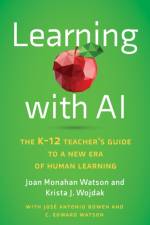
This book serves as a compass, guiding educators through the uncharted territory of AI-powered education and the future of teaching and learning.
Understand the role of network communications in the private sector with this timely guide 4G and 5G wireless communication technologies have come to dominate network communications in recent years, and their expansion is only continuing. Most existing treatments of this key subject, however, deal with large-scale public networks, not the private networks whose deployment constitutes one of the major current growth areas in wireless technology. There is an urgent need for a guide to network communication deployment specifically for private enterprises. Fundamentals of Private Cellular Enterprise Network Communications meets this need with a cutting-edge but accessible overview of the subject. Alerting to the specific needs of the private enterprise network and the disruption potential of cellular network operations, it surveys the early lessons of the global private network rollout for the benefit of future operations. With an eye towards future challenges and developments, this essential text is suitable for professionals in the network communications industry and its partners. Readers will also find: The background required to design, deploy, and manage enterprise private networks driven by 4G and 5G technologies apart from interworking and co-existence aspects with Wi-Fi (it can be an independent bullet as well) Detailed discussion of topics including fundamentals of 4G & 5G, standards bodies and their role in defining specifications for private networks, layer 3 concepts, IP connectivity, and many more Solutions to the urgent need for ubiquitous 5-bar connectivity both indoors and outdoor Fundamentals of Private Cellular Enterprise Network Communications is an ideal reference for end user devices, network operators, chip manufacturers, researchers, and all other professionals and stakeholders with roles in the information and operational technology industries.
RFID has become a key aspect of modern living, and demand for its use continues to grow. Through a detailed discussion of how to engineer and implement RFID-based solutions, this book is a valuable resource for RFID students, working RFID engineers, and researchers into the future development of this technology.
This book showcases the potential of computational approaches for research questions at the heart of migration and integration research via a set of original, cutting-edge empirical studies by a diverse, international team of authors. It was originally published as a special issue of the Journal of Ethnic and Migration Studies.
The advances in technology, engineering and science are necessary for better and sustailable life.
ICICS is a series of conferences initiated by School of Electronics and Electrical Engineering at Lovely Professional University.
This book presents the development of a classification scheme to organize and represent ransomware threat knowledge through the implementation of an innovative methodology centred around the semantic annotation of domain-specific source documentation.
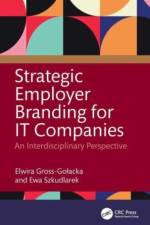
The book discusses the issues of building and maintaining a distinctive and credible employer brand and presents a set of practical tools supporting a strategic approach to employer branding in IT companies. The book includes analyses of the development of the employer branding concept as well as a set of practical recommendations.
The text provides information on antenna design for next generation communication systems and IoT applications, followed by the integration of the antennas in the wireless system. It also covers multi-input and multi-output antennas, metasurface antennas, reconfigurable antennas, fractal antennas and design of beamforming networks.
It focuses on digital museums in the context of Vietnam and contributes to global discussions on the development of digital museum offerings needed to meet audience demands, requirements for sustainable digitization methods for cultural heritage and demands for the development of intellectual property protection for the digital environment.
This book examines the applications, trends and challenges of 5G Enabled technologies for Smart City and Urbanization systems.
Provides a comprehensive coverage of various omics approaches used to improve cereals in terms of yield, quality, and stress resilience. It offers insights into the promises and challenges of multi-omics data integration, guiding future advancements in cereal research with recent breakthroughs in systems and integrative biology.
Big Data and Blockchain Technology for Secure IoT Applications presents a comprehensive exploration of the intersection between two transformative technologies: big data and blockchain, and their integration into securing Internet of Things (IoT) applications.
This book presents the applications of the healthcare sector in the context of futuristic smart cities. It explores various applications like the advancements in computational and network models along with the innovative paradigms for an able healthcare model. This book is suitable for researchers and entrepreneurs.
This book offers a comprehensive overview from diverse perspectives of online gaming technology, policy, and experiments to understand and review the Indian approach. It starts with the technological viewpoint on the governance and regulation of online gaming and includes the Indian experiment in governing and regulating it.
This book serves as source of introductory material and reference for medical application development and related technologies by providing the detail implementation of the cutting-edge deep learning methodologies. It targets the cloud based advanced medical application developments using open-source python based deep learning libraries.
This is the second of a definitive guide to databases in geotechnical and rock engineering to enhance decision-making in geotechnical practice using data-driven methods. This volume presents databases on the performance of shallow, spudcan, and deep foundations; anchors and pipelines; retaining systems and excavations; and landslides.
This is the first of two volumes forming a definitive guide to databases in geotechnical and rock engineering to enhance decision-making in geotechnical practice using data-driven methods. This volume offers a deep analysis of site data attributes before presenting databases of soil and rock properties and their applications.
This book seeks to understand emotions in the virtual world. It explores embodiment, hybridization and emotions within interactions mediated by a virtual avatar.
Abonner på vårt nyhetsbrev og få rabatter og inspirasjon til din neste leseopplevelse.
Ved å abonnere godtar du vår personvernerklæring.