











Gjør som tusenvis av andre bokelskere
Abonner på vårt nyhetsbrev og få rabatter og inspirasjon til din neste leseopplevelse.
Ved å abonnere godtar du vår personvernerklæring.Du kan når som helst melde deg av våre nyhetsbrev.

In an era defined by rapid digital transformation, "Agile Security in the Digital Era: Challenges and Cybersecurity Trends" emerges as a pivotal resource for navigating the complex and ever-evolving cybersecurity landscape.
The aim of this book is to delineate the challenges faced by new generation mobile networks, such as 5G and forthcoming 6G, and introduce the concept of addressing these challenges through the development of a novel Distributed AI (DAI) framework. The book proposes a distributed AI approach to handle these complexities effectively.
This book presents an innovative method of EEG-based feature extraction and classification of seizures using EEG signals. It describes the methodology required for EEG analysis, seizure detection, seizure prediction and seizure classification.
In this context, the book offers readers hopes as well as warnings about how technology can be used for the public good, and especially those working in government, law enforcement and technology companies can learn useful lessons from it.
This work reviews recent advancements in research, new methods and techniques, and applications in computational techniques in intelligent manufacturing.
Model-Based Enterprise describes Model-Based Enterprise (MBE) and Model-Based Definition (MBD) in detail, focusing on how to obtain significant business value from MBE.
This volume presents a comprehensive collection of the latest research findings supporting the current and future implementations and applications of computerized multistage testing (MST).
This volume presents a comprehensive collection of the latest research findings supporting the current and future implementations and applications of computerized multistage testing (MST).
The book is designed for a practical approach to learning, with examples based on scenarios. It covers possible OSINT blueprints from the beginning to an advanced levelDESCRIPTION OSINT is a powerful technology used to gather and analyze information from publicly available sources. It empowers cybersecurity professionals to proactively detect and mitigate threats. This book serves as a comprehensive guide offering strategic approaches and practical insights into leveraging OSINT for cybersecurity defense.This book is an all-encompassing guide to open-source intelligence (OSINT). It meticulously details tools, techniques, and applications across a multitude of domains. The book explores OSINT's use in social media, email domains, IP addresses, images, videos, documents, mobile numbers, companies, job postings, and the dark web. It probes OSINT's application for threat intelligence, data leak detection, understanding encryption, and digital certificates, assessing fake news, reverse image search, geolocation workarounds, real image identification, finding banned organizations, handling sensitive information like Aadhar and Social Security Numbers, while also tracking fraudulent SMS.By the end of this book, readers will emerge as competent cybersecurity professionals equipped with the skills and expertise to navigate the ever-evolving landscape of cyber threats with confidence and proficiency.KEY FEATURES ¿ Learn about OSINT and how to set up an OSINT environment for investigations.¿ Master techniques for tracking fraud SMS and investigating emails.WHAT YOU WILL LEARN¿ Understand the fundamentals of OSINT in cybersecurity.¿ Securing web browsers and ensuring online privacy.¿ Investigating emails and tracking cyber threats.¿ Gain insights into tracking mobile identities and domain or IP investigations.WHO THIS BOOK IS FORThis book is essential for cybersecurity professionals, investigators, law enforcement, and digital forensics analysts seeking advanced OSINT strategies.
Explore the world of Artificial Intelligence with a deep understanding of Machine Learning concepts and algorithmsKEY FEATURES ¿ A detailed study of mathematical concepts, Machine Learning concepts, and techniques.¿ Discusses methods for evaluating model performances and interpreting results.¿ Explores all types of Machine Learning (supervised, unsupervised, reinforcement, association rule mining, artificial neural network) in detail.DESCRIPTION "Simplified Machine Learning" is a comprehensive guide that navigates readers through the intricate landscape of Machine Learning, offering a balanced blend of theory, algorithms, and practical applications. The first section introduces foundational concepts such as supervised and unsupervised learning, regression, classification, clustering, and feature engineering, providing a solid base in Machine Learning theory. The second section explores algorithms like decision trees, support vector machines, and neural networks, explaining their functions, strengths, and limitations, with a special focus on deep learning, reinforcement learning, and ensemble methods. The book also covers essential topics like model evaluation, hyperparameter tuning, and model interpretability. The final section transitions from theory to practice, equipping readers with hands-on experience in deploying models, building scalable systems, and understanding ethical considerations.WHAT YOU WILL LEARN¿ Solid foundation in Machine Learning principles, algorithms, and methodologies.¿ Implementation of Machine Learning models using popular libraries like NumPy, Pandas, PyTorch, or scikit-learn.¿ Knowledge about selecting appropriate models, evaluating their performance, and tuning hyperparameters.¿ Techniques to pre-process and engineer features for Machine Learning models.¿ To frame real-world problems as Machine Learning tasks and apply appropriate techniques to solve them.WHO THIS BOOK IS FORThis book is designed for a diverse audience interested in Machine Learning, a core branch of Artificial Intelligence. Its intellectual coverage will benefit students, programmers, researchers, educators, AI enthusiasts, software engineers, and data scientists.
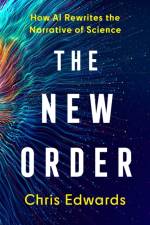
What if the great discoveries of science came in the "wrong" order? The Laws of Thermodynamics were discovered well after the creation of algebra, classical physics, and chemistry, but are perhaps much more important to our basic understanding of the universe. This flawed chronology led to a confusion that has prevented a cross-curricular understanding of the sciences. With the development of Artificial Intelligence, it will soon be possible to solve the philosophical and biological problem of solipsism, the problem that all of our scientific discoveries have been necessarily - and incorrectly - built upon anachronistic foundations. In other words, we've built our fundamental understanding of science out of order. In The New Order: How Artificial Intelligence Restructures Scientific Breakthroughs, author Chris Edwards shows that AI will be able to understand science without needing human analogies, will not be constrained by problems that are inherent in the traditional chronological developments of the sciences. If human scholars are to understand how AI interprets the universe, we will need to understand the scientific narrative in a "new order." Offering the historical narrative of science in the traditional order while explaining core ideas through the lens of thermodynamics, and then moving to the story of how a slew of quantum physicists connect thermodynamics retroactively to scientific history, Edwards provides a "new order" to place thermodynamics in its proper place at the center of our scientific universe. Under this "new order", every other discovery is then connected through those concepts. AI is likely to view the history of the universe through entropy and probability, and with the insights and invention of The New Order, readers can, too.
This book provides an overview of the most up-to-date developments in the field, presenting original contributions and surveys from a spectrum of respected academics in Mathematical Analysis. Each chapter highlights new research directions, making this book suitable for graduate students, faculty, and researchers.
Crafting elegant and efficient solutions!KEY FEATURES ¿ Learn core functional programming (FP) concepts and their advantages for Go development.¿ Implement practical techniques like closures, higher-order functions, and function currying for powerful codes.¿ Write clean and maintainable code using immutability and pure functions.DESCRIPTION "Functional Programming with Go" is a comprehensive guide to introduce Go developers to the powerful concepts of functional programming. This book covers topics like first-class functions, closures, higher-order functions, immutability, and pure functions. It also demonstrates how these principles can enhance code quality, reliability, and maintainability.Starting with functional programming basics and setup, it covers first-class functions, closures, and higher-order functions like map, filter, and reduce. You will learn advanced techniques like currying, immutability, and functional error handling with monads. The book also explores concurrent programming with FP in Go, design patterns, functional web development, testing, debugging, and advanced topics like memoization.This book equips you with the knowledge and skills needed to write efficient, scalable, and robust Go applications. By the end of this book, you will have the knowledge and skills to apply functional programming principles in Go.WHAT YOU WILL LEARN¿ Applying functional programming concepts to enhance code quality.¿ Leveraging higher-order functions and closures for flexible code.¿ Implementing advanced techniques like function currying and partial application.¿ Writing pure functions and using immutable data structures in Go.¿ Handling errors efficiently using monads and functional techniques.¿ Designing concurrent systems with goroutines and channels in Go.WHO THIS BOOK IS FORThis book is designed for Go developers who want to enhance their skills in functional programming. It is also suitable for programmers with a basic understanding of Go.
Leverage the power of AI in coding, graphics, design, and intelligence to join the next wave in game developmentKEY FEATURES ¿ Teaches the core concepts of game development for 2D, 3D, and AI games.¿ Uses AI to assist and guide the reader across several facets of game development.¿ Learn to create AI-controlled enemies for your games.DESCRIPTION This book is a comprehensive guide to creating interactive and engaging games, leveraging the capabilities of ChatGPT and other advanced AI technologies. The book starts with prompt engineering and system prompting, building a strong AI foundation for game development. It covers various game genres, from text adventures to 3D shooters, showing AI integration. Each chapter is designed to build on the previous one, ensuring a cohesive learning experience that gradually increases in complexity and depth. Readers will learn game development basics and creative techniques for immersive game worlds. They will use PyZork for text games and Streamlit for enhanced visuals. The book covers AI-generated assets, behavior-driven AI, and advanced topics like isometric world-building and voice-responsive games. Practical projects help readers create their unique games, while GPT agents and AI technologies showcase the future of gaming.By the end of this journey, readers will have a deep understanding of how to create innovative and engaging games using AI, positioning them at the forefront of modern game development.WHAT YOU WILL LEARN¿ Master prompt engineering for building games, game assets, and AI-driven games.¿ Develop engaging text-based adventures with AI-driven storytelling elements.¿ Create 2D games from platformers, isometric worlds, and physics.¿ Design AI opponents with behavior-driven logic and adaptive difficulty.¿ Introduction to 3D first-person shooters using GPT agents.¿ Implement voice recognition and text-to-speech in interactive games.WHO THIS BOOK IS FORThis book is for aspiring or experienced game developers and indie game studios interested in using generative AI to create games faster and explore new possibilities.
Architecting AI: Design patterns for building deep learning productsKEY FEATURES ¿ Master foundational concepts in design patterns of deep learning.¿ Benefit from practical insights shared by an industry professional.¿ Learn to build data products using deep learning.DESCRIPTION Design Patterns of Deep Learning with TensorFlow is your comprehensive guide to learning deep learning from a design pattern perspective. In this book, we explore deep learning within the context of building hyper-personalization models, exploring its applications across various industries and scenarios. It starts by showing how deep learning enhances retail through customer segmentation and data analysis. You will learn neural networks, computer vision with CNNs, and NLP for analyzing customer behavior. This book addresses challenges like uneven data and optimizing models with techniques like backpropagation, hyperparameter tuning, and transfer learning. Finally, it covers setting up data pipelines and deploying your system. With practical tips and actionable advice, this book equips readers with the skills and strategies needed to thrive in today's competitive AI landscape.By the end of this book, you will be equipped with the knowledge and practical skills to build and deploy deep learning-powered hyper-personalization systems that deliver exceptional customer experiences.WHAT YOU WILL LEARN¿ Understand about hyper-personalized AI models for tailored user experiences.¿ Design principles of computer vision and NLP models.¿ Inner working of transformers equipping readers to understand the intricacies of generative AI and large language models (LLMs) like ChatGPT.¿ To get the best out of deep learning models through hyperparameter tuning and transfer learning.¿ Learn how to build deployment pipelines to serve models into production environments seamlessly.WHO THIS BOOK IS FORThis book caters to both beginners and experienced practitioners in the field of data science and Machine Learning. Through practical examples, it simplifies complex ideas, linking them to design patterns.
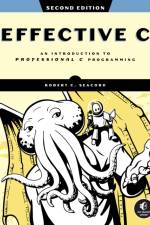
Effective C, 2nd edition, is an introduction to essential C language programming that will soon have you writing programs, solving problems, and building working systems.The latest release of the C programming language, C23, enhances the safety, security, and usability of the language. This second edition of Effective C has been thoroughly updated to cover C23, offering a modern introduction to C that will teach you best practices for writing professional, effective, and secure programs that solve real-world problems.Effective C is a true product of the C community. Robert C. Seacord, a long-standing member of the C standards committee with over 40 years of programming experience, developed the book in collaboration with other C experts, such as Clang’s lead maintainer Aaron Ballman and C project editor JeanHeyd Meneide. Thanks to the efforts of this expert group, you’ll learn how to: Develop professional C code that is fast, robust, and secureUse objects, functions, and types effectivelSafely and correctly use integers and floating-point typesManage dynamic memory allocation Use strings and character types efficientlyPerform I/O operations using C standard streams and POSIX file descriptors Make effective use of C’s preprocessorDebug, test, and analyze C programs The world runs on code written in C. Effective C will show you how to get the most out of the language and build robust programs that stand the test of time.New to this edition: This edition has been extensively rewritten to align with modern C23 programming practices and leverage the latest C23 features.Updated to cover C23
Stable Diffusion, ChatGPT, Whisper - these are just a few examples of incredible applications powered by developments in machine learning. Despite the ubiquity of machine learning applications running in production, there are only a few viable language choices for data science and machine learning tasks. Elixir's Nx project seeks to change that. With Nx, you can leverage the power of machine learning in your applications, using the battle-tested Erlang VM in a pragmatic language like Elixir. In this book, you'll learn how to leverage Elixir and the Nx ecosystem to solve real-world problems in computer vision, natural language processing, and more. The Elixir Nx project aims to make machine learning possible without the need to leave Elixir for solutions in other languages. And even if concepts like linear models and logistic regression are new to you, you'll be using them and much more to solve real-world problems in no time. Start with the basics of the Nx programming paradigm - how it differs from the Elixir programming style you're used to and how it enables you to write machine learning algorithms. Use your understanding of this paradigm to implement foundational machine learning algorithms from scratch. Go deeper and discover the power of deep learning with Axon. Unlock the power of Elixir and learn how to build and deploy machine learning models and pipelines anywhere. Learn how to analyze, visualize, and explain your data and models. Discover how to use machine learning to solve diverse problems from image recognition to content recommendation - all in your favorite programming language. What You Need: You'll need a computer with a working installation of Elixir v1.12 and Erlang/OTP 24. For some of the more compute intensive examples, you'll want to use EXLA, which currently only supports x86-64 platforms. While not explicitly required, some examples will demonstrate programs running on accelerators such as CUDA/ROCm enabled GPUs and Google TPUs. Most of these programs will still run fine on a regular CPU, just for much longer periods of time.
This book is a study of the performing arts, the body and language. Inspired by contemporary artistic research and performance philosophy, Esa Kirkkopelto proposes a new understanding of embodiment that has no direct counterpart in existing philosophies of the body, in natural science, or in everyday experience.
This book brings together leading experts from around the world to explore the transformative potential of Machine Learning (ML) and the Internet of Things (IoT) in healthcare. It provides a platform for studying a future where healthcare becomes more precise, personalized, and accessible for all.
This book introduces the basic principles underlying the design and analysis of the digital communication systems that have heralded the information revolution. One major goal of the book is to demonstrate the role of the digital communication principles in a wide variety of data science applications, including community detection, computational biology, speech recognition and machine learning. One defining feature of this book is to make an explicit connection between the communication principles and data science problems, as well as to succinctly deliver the ¿story¿ of how the communication principles play a role for trending data science applications. All the key ¿plots¿ involved in the story are coherently developed with the help of tightly coupled exercise problem sets, and the associated fundamentals are explored mostly from first principles. Another key feature is that it includes programming implementation of a variety of algorithms inspired by fundamentals, together with a brief tutorial of the used programming tools. The implementation is based on Python and TensorFlow. This book does not follow a traditional book-style organization, but is streamlined via a series of lecture notes that are intimately related, centered around coherent storylines and themes. It serves as a textbook mainly for a junior- or senior-level undergraduate course, yet is also suitable for a first-year graduate course. Readers benefit from having a good background in probability and random processes, and basic familiarity with Python. But the background can be supplemented by almost self-contained materials, as well as by numerous exercise problems intended for elaborating on non-trivial concepts. In addition, Part III for data science applications should provide motivation and insights to students and even professional scientists who are interested in the field.
This book provides the essential theoretical tools for stochastic modeling. The authors address the most used models in applications such as Markov chains with discrete-time parameters, hidden Markov chains, Poisson processes, and birth and death processes. This book also presents specific examples with simulation methods that apply the topics to different areas of knowledge. These examples include practical applications, such as modeling the COVID-19 pandemic and animal movement modeling. This book is concise and rigorous, presenting the material in an easily accessible manner that allows readers to learn how to address and solve problems of a stochastic nature.
This extensively revised new edition comprehensively reviews the rise of clinical research informatics (CRI). It enables the reader to develop a thorough understanding of how CRI has developed and the evolving challenges facing the biomedical informatics professional in the modern clinical research environment. Emphasis is placed on the changing role of the consumer and the need to merge clinical care delivery and research as part of a changing paradigm in global healthcare delivery. Clinical Research Informatics presents a detailed review of using informatics in the continually evolving clinical research environment. It represents a valuable textbook reference for all students and practising healthcare informatics professional looking to learn and expand their understanding of this fast-moving and increasingly important discipline.
This book provides theoretical background and state-of-the-art findings in artificial intelligence and cybersecurity for industry 4.0 and helps in implementing AI-based cybersecurity applications. Machine learning-based security approaches are vulnerable to poison datasets which can be caused by a legitimate defender's misclassification or attackers aiming to evade detection by contaminating the training data set. There also exist gaps between the test environment and the real world. Therefore, it is critical to check the potentials and limitations of AI-based security technologies in terms of metrics such as security, performance, cost, time, and consider how to incorporate them into the real world by addressing the gaps appropriately. This book focuses on state-of-the-art findings from both academia and industry in big data security relevant sciences, technologies, and applications.¿
The book articulates how AI can be channeled to make a perceptible impact on agriculture through digital transformation. Use cases illustrate how AI can simplify and speed this agricultural transformation. Focusing on the distinct characteristics of AI, the book explains how to intelligently automate agriculture processes and practices.
"This third edition comprehensively captures the cutting-edge research achievements of AI. Topics are thoroughly revised and updated, presenting the latest techniques and strategies to address the impending challenges facing computer scientists today. The useful reference text benefits professionals, academics, researchers, senior and graduate students in the information field and related tertiary specialties"--
Abonner på vårt nyhetsbrev og få rabatter og inspirasjon til din neste leseopplevelse.
Ved å abonnere godtar du vår personvernerklæring.