

















Gjør som tusenvis av andre bokelskere
Abonner på vårt nyhetsbrev og få rabatter og inspirasjon til din neste leseopplevelse.
Ved å abonnere godtar du vår personvernerklæring.Du kan når som helst melde deg av våre nyhetsbrev.

This book will help you comprehend the impact of artificial intelligence (AI) on information security, data privacy, and data security.The book starts by explaining the basics and setting the goals for a complete understanding of how AI, Information Security, Data Privacy, and Data Security all connect. Then, it gives you important information about the basics of AI, machine learning, and deep learning in simple terms. It also talks about the ethics of using AI in privacy and security, making sure you understand the power and responsibility that come with AI. Next, it takes you through the complex world of information security and data privacy. It covers everything from the current state of security to how AI can detect threats and protect privacy. Additionally, it delves into ethical considerations to ensure the responsible use of AI in managing data privacy. Later chapters discuss strategies and future trends in using AI for data security, finding the right balance between security and privacy, and giving useful advice for organizations.In the end, this book examines the current landscape and foresees the future, underscoring the vital importance of maintaining a balance between innovation and privacy in AI-powered security.What you will learn:How AI is being used to detect and prevent cyberattacks in real-timeWhat are the AI-powered techniques for anonymizing and de-identifying data,What are the latest advancements in AI-powered privacy-enhancing technologies (PETs)How to find the right balance between security and privacyWho this book is for:Information security professionals, data scientists, and software developers seeking to gain an understanding of the latest trends and techniques in AI for information security
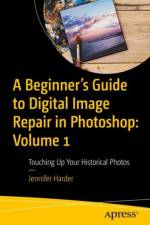
Digitally restore your old photos in Photoshop for print out or to use online as still photos. This first of two volumes will show you some of the basic techniques you can use in Photoshop to preserve or repair damaged family and historical photos.In today¿s digital world of smart phones and cameras, you can easily transfer your photos from phone to computer. However, occasionally yoüre left with an old or damaged version of the image and the uncertainty of how to fix them. Aided by the sound advice and tips from author Jennifer Harder, this book will show you how to do so with just a few basic corrections in Photoshop. Using healing tools, basic color correction tools, layer masks, and workspace commands to fill in missing gaps, yoüll be able to print out an unblemished picture or post it on your social media page.A Beginner¿s Guide to Digital Image Repair in Photoshop: Volume 1 provides the know-how to help preserve your family treasures.What You Will Learn Review scanner basics for digitizing your photos Use various ¿healing¿ and color adjustment tools in Photoshop for restoring photos See how custom selections and layer masks can be used in the photo restoration process Apply various workspaces to fill in missing details in an image or merge photosWho Is This Book ForUsers who want to learn how to repair old historical photos and slides for digital presentation or for print as well as those who are interested in basic animation.
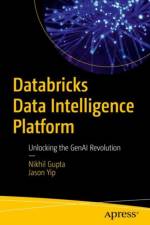
This book is your comprehensive guide to building robust Generative AI solutions using the Databricks Data Intelligence Platform. Databricks is the fastest-growing data platform offering unified analytics and AI capabilities within a single governance framework, enabling organizations to streamline their data processing workflows, from ingestion to visualization. Additionally, Databricks provides features to train a high-quality large language model (LLM), whether you are looking for Retrieval-Augmented Generation (RAG) or fine-tuning. Databricks offers a scalable and efficient solution for processing large volumes of both structured and unstructured data, facilitating advanced analytics, machine learning, and real-time processing. In today's GenAI world, Databricks plays a crucial role in empowering organizations to extract value from their data effectively, driving innovation and gaining a competitive edge in the digital age. This book will not only help you master the Data Intelligence Platform but also help power your enterprise to the next level with a bespoke LLM unique to your organization. Beginning with foundational principles, the book starts with a platform overview and explores features and best practices for ingestion, transformation, and storage with Delta Lake. Advanced topics include leveraging Databricks SQL for querying and visualizing large datasets, ensuring data governance and security with Unity Catalog, and deploying machine learning and LLMs using Databricks MLflow for GenAI. Through practical examples, insights, and best practices, this book equips solution architects and data engineers with the knowledge to design and implement scalable data solutions, making it an indispensable resource for modern enterprises. Whether you are new to Databricks and trying to learn a new platform, a seasoned practitioner building data pipelines, data science models, or GenAI applications, or even an executive who wants to communicate the value of Databricks to customers, this book is for you. With its extensive feature and best practice deep dives, it also serves as an excellent reference guide if you are preparing for Databricks certification exams. What You Will Learn Foundational principles of Lakehouse architecture Key features including Unity Catalog, Databricks SQL (DBSQL), and Delta Live Tables Databricks Intelligence Platform and key functionalities Building and deploying GenAI Applications from data ingestion to model serving Databricks pricing, platform security, DBRX, and many more topics Who This Book Is ForSolution architects, data engineers, data scientists, Databricks practitioners, and anyone who wants to deploy their Gen AI solutions with the Data Intelligence Platform. This is also a handbook for senior execs who need to communicate the value of Databricks to customers. People who are new to the Databricks Platform and want comprehensive insights will find the book accessible.
This book explores the authors' legal thinking on artificial intelligence (AI), a topic of burgeoning interest in the technology sector and among the general public. As part of the Human Intelligence book series, it primarily addresses the legislative and philosophical challenges posed by AI technology. A key philosophical concern discussed is the implications of AI surpassing human intelligence in certain domains, particularly the definition of rights and responsibilities for robots. Without clear resolutions to these issues, the deployment of AI technology may face significant hurdles. The book covers various aspects, including the legal recognition of robots as rights-holders, strategies for implementing these rights, assigning responsibilities to robots, intellectual property rights for robotic inventions, personality rights for companion robots, and an evaluation of the pros and cons of a binary legal system.
This book presents algorithms and tools that are designed to model and extract information from personal contact networks, which represent which individuals in a population are physically in contact with one another. The authors developed these tools based on research they conducted during the COVID-19 pandemic, with the goal of improving responses to epidemics in the future. The book provides methods for modelling the transmission of infection across a population. The authors explain how an epidemic model can be used to strategically distribute vaccines and minimize the spread of a virus. The book shows how evolutionary computation, graph compression, and network induction can be utilized to manage issues that arise from an epidemic.
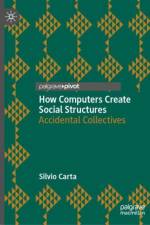
This book introduces the idea of accidental collectives: the grouping of people that occurs as a by-product of the automated work of computers. Software has a growing influence in our lives automating and optimising mundane, time-consuming and repetitive tasks. In doing this, groups of people are automatically created as the result of classification and data analysis. Once grouped by the invisible agency of software, people interact and establish new relationships, generating new collectives and communities. With the support of case studies and real-life examples, this work explores the accidental nature of the generation of new social groups and questions the role of software in social interactions.
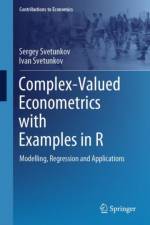
This book explores the application of complex variables to econometric modeling. Providing a thorough introduction to the theory of complex numbers, it extends these concepts to develop complex-valued models that enhance the accuracy and depth of economic forecasting and data analysis. From simple to multiple complex linear regression, the monograph discusses model formulation, estimation techniques, and correlation analysis, supported by examples in R.This comprehensive guide is a useful resource for students, researchers, and practitioners aiming to apply advanced mathematical techniques to tackle complex real-life problems, making it a useful tool for enhancing predictive analytics in business, economics, and finance.
This book presents observations, experiences, and practices that work or don't work in different areas of business analysis ¿ combining the lessons learned with how to avoid potential pitfalls.Four areas were identified that constitute the greatest project challenges and the most frequently occurring problems in the work of a business analyst: strategic analysis, business analysis process planning, requirements engineering, and solution implementation. These areas hence build the main chapters of this book. Each of them begins with a brief introduction explaining the essence of the respective area and presenting the most important information. They are further divided into sections describing specific topics, where tips and recommendations are presented. Most sections begin with a guiding thought - a quote provided by an expert or a short hint based on the author¿s 20 years of experience. At the end of each chapter, case studies and/or checklists are provided facilitating the planning and implementation of business analysis practice in a project.This book provides readers with suggestions, ideas, and conclusions regarding selected aspects of business analysis - in particular, discussing challenges and recommendations regarding the application of specific methods, practices in specific usage contexts. It will be most beneficial to professionals who already have a basic understanding of the fundamentals of business analysis and will be able to relate theoretical knowledge to practical examples of project applications. Readers who are just entering the field of business analysis will also benefit by gaining insights how to avoid basic mistakes or risks.
This book aims to help psychology students build their skills to conduct research and analyses using Microsoft Excel¿s Data Analysis Toolpak. Concise yet comprehensive, this accessible textbook walks students through basic research methodology, central tendency, variability, standardized scores, t-tests (independent and related samples), One-way Analysis of Variance (between-groups and repeated measures), the Pearson correlation, and Chi Square analyses. Each chapter includes examples of research questions to be addressed, the rationale for the analysis, a step-by-step analysis of the dataset in equation format and using Microsoft Excel, and how to present results in APA (7th Edition) style.The extensive didactic material encompasses end-of-chapter questions, learning outcomes, sidebar boxes with common mistakes to avoid, and biographical sketches of those who developed research methods and statistical techniques. Students and instructors will also benefit from a companion website where PowerPoint slides and additional exercises, datasets, and resources are available. Ideal for undergraduate psychology courses, this textbook can also be of use for those interested in learning more about statistical research and its practical application at university and beyond.Test your knowledge with questions and answers about the book with Springer Nature Flashcards.
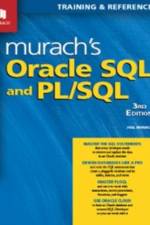
If you're developing applications that access Oracle databases, you can save time and effort by having the database do more work for you. That's where this book comes in.This book teaches you how to write SQL statements to efficiently retrieve and update the data in an Oracle database. It teaches you how to design and create a database because that provides insight into performance and security issues. It teaches you how to use Oracle's procedural language (PL/SQL) to take advantage of powerful features like transactions, stored procedures, functions, and triggers. And it teaches you how to host an Oracle database in the cloud and use SQL Developer to run SQL statements against that database.The result? You'll learn how to write the kind of SQL and PL/SQL that makes you a more effective and valuable developer or analyst.
The Metaverse Dilemma explores a balanced viewpoint of the metaverse from both a theoretical and practical mindset, examining the challenges and opportunities faced when adopting and implementing the metaverse in business and everyday scenarios.
This collected edition provides a comprehensive and practical roadmap for insurers, data scientists, technologists, and insurance enthusiasts alike, to navigate the data-driven revolution that is sweeping the insurance landscape.
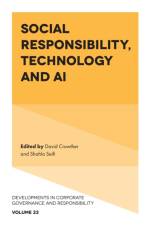
This edited collection builds on the ethical questions reminiscent of those raised by early fiction writing in relation to robotics, and AI's position within human endeavour. The chapters recognise the dangers as well as the applications which are appropriate and helpful.
FIND NEW WAYS TO SHOOT AND LEARN KEY SKILLS WITH OVER 60 PHOTOGRAPHY PROJECTS FROM EVERY GENRE.Elevate your craft and unleash your creativity with the Ultimate Photography Ideas Book. Requiring simple and minimal kit, this no-nonsense guide is packed with over 60 captivating challenges across every major genre of photography:LANDSCAPES: Try out new techniques for stunning images of the great outdoors.PORTRAITS: Get creative with different ways of shooting people and animals.WILDLIFE & MACRO: Embrace nature both close-up and from a distance.STILL LIFE & CREATIVE: Have fun with inspiring table-top projects.ACTION: Master all the technical skills for capturing subjects on the go.DOCUMENTARY & STREET: Find new ways of looking at your environment.BASIC KIT: Shoot every project on standard kit, or learn how to make what you need!EASY ADVICE: Step-by-step guides and difficulty ratings for every project inside.In partnership with the UK's best-selling photography magazine, this book offers limitless ideas and concise guidance for you to transform ordinary moments into extraordinary works of art.Turn your passion for photography into professional looking images with The Ultimate Photography Ideas Book.
Explores the diverse roles that IoT and AI technologies played during the COVID-19 global pandemic. It discusses the how state-of-the art technology has been and can be applied for global health crises. It looks at new technological solutions for virus detection, prediction, classification, prevention, and communication outreach.
Discusses state-of-the-art technology for predicting disasters by designing healthcare disaster management systems that use modern technology-cloud computing, artificial intelligence, IoT, data analytics, machine learning-to increase effectiveness in remote sensing technologies, data analytics, data storage, GIS, GPS, etc.
Explores the rapid changes in technology that have affected businesses and social environments that are offering new challenges and opportunities for small to mid-size enterprises (SMEs) and start-ups. It highlights how businesses in emerging economies are implementing the new technological innovations to compete in the global market.
This volume introduces the key evolving applications of IoT in the medical field for patient care delivery through the usage of smart devices that can provide relevant healthcare information through real-time data analysis as well as testing, providing reliable and pragmatic data.
This new volume illustrates the diversified applications of IoT. The volume addresses the issue of data safekeeping along with the development of a new cryptographic and security technology as well as a range of other advances in IoT.
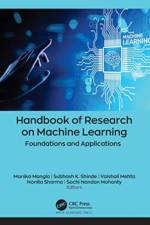
An exploration of machine learning advancements. It covers many aspects in machine learning, along with the applications in healthcare, in the steel industry, for urban information retrieval, in garbage detection, in measuring air pollution, for stock market predictions, for underwater fish detection, as a fake news predictor, and more.
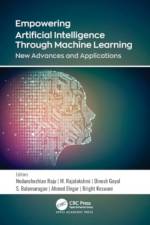
This new volume, Empowering Artificial intelligence Through Machine Learning: New Advances and Applications, discusses various new applications of machine learning, a subset of the field of artificial intelligence. Artificial intelligence is considered to be the next-big-game changer in research and technology.
Role of IoT and Blockchain: Techniques and Applications provides an informative collection of chapters on the emerging issues, challenges, and new methods and state-of-the-art technologies in the Internet of Things and blockchain technology.
Explores a plethora of blockchain-based solutions for big data and IoT real-world applications in several sectors, including higher education, cybersecurity, agriculture, business and management, healthcare and biomedical science, construction and project management, smart city development, and others.
This volume helps to meet the challenge processing of medical images by presenting a thorough overview of medical imaging modalities, its processing, high-performance computing, and the need to embed parallelism in medical image processing techniques to achieve efficient and fast results.
Improve speed, quality, AND cost by automating your API delivery process!Automating API Delivery shows you how to strike the perfect balance between speed and usability by applying DevOps automation principles to your API design and delivery process. It lays out a clear path to making both the organizational and technical changes you need to deliver high-quality APIs both rapidly and reliably. In Automating API Delivery you’ll learn how to: Enforce API design standards with linting Automate breaking-change checks to control design creep Ensure accuracy of API reference documents Centralize API definition consistency checks Automate API configuration deployment Conduct effective API design reviews Author Ikenna Nwaiwu provides comprehensive guidance on implementing APIOps in your organization. He carefully walks through the technical steps and introduces the essential open-source tools, with practical advice and insights from his years of experience. You’ll benefit from his personal tips for avoiding common pitfalls and challenges of moving to automated API delivery. Foreword by Melissa van der Hecht. Purchase of the print book includes a free eBook in PDF and ePub formats from Manning Publications. About the technology Create high quality, consistent, and fast-to-market APIs by automating the development process! This innovative book shows you how to apply established Continuous Delivery and DevOps principles along the whole API lifecycle, transforming a collection of individual tasks into a smooth, manageable pipeline that supports automated testing, iterative improvement, and reliable documentation. About the book Automating API Delivery introduces the tools and strategies behind APIOps. You’ll discover tools and process improvements that give you important quick wins, including API governance using the Spectral API linter and establishing an efficient CI/CD pipeline with GitHub Actions. You’ll even discover how to use the powerful OpenAPI Generator to automatically create client and server code from your API definitions. What's inside Check for breaking changes with oasdiff Create SDKs using OpenAPI Generator Maintain accurate documentation with API conformance tests Deploy API gateway configuration with GitOps About the reader Experience building RESTful APIs required. About the author Ikenna Nwaiwu is Principal Consultant at Ikenna Consulting, specializing in automating API governance. The technical editor on this book was Marjukka Niinioja. Table of Contents 1 What is APIOps? 2 Leaning into APIOps: Problem-solving and leading improvements 3 API linting: Automating API consistency 4 Breaking change checks: Managing API evolution 5 API design review: Checking for what you cannot automate 6 API conformance: Generating code and API definitions 7 API conformance: Schema testing 8 CI/CD for API artifacts 1: Source-stage governance controls 9 CI/CD for API artifacts 2: Build-stage and API configuration deployment 10 More on API consistency: Custom linting and security checks 11 Monitoring and analytics: Measuring API product metrics Appendixes A Value stream mapping icons B Installing API linting and OpenAPI diff tools C Introduction to JSON Pointer D Tools for API conformance and analytics E Docker and Kubernetes
Great data presentations tell a story. Learn how to organize, visualize, and present data using Python, generative AI, and the cutting-edge Altair data visualization toolkit.Take the fast track to amazing data presentations! Data Storytelling with Altair and AI introduces a stack of useful tools and tried-and-tested methodologies that will rapidly increase your productivity, streamline the visualization process, and leave your audience inspired. In Data Storytelling with Altair and AI you’ll discover: • Using Python Altair for data visualization • Using Generative AI tools for data storytelling • The main concepts of data storytelling • Building data stories with the DIKW pyramid approach • Transforming raw data into a data story Data Storytelling with Altair and AI teaches you how to turn raw data into effective, insightful data stories. You’ll learn exactly what goes into an effective data story, then combine your Python data skills with the Altair library and AI tools to rapidly create amazing visualizations. Your bosses and decision-makers will love your new presentations—and you’ll love how quick Generative AI makes the whole process! Purchase of the print book includes a free eBook in PDF and ePub formats from Manning Publications. About the technology Every dataset tells a story. After you’ve cleaned, crunched, and organized the raw data, it’s your job to share its story in a way that connects with your audience. Python’s Altair data visualization library, combined with generative AI tools like Copilot and ChatGPT, provide an amazing toolbox for transforming numbers, code, text, and graphics into intuitive data presentations. About the book Data Storytelling with Altair and AI teaches you how to build enhanced data visualizations using these tools. The book uses hands-on examples to build powerful narratives that can inform, inspire, and motivate. It covers the Altair data visualization library, along with AI techniques like generating text with ChatGPT, creating images with DALL-E, and Python coding with Copilot. You’ll learn by practicing with each interesting data story, from tourist arrivals in Portugal to population growth in the USA to fake news, salmon aquaculture, and more. What's inside • The Data-Information-Knowledge-Wisdom (DIKW) pyramid • Publish data stories using Streamlit, Tableau, and Comet • Vega and Vega-Lite visualization grammar About the reader For data analysts and data scientists experienced with Python. No previous knowledge of Altair or Generative AI required. About the author Angelica Lo Duca is a researcher at the Institute of Informatics and Telematics of the National Research Council, Italy. The technical editor on this book was Ninoslav Cerkez. Table of Contents PART 1 1 Introducing data storytelling 2 Running your first data story in Altair and GitHub Copilot 3 Reviewing the basic concepts of Altair 4 Generative AI tools for data storytelling PART 2 5 Crafting a data story using the DIKW pyramid 6 From data to information: Extracting insights 7 From information to knowledge: Building textual context 8 From information to knowledge: Building the visual context 9 From knowledge to wisdom: Adding next steps PART 3 10 Common issues while using generative AI 11 Publishing the data story A Technical requirements B Python pandas DataFrameC Other chart types
To create web designs that delight, entertain, and impress your users, you need to know CSS in depth!Getting good—really good—at CSS means learning everything that CSS is capable of. This totally revised new edition of CSS in Depth expands your CSS skills with the patterns, layouts, and methods you need to deliver truly beautiful front ends. In CSS in Depth, Second Edition you will learn how to:• Create a web page with layout methods • Develop essential website components, like dropdown menus and dialog boxes • Make your website fully responsive across devices • Organize your CSS for easy future maintenance • Implement designer mockups with attention to detail • Use animations to guide user focus • Avoid common CSS pitfalls The more you know about CSS, the more confident you’ll be at tackling any tricky website design! CSS in Depth has given thousands of web developers the tools and the inspiration to make sites that really pop. This second edition is packed with the latest best practices, new CSS language features, and essential advice on how to organize and maintain your CSS codebase. Foreword by Chris Coyier. Purchase of the print book includes a free eBook in PDF and ePub formats from Manning Publications. About the technology To deliver truly beautiful frontends, you need to know CSS inside and out. And as CSS grows and matures, even experienced CSS developers will find a whole new set of skills to catch up on! This guide will help you discover everything that CSS is capable of—from the must-knows and brand-new features to the hidden insights you won’t find anywhere else! About the book CSS in Depth, Second Edition, deep dives into the CSS techniques used by the world’s most skilled web developers. Inside, you’ll learn how to build and organize a modular CSS codebase that’s easy to understand, maintain, and reuse. This new edition is fully revised to cover the CSS standard’s latest additions, including cascade layers, logical properties, new color functions, subgrid, and container queries. What's inside• Vertical centering, margin collapsing, and positioning • Dropdown menus and modal dialog boxes • Animations to guide user focus • Avoiding common CSS pitfalls About the reader Written for web developers who know the basics of CSS and HTML. About the author Keith J. Grant is a Principal Software Engineer at Red Hat, where he works on front-end code for the Ansible Controller web application using JavaScript and CSS. The technical editor on this book was Chris Chinchilla. Table of Contents PART 1 1 Cascade, specificity, and inheritance 2 Working with relative units 3 Document flow and the box model PART 2 4 Flexbox 5 Grid layout 6 Positioning and stacking contexts 7 Responsive design PART 3 8 Cascade layers and nesting 9 Modular CSS and scope 10 Container queries PART 4 11 Color and contrast 12 Typography and spacing 13 Gradients, shadows, and blend modes 14 Masks, shapes, and clipping PART 5 15 Transitions 16 Transforms 17 Animations APPENDIXES A Selectors reference B Preprocessors
Tips, tricks, design patterns, and secret features of Rust that will help you build stable and maintainable applications.Whether you’re a Rust beginner or a pro, Idiomatic Rust will teach you to be a better Rust programmer. It introduces essential design patterns for Rust software with detailed explanations, and code samples that encourage you to get stuck in. In Idiomatic Rust you’ll learn how to apply important design patterns including: • Fluent interfaces for creating delightful APIs • The Builder pattern to encapsulate data and perform initialization • Immutable data structures that help you avoid hard-to-debug data race conditions • Functional programming patterns • Anti-patterns and what not to do in Rust Idiomatic Rust catalogs, documents, and describes both how classic design patterns work with Rust, and the new Rust-specific patterns that will help you master the language. Each pattern or best practice helps solve common programming problems and ensure your code is easy for others to understand. You’ll learn when to use each pattern—and when to break it! You’ll soon be producing higher-quality Rust code and higher-quality Rust software. Purchase of the print book includes a free eBook in PDF and ePub formats from Manning Publications About the technology After you’re comfortable with Rust’s syntax and its uniquely-powerful compiler, there’s a whole new dimension to explore as you put it to use in real projects. How do you apply standard design patterns in Rust applications? Where and why should you use IntoIterator? Why do Rustaceans love the PhantomData type? This book answers these questions and many, many more. About the book Idiomatic Rust introduces the coding and design patterns you’ll need to take advantage of Rust’s unique language design. This book’s clear explanations and reusable code examples help you explore metaprogramming, build your own libraries, create fluent interfaces, and more. Along the way, you’ll learn how to write efficient, idiomatic Rust code that’s easy to maintain and evolve as you learn how the language works under the hood. What's inside • Creating delightful APIs • Applying Builder and other classic design patterns • Functional programming patterns • Rust anti-patterns About the reader For intermediate Rust programmers. About the author Brenden Matthews is a member of the Apache Software Foundation, creator of the system monitor Conky, and author of Code Like a Pro in Rust. The technical editor on this book was Alain M Couniot. Table of Contents PART 1 1 Rust-y patterns 2 Rust’s basic building blocks 3 Code flow PART 2 4 Introductory patterns 5 Design patterns: Beyond the basics 6 Designing a library PART 3 7 Using traits, generics, and structs for specialized tasks 8 State machines, coroutines, macros, and preludes PART 4 9 Immutability 10 Antipatterns A Installing Rust
Abonner på vårt nyhetsbrev og få rabatter og inspirasjon til din neste leseopplevelse.
Ved å abonnere godtar du vår personvernerklæring.