

















Gjør som tusenvis av andre bokelskere
Abonner på vårt nyhetsbrev og få rabatter og inspirasjon til din neste leseopplevelse.
Ved å abonnere godtar du vår personvernerklæring.Du kan når som helst melde deg av våre nyhetsbrev.

Conducting an in-depth analysis of machine learning, this book proposes three perspectives for studying machine learning: the learning frameworks, learning paradigms, and learning tasks. With this categorization, the learning frameworks reside within the theoretical perspective, the learning paradigms pertain to the methodological perspective, and the learning tasks are situated within the problematic perspective. Throughout the book, a systematic explication of machine learning principles from these three perspectives is provided, interspersed with some examples.The book is structured into four parts, encompassing a total of fifteen chapters. The inaugural part, titled "Perspectives," comprises two chapters: an introductory exposition and an exploration of the conceptual foundations. The second part, "Frameworks": subdivided into five chapters, each dedicated to the discussion of five seminal frameworks: probability, statistics, connectionism, symbolism, and behaviorism. Continuing further, the third part, "Paradigms," encompasses four chapters that explain the three paradigms of supervised learning, unsupervised learning, and reinforcement learning, and narrating several quasi-paradigms emerged in machine learning. Finally, the fourth part, "Tasks": comprises four chapters, delving into the prevalent learning tasks of classification, regression, clustering, and dimensionality reduction.This book provides a multi-dimensional and systematic interpretation of machine learning, rendering it suitable as a textbook reference for senior undergraduates or graduate students pursuing studies in artificial intelligence, machine learning, data science, computer science, and related disciplines. Additionally, it serves as a valuable reference for those engaged in scientific research and technical endeavors within the realm of machine learning.The translation was done with the help of artificial intelligence. A subsequent human revision was done primarily in terms of content.
This book focuses on the emerging topic of embedded artificial intelligence and provides a systematic summary of its principles, platforms, and practices. In the section on principles, it analyzes three main approaches for implementing embedded artificial intelligence: cloud computing mode, local mode, and local-cloud collaborative mode. The book identifies five essential components for implementing embedded artificial intelligence: embedded AI accelerator chips, lightweight neural network algorithms, model compression techniques, compiler optimization techniques, and multi-level cascaded application frameworks. The platform section introduces mainstream embedded AI accelerator chips and software frameworks currently used in the industry. The practical part outlines the development process of embedded artificial intelligence and showcases real-world application examples with accompanying code.As a comprehensive guide to the emerging field of embedded artificial intelligence, the book offers rich and in-depth content, a clear and logical structure, and a balanced approach to both theoretical analysis and practical applications. It provides significant reference value and can serve as an introductory and reference guide for researchers, scholars, students, engineers, and professionals interested in studying and implementing embedded artificial intelligence.
This open access book gathers selected high-quality research papers presented at the Ninth International Congress on Information and Communication Technology, held at Brunel University, London, on February 19-22, 2024. It discusses emerging topics pertaining to information and communication technology (ICT) for managerial applications, e-governance, e-agriculture, e-education and computing technologies, the Internet of Things (IoT), and e-mining. Written by respected experts and researchers working on ICT, the book offers an asset for young researchers involved in advanced studies. The work is presented in ten volumes.
This book provides a concise overview of intelligent technologies for vision and sensing, with a particular focus on their applications in various multispectral configurations, including safety monitoring in rural areas. Within the realm of intelligent perception and contemporary healthcare, the book emphasizes the real-time monitoring, analysis, and prediction of vital signals using biomedical optical sensors. This approach aims to offer more adaptable and personalized services within the medical health management domain. Furthermore, the book delves into the comprehensive comprehension of physiological signals and additional data sources, such as environmental and motion data. The goal is to enhance the breadth and depth of data analysis, providing more integrated support for the life and health sector. Additionally, the book explores the implementation of edge intelligence algorithms at the sensor level to enable real-time analysis, enhancing the efficiency of sensor data processing and utilization. Detailed explanations of the configuration and deployment of an active vision camera system featuring an integrated edge algorithm are provided to elucidate the coordination and communication mechanisms of edge intelligence technology across multiple edge devices. A specific application case is then presented-the universal camera jamming system-which underscores the benefits of intelligent sensing fusion for tasks such as attitude and position recognition, as well as self-feedback excitation jamming. The book underscores the pervasive and seamless integration of smart sensing in both current and future lifestyles, spanning from active vision cameras to diverse applications across multiple spectrums. Its insights are poised to stimulate innovation and application within the realms of smart vision and sensing, including a comprehensive analysis of future healthcare paradigms.
Strengthening networks, redefining security: ELK Stack leading the chargeDESCRIPTION Step into the dynamic world of zero trust network architecture with this comprehensive handbook. Starting with an exploration of zero trust principles, each chapter unveils new insights and practical strategies. From crafting strategic blueprints to implementing hands-on deployment tactics, discover the intricacies of building a resilient zero trust network capable of thwarting modern threats.Journey through the extensive capabilities of ELK Stack, essential for fortifying a zero trust paradigm. Learn the nuances of data acquisition strategies and efficient ingestion methods with ELK, enabling robust data visualization and dashboard creation using Kibana. Explore advanced functionalities like Machine Learning driven anomaly detection to enhance your defenses against emerging threats. Explore Elastic Security's suite, encompassing threat detection, incident response, and compliance reporting, crucial elements in strengthening network defenses. Utilize the transformative potential of Zeek in network security, from foundational principles to advanced integration with Elastic Security. Real-world case studies showcase the synergy between Zeek and Elastic Security, providing insights into future-proof network protection strategies.Arm yourself with the knowledge and tools necessary to navigate the evolving landscape of network security. Traverse the realms of zero trust architecture, ELK Stack, and Elastic Security, empowered by practical insights and real-world applications.WHAT YOU WILL LEARN¿ Understanding the core principles and intricacies of zero trust network architecture.¿ Designing and deploying a robust zero trust network using strategic methodologies.¿ Leveraging ELK Stack's capabilities to support and enhance a zero trust approach.¿ Implementing effective data gathering and ingestion strategies with ELK.¿ Mastering data visualization and dashboard creation using Kibana for actionable insights.WHO THIS BOOK IS FORThe book is primarily aimed at security professionals, network architects, and IT managers who are responsible for securing their organization's network infrastructure and sensitive data. The book is suitable for both technical and non-technical readers.
Quickly master Kotlin by practicing what you learnDESCRIPTION Kotlin Crash Course is a fast-paced, hands-on introduction to Kotlin, preparing readers to build robust applications efficiently using the latest language features and best practices.The book is divided into comprehensive chapters that cover key Kotlin programming topics such as object-oriented and functional programming, collections, concurrency, and unit testing. Each chapter takes a learning by doing approach, focusing on practical projects rather than solely theoretical knowledge. This strategy improves knowledge retention by simulating real-life experiences, allowing students to apply concepts in practice as they learn them. Furthermore, the book is interwoven with an abundance of best practices obtained from industry experience. This approach ensures that even beginners can gain seasoned insights and apply their knowledge confidently to real-world challenges.By the end of this comprehensive course, you will not only possess a strong foundation in Kotlin programming but also the practical skills to build real-world applications, including REST APIs and serverless applications leveraging Kotlin's cloud capabilities.WHAT YOU WILL LEARN¿ Understand Kotlin syntax and basic coding conventions.¿ Master object-oriented and functional programming concepts.¿ Utilize Kotlin's collection framework effectively.¿ Implement concurrency and parallelism with coroutines.¿ Build robust applications with best practices.¿ Develop diverse applications, including REST APIs and serverless solutions.WHO THIS BOOK IS FORThis book is suitable for students, programmers from other languages, Java developers, back-end developers, full-stack developers, and mobile developers. The book is appropriate for both new and experienced programmers wishing to acquire or refresh their Kotlin skills.
Dive into the fascinating world of digital disruption and discover the transformative power of open and digital ecosystems, which will constitute one-third of global trade by 2030. This book demonstrates how value creation occurs beyond organizational boundaries and places the consumer at the forefront. The convergence of industries and technologies drives the experience-oriented customer journey and accelerates digital transformation. Explore Artificial Intelligence, Augmented Reality, the Internet of Things, Blockchain, Cloud, and Quantum Computing as key building blocks for innovation. The golden triangle of digital ecosystems - commerce, social media, and finance ¿ illustrates how companies like Alibaba, Tencent, NIO, Alphabet, Apple, Amazon, and Migros create unique customer experiences and integrate services with super-apps.Through in-depth analyses and practical case studies, you will learn how companies can thrive in this revolutionary model, achieving growth by sharing knowledge and resources, responding swiftly to market changes, and balancing the optimization of existing businesses with the exploration of new opportunities. Leadership in open and digital ecosystems demands a shift in mindset and the development of new dynamic capabilities. Emphasizing openness, agility, and ambidexterity as critical skills, this book is an indispensable guide for companies aiming to leverage open and digital ecosystems for sustainable growth and to build agile, resilient organizations.Gain a modern understanding of leadership and discover how it shapes the future of work in the era of digital ecosystems.
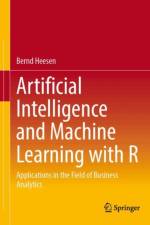
In a VUCA world, which is becoming increasingly volatile, uncertain, and complex, companies, organizations, and states must respond promptly and adequately to the respective situations. Making decisions based on past experiences is less successful in these times than having an accurate understanding of current conditions. The importance of empirical sciences, continuous environmental observation, timely analysis of causal relationships, and deriving new insights from them is increasing. From this, it can be deduced which measures are likely to achieve one's goals with predictable probability, such as which price for an offer generates the desired demand or which marketing measure reaches the desired target group.Where classical statistics were once used for calculations and predictions, today free (open source) tools like R allow data in various formats and from any number of sources to be read in, processed, and analyzed using methods of Artificial Intelligence and Machine Learning. The results can then be perfectly visualized so that decision-makers can benefit quickly and effectively.The age of Data Science has arrived. Digitalization is more than a buzzword or a promise; it is actionable and usable for everyone.This book teaches you, based on the latest version of R at the time of publication, how to use Artificial Intelligence and Machine Learning in Industry 4.0.
This book, authored by three experts with the assistance of GPT, provides comprehensive insights into the applications of generative AI, such as GPT, in the financial sector of businesses. It offers background information, benefits, as well as the challenges and risks associated with implementation. In addition to general applications within companies, specific use cases are also presented, focusing on areas such as controlling, business intelligence, accounting, investor relations, internal audit and control systems, risk management, auditing, and data privacy. The book concludes with a discussion on strategies for utilizing GPT effectively.
Technological and scientific progress, especially the rapid development in information technology (IT) and artificial intelligence (AI), plays a crucial role regarding questions of peace and security. This textbook, extended and updated in its second edition, addresses the significance, potential of IT, as well as the challenges it poses, with regard to peace and security.It introduces the reader to the concepts of peace, conflict, and security research, especially focusing on natural, technical and computer science perspectives. In the following sections, it sheds light on cyber conflicts, war and peace, cyber arms control, cyber attribution, infrastructures, artificial intelligence, as well ICT in peace and conflict.
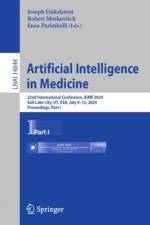
This two-volume set LNAI 14844-14845 constitutes the refereed proceedings of the 22nd International Conference on Artificial Intelligence in Medicine, AIME 2024, held in Salt Lake City, UT, USA, during July 9-12, 2024.The 54 full papers and 22 short papers presented in the book were carefully reviewed and selected from 335 submissions.The papers are grouped in the following topical sections:Part I: Predictive modelling and disease risk prediction; natural language processing; bioinformatics and omics; and wearable devices, sensors, and robotics.Part II: Medical imaging analysis; data integration and multimodal analysis; and explainable AI.
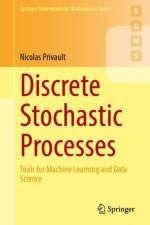
This text presents selected applications of discrete-time stochastic processes that involve random interactions and algorithms, and revolve around the Markov property. It covers recurrence properties of (excited) random walks, convergence and mixing of Markov chains, distribution modeling using phase-type distributions, applications to search engines and probabilistic automata, and an introduction to the Ising model used in statistical physics. Applications to data science are also considered via hidden Markov models and Markov decision processes. A total of 32 exercises and 17 longer problems are provided with detailed solutions and cover various topics of interest, including statistical learning.
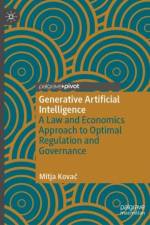
"AI is guaranteed to change nearly every aspect of our lives, but predicting how it will do so and determining what role law and regulation should play involve huge uncertainty. Kovac gives us an insightful roadmap, using the tools of law and economics, to our bewildering future. In the process, he also provides a comprehensive and necessary guide to understanding the regulatory and legal challenges we will face in the very near future."-Jonathan Klick, Charles A. Heimbold, Jr. Professor of Law, University of Pennsylvania and Erasmus Chair of Empirical Legal Studies, Erasmus University RotterdamThis book takes a comparative law and economics approach to explore the role of public and private actors in regulating generative artificial intelligence. The book provides an introduction and context for the creation of new generative AI technologies, now understood to be the chief goal of the leading AI companies. As autonomous 'super-intelligences', these technologies are still an unknown entity which nevertheless have profound implications for liberal democracy, consumer choice mechanisms, mutual trust, and political legitimacy.This book explores the deep challenges posed for lawmakers and how we can achieve an optimal form of regulation and governance of such unreliable technologies. Chapters investigate possible hybrid modes of regulation, such as a co-regulatory approach between private AI companies and public actors in addressing the issue of misinformation spread. It also explores mixed types of regulation toward research on new forms of AI, arguing that different levels of systemic risk posed by different technologies must be accounted for. Different contemporary and historical contexts for the regulation of unprecedented technical innovation are also considered, and new suggestions for policy are presented. This book is a timely resource which will be of interest to researchers and practitioners in economic governance, law and regulation, artificial intelligence, and comparative law.Mitja Kovä is full time Professor of Civil and Commercial Law at the University of Ljubljana, School of Economics and Business, Ljubljana, Slovenia. He is also a visiting lecturer at the Erasmus University Rotterdam, The Netherlands, at University of Ghent, Belgium, at the ISM University of Management and Economics in Vilnius, Lithuania, and at University of Vienna, Austria. He publishes in the fields of comparative contract law and economics, new institutional economics, consumer protection, contract theory and competition law and economics.
This book provides basic knowledge required by an application developer to understand and use the Fully Homomorphic Encryption (FHE) technology for privacy preserving Data-Science applications. The authors present various techniques to leverage the unique features of FHE and to overcome its characteristic limitations.Specifically, this book summarizes polynomial approximation techniques used by FHE applications and various data packing schemes based on a data structure called tile tensors, and demonstrates how to use the studied techniques in several specific privacy preserving applications. Examples and exercises are also included throughout this book.The proliferation of practical FHE technology has triggered a wide interest in the field and a common wish to experience and understand it. This book aims to simplify the FHE world for those who are interested in privacy preserving data science tasks, and for an audience that does not necessarily have a deep cryptographic background, including undergraduate and graduate-level students in computer science, and data scientists who plan to work on private data and models.
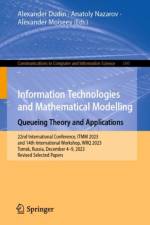
This book constitutes the refereed proceedings of the 2nd International Conference, ITMM 2023 and 14th International Workshop, WRQ 2023, held in Tomsk, Russia, during December 4¿9, 2023.The 23 full papers included in this book were carefully reviewed and selected from 96 submissions. The papers are devoted to new results in queueing theory and its applications, and also related areas of probabilistic analysis. Its target audience includes specialists in probabilistic theory, random processes, and mathematical modeling as well as engineers engaged in logical and technical design and operational management of data processing systems, communication, and computer networks.
This textbook introduces the theory and application of open source software (OSS) reliability.The measurement and management of open source software are essential to produce and maintain quality and reliable systems while using open source software. This book describes the latest methods for the reliability assessment of open source software. It presents the state of the art of open source software reliability measurement and assessment based on stochastic modeling and deep learning approaches. It introduces several stochastic reliability analyses of OSS computing with application along with actual OSS project data.The book contains exercises to aid learning and is useful for graduate students and researchers.
This book presents a detailed and innovative analysis of the governance, policies and ecosystem that define the Italian cybersecurity posture. It explores the complex interplay between technology and policy in shaping national security strategies in the digital era. The author introduces the reader to the critical importance of a policy-driven approach to cyber security, highlighting the challenges and necessary evolution prompted by rapid technological advancements and the expanding relevance of cyberspace. It emphasizes the multifaceted nature of cyber security that extends beyond technological solutions to encompass a broad socio-political analytical framework. The author also illustrates the need for an integrated approach that includes policies development, stakeholder engagement and strategic national objectives.This book delves into the organizational structure and dynamics of Italian national cybersecurity ecosystem, while shedding light on the collaborative interactions among different actors within this complex field. It meticulously outlines the roles and responsibilities of public, private and civil sectors in enhancing Italy¿s cyber resilience. Key developments such as the establishment of the National Cybersecurity Agency and the formulation of strategic objectives to safeguard national cyber perimeter are critically examined. This examination not only reflects on the strategies employed but also on the challenges and achievements in fostering a robust cyber security environment able to respond to both current and emerging threats. Through a blend of theoretical insights and practical case studies, supplemented by more than 30 semi-structured interviewees. This book also offers a comprehensive overview of efforts implemented by Italy in 10 years of policy making experience with the aim to structure the appropriate cyber security national institutional architecture. It provides valuable perspectives on the effectiveness of these policies, the ongoing adjustments required to address the fluid nature of cyber threats, and the implications of these efforts on both national and international scales.Upper-under graduate level and graduate level students in computer science or students interested in cybersecurity will want to purchase this book as a study guide. Researchers working in cybersecurity as well as Policy Makers, Legislators, Decision Makers and CISO will also want to purchase this book as a reference book.
By providing an accessible collection of short, practical insights, this book offers a framework for understanding the issues and implications of AI for individuals and organizations in this time of significant digital disruption.
This book is essential reading for anyone seeking to understand and navigate the rapidly evolving landscape of digital property and mortgage transactions. It offers understanding of the transformative forces that are shaping the digital property market, and it provides a warning to market incumbents on the need to evolve their business models.
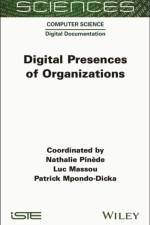
Organizations communicate in complex and various ways, and the context is mainly characterized by the pervasiveness of the digital ecosystem, including the Web, social networks and the Internet of data. However, its information delivery cannot overlook the requirements of multicultural communications at a variety of levels. Digital Presences of Organizations highlights the communication roadblocks faced by organizations as they emerge, arising not only from issues encountered on their own websites, but also as they construct online narratives. This multi-faceted and multi-strategy digital presence of organizations is addressed via three main thematic axes. The first focuses on differentiated strategies (content, services, interaction) that can be observed depending on the types of organizations and their users. The second examines the cultural dimension of websites, ranging from the local to the global. Finally, the third focuses on the role of narration in organizations' online communication strategies.
Autodesk Revit 2025 Architecture Basics is geared towards beginning architectural students or professional architects who want to get a jump-start into 3D parametric modeling for commercial structures. This book is filled with tutorials, tips and tricks, and will help you get the most out of your software in very little time.
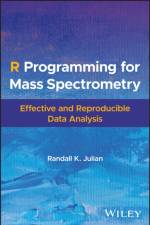
A practical guide to reproducible and high impact mass spectrometry data analysis R Programming for Mass Spectrometry teaches a rigorous and detailed approach to analyzing mass spectrometry data using the R programming language. It emphasizes reproducible research practices and transparent data workflows and is designed for analytical chemists, biostatisticians, and data scientists working with mass spectrometry. Readers will find specific algorithms and reproducible examples that address common challenges in mass spectrometry alongside example code and outputs. Each chapter provides practical guidance on statistical summaries, spectral search, chromatographic data processing, and machine learning for mass spectrometry. Key topics include: Comprehensive data analysis using the Tidyverse in combination with Bioconductor, a widely used software project for the analysis of biological data Processing chromatographic peaks, peak detection, and quality control in mass spectrometry data Applying machine learning techniques, using Tidymodels for supervised and unsupervised learning, as well as for feature engineering and selection, providing modern approaches to data-driven insights Methods for producing reproducible, publication-ready reports and web pages using RMarkdown R Programming for Mass Spectrometry is an indispensable guide for researchers, instructors, and students. It provides modern tools and methodologies for comprehensive data analysis. With a companion website that includes code and example datasets, it serves as both a practical guide and a valuable resource for promoting reproducible research in mass spectrometry.
Generative AI in the English Composition Classroom looks to the future, discussing the evolving skillsets required in the workforce and how educators can equip students for a future in which AI is an integral component. This book will be of interest to educators involved in teaching English composition and writing.
This book explores the transformative potential of Artificial Intelligence (AI) in addressing critical humanitarian challenges. It examines AI's role in enhancing emergency responses, poverty alleviation, and healthcare.
This book explores the transformative potential of Artificial Intelligence (AI) in addressing critical humanitarian challenges. It examines AI's role in enhancing emergency responses, poverty alleviation, and healthcare.
The text comprehensively discusses the representation of visual data and design principles of interactive and dynamic dashboards. It further covers the theoretical concept of inference and machine learning algorithms for making the concepts clear to the reader.
Abonner på vårt nyhetsbrev og få rabatter og inspirasjon til din neste leseopplevelse.
Ved å abonnere godtar du vår personvernerklæring.