















Gjør som tusenvis av andre bokelskere
Abonner på vårt nyhetsbrev og få rabatter og inspirasjon til din neste leseopplevelse.
Ved å abonnere godtar du vår personvernerklæring.Du kan når som helst melde deg av våre nyhetsbrev.

Advances in Neural Engineering: Brain-Computer Interfaces, Volume Two covers the broad spectrum of neural engineering subfields and applications. The set provides a comprehensive review of dominant feature extraction methods and classification algorithms in the brain-computer interfaces for motor imagery tasks. The book's authors discuss existing challenges in the domain of motor imagery brain-computer interface and suggest possible research directions. The field of neural engineering deals with many aspects of basic and clinical problems associated with neural dysfunction, including sensory and motor information, stimulation of the neuromuscular system to control muscle activation and movement, analysis and visualization of complex neural systems, and more.
A veteran Pulitzer Prize-winning journalist shadows the top thinkers in the field of Artificial Intelligence, introducing the breakthroughs and developments that will change the way we live and work. Artificial Intelligence has been "just around the corner" for decades, continually disappointing those who long believed in its potential. But now, with the emergence and growing use of ChatGPT, Gemini, and a rapidly multiplying number of other AI tools, many are wondering: Has AI's moment finally arrived?In AI Valley, Pulitzer Prize-winning journalist Gary Rivlin brings us deep into the world of AI development in Silicon Valley. Over the course of more than a year, Rivlin closely follows founders and venture capitalists trying to capitalize on this AI moment. That includes LinkedIn founder Reid Hoffman, the legendary investor whom the Wall Street Journal once called, "the most connected person in Silicon Valley."Through Hoffman, Rivlin is granted access to a number of companies on the cutting-edge of AI research, such as Inflection AI, the company Hoffman cofounded in 2022, and OpenAI, the San Francisco-based startup that sparked it all with its release at the end of that year of ChatGPT. In addition to Hoffman, Rivlin introduces us to other AI experts, including OpenAI cofounder Sam Altman and Mustafa Suleyman, the co-founder of DeepMind, an early AI startup that Google bought for $650 million in 2014. Rivlin also brings readers inside Microsoft, Meta, Google and other tech giants scrambling to keep pace. On this vast frontier, no one knows which of these companies will hit it big-or which will flame out spectacularly. In this riveting narrative marbled with familiar names such as Musk, Zuckerberg, and Gates, Rivlin chronicles breakthroughs as they happen, giving us a deep understanding of what's around the corner in AI development. An adventure story full of drama and unforgettable personalities, AI Valley promises to be the definitive story for anyone seeking to understand the latest phase of world-changing discoveries and the minds behind them.
"The AI Revolution" is a practical guide to using new AI tools, such as ChatGPT. Generative AI models produce text, images, music, videos, and even 3D models in a way that was previously believed to be impossible for machines.
Establishing a paradigm shift in the field of marketing, this thought-provoking scholarly work examines how customers, markets, and communities are groomed, socially conditioned, subliminally marketed to, and influenced by the use of AI technologies.
Discover the world of 3D Modeling and animation with Autodesk 3ds Max 2025 Basics Guide, a comprehensive and user-friendly guide designed for beginners and professionals alike.
Thos book is a comprehensive and interdisciplinary introduction to AI Safety. As AI threatens to transform society, it becomes increasingly more important to understand the risks that AI poses, and to learn what measures we can take to mitigate them.
Residential Design Using Autodesk Revit 2025 is designed for users completely new to Autodesk Revit. This text takes a project based approach to learning Autodesk Revit's architectural tools in which you develop a single family residence all the way to photorealistic renderings like the one on the cover.
In today's dynamic workplace environment, ensuring the safety and well-being of employees has never been more critical. This book explores cutting-edge technologies intersecting with workplace safety to deliver effective and practical results.
This book contains the proceedings of the 4TH International Conference on Computational Methods in Science and Technology (ICCMST 2024).
Whether your company already has ERP software in place or is considering rolling one out, you're going to need to figure out the best possible way to get the job done while causing the minimum amount of pain and damage. This book is designed to take you through the journey of what a typical rollout looks like and includes real stories from Evan Schwartz's experience in the field.
This book contains the proceedings of the 4TH International Conference on Computational Methods in Science and Technology (ICCMST 2024).
An overview on the use and application of GIS technologies in relation to Mediterranean archaeology in the Roman period.
In today's technology-driven environment there is an ever-increasing demand for information delivery. A compromise has to be struck between security and availability. This book is a pragmatic guide to information assurance for both business professionals and technical experts.
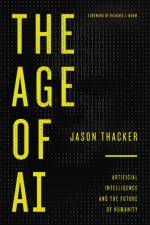
In The Age of AI, researcher Jason Thacker explores how the prevalence of artificial intelligence shapes what it means to be human today - and how the fact that we are made in the image of God transforms everything about how we use it.
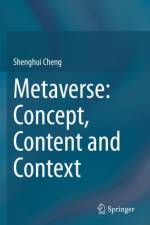
The metaverse, a hybrid society of the real and the virtual is attracting significant attention from academia to industry and is starting to change the world. Composed of ten chapters, this book introduces the metaverse from three aspects ¿ concept, content and context. It starts with numerous concepts related to the metaverse, such as virtual reality, augmented reality, Web 3.0 and NFTs and describes the background, features, advantages and disadvantages. It then presents the content or key techniques around the metaverse, Artificial Intelligence, big data, edge computing, 3D modeling and blockchain. For each technique, it depicts how it performs to advance the development of the metaverse. Finally, it gives the context of the metaverse and illustrates the new society in the virtual world, consisting of economic systems, assets, social activities, security, law, etcetera. Overall, Metaverse: Concept, Content and Context provides a panoramic view of the metaverse, a key feature of which is the intuitive visualizations with numerous figures that clearly address the main aspects. This book is well-designed and well-written and will appeal to beginners and students as well as professionals, welcome to the metaverse community!
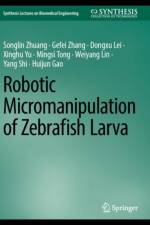
This book offers readers a series of robotic methods for manipulating zebrafish larva, one of the most popular model vertebrates widely used in biomedical research and clinical applications. The authors leverage advanced control theories, image processing algorithms, and artificial intelligence to establish a robot-assisted automated or semi-automated zebrafish larva-targeted micromanipulation system for different experimental purposes. The methods presented are generic and can be translated to manipulate other types of biological objects, such as embryos or cells. Coverage includes topics that span the procedures of manipulating zebrafish larva, such as in-plane positioning, three-dimensional orientation, deformation-controllable immobilization, organ-targeted microinjection, whole-organism imaging, and high-throughput trajectory tracking of zebrafish larvae group movement.Robotic Micromanipulation of Zebrafish Larva is written in a simple, clear, and easy-to-read style. It is an ideal reference for academic researchers and biomedical operators. It is also a valuable resource for students learning robotics, control and system theories, image processing, artificial intelligence, and biomedical engineering.
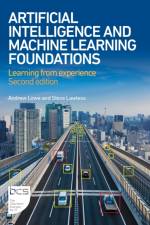
In alignment with BCS AI Foundation and Essentials certificates, this introductory guide provides the understanding you need to start building artificial intelligence (AI) capability into your organisation.
This book problematizes and explores appropriate ways of using AI technology that can augment educational practice, especially in K-12 teaching and learning. It was originally published as a special issue of Computers in the Schools.
The book explores the regulatory and institutional aspects of global governance of space cybersecurity.
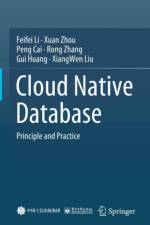
This book analyzes in detail the technological evolution process of databases in the era of cloud computing and explains how traditional database technology has gradually developed to cloud-native form from multiple perspectives such as architecture design, implementation mechanism, and system optimization. This book emphasizes the full combination of theory and practice and also analyzes the SQL optimization and execution, transaction processing, caching and indexing principles of databases implemented by MySQL, PostgreSQL and other systems, what trade-offs and compromises are made in the face of actual application requirements, how to optimize in the face of complex application scenarios, and the reasons behind making various choices. At the same time, combined with Alibaba Cloud's R&D experience in the database field, this book focuses on a series of core technical principles of modern database evolution from system to service, such as the use of cloud computing resource pooling technology and distributed technology to achieve high availability, elastic expansion, and on-demand use of databases.The book is informative, combines theoretical depth and implementation details, and openly explores the new development direction of the database, which can inspire readers to think further.
This book explains basic ideas behind several methods used in artificial intelligence-based knowledge management techniques. It also shows how these techniques are applied in practical contexts in different education sectors. The book discusses AI-based knowledge management applications, AI-empowered knowledge management in primary and higher education, and technical and ethical challenges and opportunities.
DESCRIPTION Our book is divided into several useful concepts and techniques of machine learning. This book serves as a valuable resource for individuals seeking to deepen their understanding of advanced topics in this field. Learn about various learning algorithms, including supervised, unsupervised, and reinforcement learning, and their mathematical foundations. Discover the significance of feature engineering and selection for enhancing model performance. Understand model evaluation metrics like accuracy, precision, recall, and F1-score, along with techniques like cross-validation and grid search for model selection. Explore ensemble learning methods along with deep learning, unsupervised learning, time series analysis, and reinforcement learning techniques. Lastly, uncover real-world applications of the machine and deep learning algorithms.After reading this book, readers will gain a comprehensive understanding of machine learning fundamentals and advanced techniques. With this knowledge, readers will be equipped to tackle real-world problems, make informed decisions, and develop innovative solutions using machine and deep learning algorithms.WHAT YOU WILL LEARN¿ Ability to tackle complex machine learning problems.¿ Understanding of foundations, algorithms, ethical issues and how to implement each learning algorithm for their own use/ with their data.¿ Efficient data analysis for real-time data will be understood by researchers/ students.¿ Using data analysis in near future topics and cutting-edge technologies.WHO THIS BOOK IS FORThis book is ideal for students, professors, and researchers. It equips industry experts and academics with the technical know-how and practical implementations of machine learning algorithms.
This book intends to provide a collection of various MCQs on data scienceDESCRIPTION This book is a comprehensive manual created to assess and improve your comprehension of many concepts and methodologies in data science. The course encompasses a broad spectrum of subjects, such as data preprocessing, Machine Learning techniques, data visualization, statistical analysis, and additional topics. Every chapter is organized with a series of multiple-choice questions that test your understanding and allow you to evaluate your expertise in the subject. The book's objective is to offer a pragmatic and captivating approach for readers to enhance their proficiency in data science through practical exercises. The book provides an extensive examination of several subjects in data science, encompassing data preprocessing, statistical analysis, Machine Learning techniques, data visualization, and additional areas. This extensive knowledge helps readers acquire a full and all-encompassing comprehension of the subject matter. The chapters in this book adhere to a structured framework, which includes multiple-choice questions that enable readers to assess their understanding and grasp of the content. KEY FEATURES ¿ Comprehensive coverage of data science concepts and features.¿ Multiple-choice questions to test and assess knowledge effectively.¿ Over 5000 multiple-choice questions for practice.WHAT YOU WILL LEARN¿ Mastering data science concepts through multiple-choice questions.¿ Strengthening problem-solving skills by practicing diverse scenarios.¿ Interpreting the results of data analyses and Machine Learning models effectively.¿ Evaluating the performance of different Machine Learning models using metrics.¿ Developing critical thinking skills to assess the suitability of various data science approaches.¿ Preparing for exams, interviews, and quizzes, etc.WHO THIS BOOK IS FORThis data science MCQ book is perfect for anyone looking to test and improve their knowledge of data through multiple-choice questions.
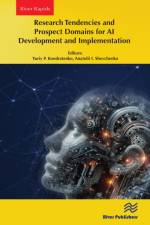
This book analyzes AI implementation priorities and trends, exploring global and NATO strategies, with a focus on Ukraine's AI development. Part 1 covers worldwide AI priorities and educational impacts, while Part 2 examines new AI research trends, including quantum and color fuzzy computing, AI in shipbuilding, and neural networks.
This Rapids book is an analysis of quantum computing, covering everything from its foundational principles to practical applications in the development of quantum services.
Abonner på vårt nyhetsbrev og få rabatter og inspirasjon til din neste leseopplevelse.
Ved å abonnere godtar du vår personvernerklæring.