



















Gjør som tusenvis av andre bokelskere
Abonner på vårt nyhetsbrev og få rabatter og inspirasjon til din neste leseopplevelse.
Ved å abonnere godtar du vår personvernerklæring.Du kan når som helst melde deg av våre nyhetsbrev.

Comprehensive forensic reference explaining how file systems function and how forensic tools might work on particular file systems File System Forensics delivers comprehensive knowledge of how file systems function and, more importantly, how digital forensic tools might function in relation to specific file systems. It provides a step-by-step approach for file content and metadata recovery to allow the reader to manually recreate and validate results from file system forensic tools. The book includes a supporting website that shares all of the data (i.e. sample file systems) used for demonstration in the text and provides teaching resources such as instructor guides, extra material, and more. Written by a highly qualified associate professor and consultant in the field, File System Forensics includes information on: Preliminary concepts for necessary studying file system forensics for anyone with basic computing experience but without specific knowledge on digital forensics and file systems File systems specific to Windows, Linux, and macOS, with coverage of FAT, ExFAT, and NTFS Advanced topics such as deleted file recovery, fragmented file recovery, searching for particular files, links, checkpoints, snapshots, and RAID Issues facing file system forensics today and various issues that might evolve in the field in the coming years File System Forensics is an essential, up-to-date reference on the subject for graduate and senior undergraduate students in digital forensics, as well as digital forensic analysts and other law enforcement professionals.
In a world where the pace of technological advancement continues to accelerate, the imperative to ensure sustainable development has never been more pressing to address the same.
The second edition of Reverse Engineering of Algebraic Inequalities is a comprehensively updated new edition demonstrating the exploration of new physical realities and creation of new knowledge in various unrelated domains of human activity through reverse engineering of algebraic inequalities.
The book provides an in-depth discussion of various Hybrid Nanostructures as solid-state sensors in the context of the Internet of Things (IoT). It explains the vital role that sensors play in IoT to aid in discovering what possibilities ought to be addressed to make the data more meaningful.
Brain Technology in Augmented Cognition: Current and Future Trends informs engineers interested in human-computer interaction about the current state of augmented cognition. Its scope includes recent advances in electroencephalography (EEG), neural network, and brain-computer interface (BCI) brain technologies.
A flexible supply chain system creates postal communication agility and adaptability to respond to the changing technologies of the modern era. This book focuses on how Industrial Engineering can be used to achieve flexibility, resiliency, and efficiency in response to the needs of the global postal system.
The book explores a range of mathematical topics essential for application in engineering and applied sciences. It explores both the theoretical and practical aspects, providing a comprehensive foundation for the development of robust theories applicable to engineering and applied sciences.
This book presents state-of-the art, high-level synthesis methodologies for hardware security and trust, including IP protection through synthesis-based watermarking and structural obfuscation.
As manufacturing organizations grapple with the imperative to foster sustainability, environmental, social, and governance (ESG) principles can be used as a guiding framework. This book seeks to explore the intersection of ESG and manufacturing technology.
Enter the wonderful world of graph algorithms, where you’ll learn when and how to apply these highly useful data structures to solve a wide range of fascinating (and fantastical) computational problems.Graph Algorithms the Fun Way offers a refreshing approach to complex concepts by blending humor, imaginative examples, and practical Python implementations to reveal the power and versatility of graph based problem-solving in the real world. Through clear diagrams, engaging examples, and Python code, you’ll build a solid foundation for addressing graph problems in your own projects.Explore a rich landscape of cleverly constructed scenarios where:Hedge mazes illuminate depth-first searchUrban explorations demonstrate breadth-first searchIntricate labyrinths reveal bridges and articulation pointsStrategic planning illustrates bipartite matchingFrom fundamental graph structures to advanced topics, you will:Implement powerful algorithms, including Dijkstra’s, A*, and Floyd-WarshallTackle puzzles and optimize pathfinding with newfound confidenceUncover real-world applications in social networks and transportation systemsDevelop robust intuition for when and why to apply specific graph techniquesDelve into topological sorting, minimum spanning trees, strongly connected components, and random walks. Confront challenges like graph coloring and the traveling salesperson problem.Prepare to view the world through the lens of graphs—where connections reveal insights and algorithms unlock new possibilities.
AI is going to change brand strategy and marketing forever. Are you ready?What does the rapid rise and astonishing rate of improvement of AI mean for brands in the next five years? Listen to what OpenAI CEO Sam Altman told authors Adam Brotman and Andy Sack when he met them: "It will mean that 95% of what marketers use agencies, strategists, and creative professionals for today will easily, nearly instantly, and at almost no cost be handled by the AI--and the AI will likely be able to test the creative against real or synthetic customer focus groups. No problem."With that astonishing statement, the authors began a journey of discovery to understand what this transition to an AI-first world means. You'll hear from a who's who of tech visionaries who spoke with the authors, including Altman, Bill Gates, and Reid Hoffman, sharing how they're thinking of the transition to the new reality. You'll also hear from practitioners bold enough to be surfing this tidal wave of change, including one who audaciously mandated experimentation with AI for all his employees.Brotman is the former chief digital officer at Starbucks, pivotal in the development of the coffee giant's mobile payment and loyalty programs. Sack is a legendary tech visionary and former adviser to Microsoft CEO Satya Nadella. Together, they formed strategic consultancy Forum3 to take on every aspect of the challenge to becoming an AI-first organization, including how you think about the design of jobs, what skills you need to start developing, what customers will expect from brands that they don't today, how to achieve early wins, and how to compete in an AI-first arena, where nearly anyone can build creatively engaging brands quickly and cheaply.It's time to get ready for a brand-new world. Start here.
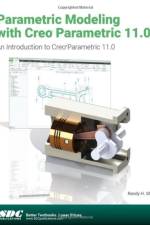
The primary goal of Parametric Modeling with Creo Parametric 11.0 is to introduce the aspects of Solid Modeling and Parametric Modeling. This text is intended to be used as a training guide for any student or professional wanting to learn to use Creo Parametric.
Technical Drawing 101 with AutoCAD begins with technical and multi-view drawing basics. The CAD portion of the text incorporates drafting theory whenever possible and covers the basics of drawing setup (units, limits, and layers), the tools of the Draw, Modify, and Dimension toolbars, and the fundamentals of 3D modeling.
The 1st International Conference on Intelligent Computation and Analytics on Sustainable Energy (ICICASEE 2023) was held at Ghani Khan Choudhury Institute of Engineering & Technology (GKCIET), Malda, West Bengal, India.
The conference on 'Substantial Materials Processing and Manufacturing (SMPM)' aims to bring together scientists, researchers, and companies to attend and share their vision, ideas, recent developments as well as advanced scientific and technical knowledge in the field of materials processing and manufacturing.
This book teaches regression methods for continuous, binary, ordinal, and time-to-event outcomes using R as a tool. Regression is a useful tool for understanding the associations between an outcome and a set of explanatory variables, and regression methods are commonly used in many fields.
This book explores the efficacy of cybersecurity and anti-phishing training and awareness programs, as well as internal messaging and discusses mitigation strategies.
This book presents an exciting new theory of time for a world built on hyper-fast digital media networks.It explains how super-powerful computers and global webs of connection have remade time through speed.
Unlock efficiency in software development by learning microservices with C# and AzureKey Features:- Gain step-by-step project-based guidance on how to develop a full-fledged microservices application- Gain extensive knowledge of microservices by covering essential concepts, tools, and methodologies- Acquire skills to deploy and manage microservices on MS Azure- Purchase of the print or Kindle book includes a free PDF eBookBook Description:This book introduces .NET Aspire and its features for developing microservices. It delves into defining an app model for an application's services, using service discovery, and integrating components locally and via native cloud services with Azure. It offers practical insights and hands-on experience, exploring microservices concepts in ASP.NET Core.You'll learn how to develop robust services using .NET features such as minimal APIs, gRPC, and SignalR for real-time communication. The book also covers essential aspects of DevOps, testing methodologies including unit, integration, and load testing, and logging and monitoring including OpenTelemetry using tools such as Azure Log Analytics, Application Insights, Prometheus, and Grafana. You'll understand how asynchronous communication leveraging queues and events is facilitated through Azure Event Hub and Apache. Throughout the book, you'll not only discover the theoretical aspects but also gain practical skills by building and deploying a fully functional microservices-based application.By the end of this book, you'll have a deep understanding of microservices architecture, hands-on experience with various .NET technologies and Azure services, and the ability to design, build, deploy, and manage microservices applications effectively in both on-premises and cloud environments.What You Will Learn:- Understand microservices architecture benefits- Utilize the cloud-ready .NET Aspire stack along with its associated tools and libraries- Develop REST APIs with ASP.NET Core minimal APIs- Implement database integration with relational and NoSQL databases- Containerize microservices using Docker- Deploy microservices to the Azure Container Apps environment and Kubernetes- Configure logging, monitoring, and tracing for microservices- Use advanced communication patterns with SignalR, gRPC, queues, and eventsWho this book is for:This book is for software developers, architects, and engineers who are interested in adopting microservices architecture using the .NET framework and Microsoft Azure. Both intermediate and advanced developers who have a foundational understanding of C#, ASP.NET Core, and cloud computing concepts will find this book helpful.
Taking the reader on a journey through queer manifestations in games, this book advocates for video games as a rich, political and cultural medium, which provides us with tools to navigate the future of gaming.
Become an API security professional and safeguard your applications against threats with this comprehensive guide Key Features- Gain hands-on experience in testing and fixing API security flaws through practical exercises- Develop a deep understanding of API security to better protect your organization's data- Integrate API security into your company's culture and strategy, ensuring data protection- Purchase of the print or Kindle book includes a free PDF eBookBook DescriptionAPIs have evolved into an essential part of modern applications, making them an attractive target for cybercriminals. Written for security professionals and developers, this comprehensive guide offers practical insights into testing APIs, identifying vulnerabilities, and fixing them.With a focus on hands-on learning, this book guides you through securing your APIs in a step-by-step manner. You'll learn how to bypass authentication controls, circumvent authorization controls, and identify vulnerabilities in APIs using open-source and commercial tools. Moreover, you'll gain the skills you need to write comprehensive vulnerability reports and recommend and implement effective mitigation strategies to address the identified vulnerabilities. This book isn't just about hacking APIs; it's also about understanding how to defend them. You'll explore various API security management strategies and understand how to use them to safeguard APIs against emerging threats.By the end of this book, you'll have a profound understanding of API security and how to defend against the latest threats. Whether you're a developer, security professional, or ethical hacker, this book will ensure that your APIs are secure and your organization's data is protected.What you will learn- Implement API security best practices and industry standards- Conduct effective API penetration testing and vulnerability assessments- Implement security measures for API security management- Understand threat modeling and risk assessment in API security- Gain proficiency in defending against emerging API security threats- Become well-versed in evasion techniques and defend your APIs against them- Integrate API security into your DevOps workflow- Implement API governance and risk management initiatives like a proWho this book is forIf you're a cybersecurity professional, web developer, or software engineer looking to gain a comprehensive understanding of API security, this book is for you. The book is ideal for those who have beginner to advanced-level knowledge of cybersecurity and API programming concepts. Professionals involved in designing, developing, or maintaining APIs will also benefit from the topics covered in this book. Table of Contents- Introduction to API Architecture and Security- The Evolving API Threat Landscape and Security Considerations - OWASP API Security Top 10 Explained - API Attack Strategies and Tactics- Exploiting API Vulnerabilities- Bypassing API Authentication and Authorization Controls - Attacking API Input Validation and Encryption Techniques - API Vulnerability Assessment and Penetration Testing- Advanced API Testing: Approaches, Tools, and Frameworks- Using Evasion Techniques- Best Practices for Secure API Design and Implementation- Challenges and Considerations for API Security in Large Enterprises- Implementing Effective API Governance and Risk Management Initiatives
Walk around an arcade nowadays and you'll find it filled with countless penny pushing games and fruit machines. In the Seventies and Eighties it was a completely different scenario with those machines playing second fiddle to countless arcade games. While home computers were moving at an astonishing rate they still couldn't compete with the incredible games that were being released in the arcades. It was an insanely exciting time to be a gamer and it seemed like a new mechanic or type of game was appearing every time you visited your local arcade. Pong, Asteroids, Street Fighter, Pac Man, Space Invaders and Donkey Kong are all featured in this book. Sure, many of those games that took your breath away would eventually appear on your own home system, but they were never as good as the originals. Retro Arcade Classics looks at all the greatest arcade content so you can relive one of gaming's most amazing periods.
Abonner på vårt nyhetsbrev og få rabatter og inspirasjon til din neste leseopplevelse.
Ved å abonnere godtar du vår personvernerklæring.