


















Gjør som tusenvis av andre bokelskere
Abonner på vårt nyhetsbrev og få rabatter og inspirasjon til din neste leseopplevelse.
Ved å abonnere godtar du vår personvernerklæring.Du kan når som helst melde deg av våre nyhetsbrev.

"This book explores the democratization of music in our current era made possible by digital technologies. It investigates how the utopian ideals and experimental practices of 20th-century musicians helped to spawn the recent seismic disruptions to the art form. In the current environment of networked connectivity, music has become ubiquitous and increasingly intertwined with everyday life, rendering previous models of creation, performance, dissemination, and consumption largely obsolete"--
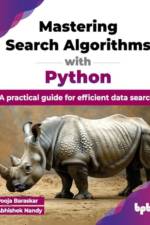
DESCRIPTION In today's era of Artificial Intelligence and the vast expanse of big data, understanding how to effectively utilize search algorithms has become crucial. Every day, billions of searches happen online, influencing everything from social media recommendations to critical decisions in fields like finance and healthcare. Behind these seemingly straightforward searches are powerful algorithms that determine how information is discovered, organized, and applied, fundamentally shaping our digital interactions. This book covers various search algorithms, starting with linear and binary searches, analyzing their performance, and implementing them in Python. It progresses to graph traversal algorithms like DFS and BFS, including Python examples and explores the A* algorithm for optimal pathfinding. Advanced search techniques and optimization best practices are discussed, along with neural network applications like gradient descent. You will also learn to create interactive visualizations using Streamlit and explore real-world applications in gaming, logistics, and Machine Learning.KEY FEATURES ¿ Comprehensive coverage of a wide range of search algorithms, from basic to advanced. ¿ Hands-on Python code examples for each algorithm, fostering practical learning.¿ Insights into the real-world applications of each algorithm, preparing readers for real-world challenges.WHAT YOU WILL LEARN¿ Understand basic to advanced search algorithms in Python that are crucial for information retrieval.¿ Learn different search methods like binary search and A* search, and their pros and cons.¿ Use Python's visualization tools to see algorithms in action for better understanding.¿ Enhance learning with practical examples, challenges, and solutions to boost programming skills.WHO THIS BOOK IS FORThis book is for software engineers, data scientists, and computer science students looking to master search algorithms with Python to optimize search algorithms in today's data-driven environments.
This book offers a comprehensive scholarly analysis of the digital adaptation of Indigenous African communication methods, challenging conventional narratives of media development through real life case studies to highlight the resilience and relevance of African cultural expressions in an increasingly interconnected world.
This book investigates various public aspects of the management, use, and control of social media by police agencies in Canada. This book aims to illustrate the process by which new information technologynamely, social mediaand related changes in communication formats have affected the public face of policing and police work. Schneider argues that police use of social media has altered institutional public police practices in a manner that is consistent with the logic of social media platforms. Policing is changing to include new ways of conditioning the public, cultivating self-promotion, and expanding social control. While each case study presented here focuses on a different social media platform or format, his concern is less with the particular format per se, as these will undoubtedly change, and more with developing suitable analytical and methodological approaches to understanding contemporary policing practices on social media sites.
Federated machine learning is a novel approach to combining distributed machine learning, cryptography, security, and incentive mechanism design. It allows organizations to keep sensitive and private data on users or customers decentralized and secure, helping them comply with stringent data protection regulations like GDPR and CCPA.
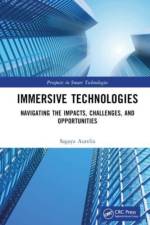
Immersive technology is going to govern the next generation in terms of education, health, military, tourism, and much more. Through its comprehensive exploration, didactic approach, and insightful analyses, this book provides an invaluable resource for understanding and harnessing the power of immersive technology.
This book explores the relationship between video games and satire through an in-depth examination of Capcom's Dead Rising series, which alludes to, recontextualises, and builds upon George A. Romero's filmic satire on American consumer culture, Dawn of the Dead.
Ethos, Technology, and AI in Contemporary Society: The Character in the Machine explores our current understanding of and attitudes toward ethos, credibility, trust, and technology. This book will be of interest to students and scholars in the fields of Rhetoric, Communication Studies, and many others.
The Companion to Digital Humanities in Practice offers international perspectives on how we teach and research in and with digital humanities today.
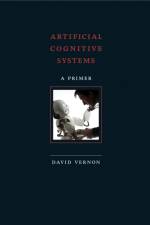
A concise introduction to a complex field, bringing together recent work in cognitive science and cognitive robotics to offer a solid grounding on key issues. This book offers a concise and accessible introduction to the emerging field of artificial cognitive systems. Cognition, both natural and artificial, is about anticipating the need for action and developing the capacity to predict the outcome of those actions. Drawing on artificial intelligence, developmental psychology, and cognitive neuroscience, the field of artificial cognitive systems has as its ultimate goal the creation of computer-based systems that can interact with humans and serve society in a variety of ways. This primer brings together recent work in cognitive science and cognitive robotics to offer readers a solid grounding on key issues. The book first develops a working definition of cognitive systems--broad enough to encompass multiple views of the subject and deep enough to help in the formulation of theories and models. It surveys the cognitivist, emergent, and hybrid paradigms of cognitive science and discusses cognitive architectures derived from them. It then turns to the key issues, with chapters devoted to autonomy, embodiment, learning and development, memory and prospection, knowledge and representation, and social cognition. Ideas are introduced in an intuitive, natural order, with an emphasis on the relationships among ideas and building to an overview of the field. The main text is straightforward and succinct; sidenotes drill deeper on specific topics and provide contextual links to further reading.
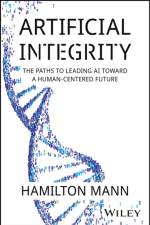
Navigating the transitions to the future of AI--Integrity over Intelligence Envision a world where artificial intelligence can deliver integrity-led outcomes seamlessly, adapting to diverse cultural context, value models, and situational nuances, countering subconscious biases, all while operating in an advanced human-centered manner. This is the promise of Artificial Integrity. In Artificial Integrity, digital strategist, technologist, doctoral researcher, acclaimed management thinker and seasoned business executive Hamilton Mann emphasizes that the challenge of AI is in ensuring systems that exhibit integrity-led capabilities over the pursuit of mere general or super intelligence. Mann tackles the inadequacies of traditional ethical frameworks in handling the complexities of new AI technologies to make them trustworthy and reliable as they profoundly impact human lives. Introducing the transformative concept of "artificial integrity," Mann proposes a paradigm shift, defining a "code of design" to ensure AI systems align with, amplify, and sustain human values and societal norms, maximizing integrity-led AI outcomes. Artificial Integrity discusses practical insights into driving a future where AI enhances, not replaces human capabilities while being inclusive and reflective of diverse human experiences., emphasizing human agency. This new framework providing an exploration on how AI should take place in society upholding human values, sets a new standard for Frontier AI. The book offers: Guiding posts and step by step into designing, implementing and continuously aligning AI development to responsibly advance human and artificial co-intelligence Strategies and actionable advice for integrating AI into business and societal structures Practical paths forward toward managing the transitions into the future of AI's role in augmenting human productivity and decision-making experiences while maintaining sustainable trustworthiness Artificial Integrity is essential for anyone involved in AI development, from Executives, business leaders and managers to entrepreneurs, tech enthusiasts and policymakers. It's also perfect for laypeople interested in how AI intersects with society. Dive into this compelling and thought provoking read to ensure you are prepared for the challenges and opportunities that lie ahead in a human-centered AI-driven future.
In November 2022, OpenAI released GPT-4 in a chatbot form to the public. In just two months, it claimed 100 million users, the fastest app to ever reach this benchmark. Since then, AI has become an all-consuming topic - but as AI becomes more ubiquitous and grows at an ever-increasing pace, what does it mean for the financial markets, and how should investors prepare?In MoneyGPT, James Rickards shares his signature predictions of the danger AI poses to the global financial order, and the insidious ways in which AI will threaten national security. Rickards shows how, while AI is touted to increase efficiency and lower costs, its global implementation in the financial world will actually cause chaos, as selling begets selling and bank runs happen at lightning speed. AI further benefits malicious actors, Rickards argues, because without human empathy or instinct to intervene, threats like total nuclear war that once felt extreme are now within reach. And throughout all this, we must remain vigilant on the question of whose values will be promoted in the age of AI. As Rickards predicts, these systems will fail just when they are needed the most.MoneyGPT shows that the danger is not that AI will malfunction, but that it will function exactly as intended. The peril is not in the algorithms, but in ourselves. And it's up to us to intervene with old-fashioned human logic before it's too late. Rickards' take is essential reading for anyone looking to navigate this tumultuous new AI climate.
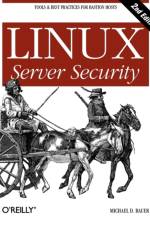
Conveys to administrators and developers the tricks of the trade that can help them avoid serious security breaches. It covers both background theory and practical step-by-step instructions for protecting a server that runs Linux.
This book argues for neuromorphic systems as a technology of the future, which are oriented towards the energy efficiency of natural brains. Energy efficiency is a dramatic claim in times of environmental and climate challenges which should consider the sustainability goals of the United Nations (UN). Mathematically, neuromorphic computing is connected to analogue ('real') computing, which theoretically overcomes the limits of digital Turing computability. Therefore, the book also considers material sciences and engineering sciences which start to realize neuromorphic computing in hardware. Other mathematical formalisms such as quantum mechanics also open up new solutions (e.g., quantum computing) beyond the limits of digital Turing computability. These research fields are no longer merely of theoretical interest, they promise increasing innovation power of market interest. Nevertheless, neuromorphic computing is connected with deep logical, mathematical, and epistemic questions. Does it open new avenues to Artificial General Intelligence (AGI)? All these tendencies of research and innovation demonstrate that we need more integrated research in the foundations of logic, mathematics, physics, engineering sciences, cognitive science, and philosophy. The book is a plea for this kind of research.
This book will review cutting edge technologies and advanced research, which can realize and evaluate the effectiveness and advantages of SplitFed learning for advancing and securing IoTs.
The primary goal of Introduction to Finite Element Analysis Using Creo Simulate 11.0 is to introduce the aspects of finite element analysis (FEA) that are important to engineers and designers. This text is intended to be used as a training guide for both students and professionals.
This text discusses resource management solutions for the Internet of Things devices in fog computing architecture, management of metropolitan mobility for public transport and smart vehicles with cloud, fog, and edge computing, and waste management with cloud and fog computing for sustainable development.
The scope of this book is widened for language researchers, policy makers, readers and administrators of the government to analyse some of the problems and issues mentioned in this book and develop a roadmap for better education.
The Routledge Companion to Transnational Web Archive Studies explores the untapped potential of web archives for researching transnational digital history and communication. It covers cross-border, cross-collection, and cross-institutional examination of web archives on a global scale.
This book summarizes more than two decades of work on advanced calibration techniques for vector network analyzers (VNA) and is written so every electrical engineer with knowledge of electrical circuits and linear algebra basics can understand the principles of VNA calibration techniques.
Offers the most comprehensive analysis and discussion of medievalist computer games to date.
Abonner på vårt nyhetsbrev og få rabatter og inspirasjon til din neste leseopplevelse.
Ved å abonnere godtar du vår personvernerklæring.