





















Gjør som tusenvis av andre bokelskere
Abonner på vårt nyhetsbrev og få rabatter og inspirasjon til din neste leseopplevelse.
Ved å abonnere godtar du vår personvernerklæring.Du kan når som helst melde deg av våre nyhetsbrev.

Explore the potential and risks of generative AI in the legal industry In AI in Legal Tech: How Generative AI Is Transforming Legal Technology and the Practice of Law, legal-tech pioneer and eDiscovery guru Catherine Casey--aka, TechnoCat--delivers a startlingly insightful and up-to-date discussion of the risks and opportunities presented by generative AI in the legal sector. The author walks you through generative AI's impact on the practice of law, legal ethics, and legal careers, offering guidance and clarity on a rapidly evolving technology. Balancing engaging narrative with expert analysis, AI in Legal Tech is written specifically for non-technical legal professionals and students doing their best to navigate the intersection of technology and law. You'll find: Explanations of how AI is shaping new legal careers and what you can do to find success in your own A "Legal Tech Survival Kit," complete with a comprehensive Legal AI glossary and must-try tools for tech-savvy lawyers Insights from the "front lines" of legal AI and the people designing the technologies shaping tomorrow's legal industry Perfect for practicing lawyers, law students, and law practice managers, AI in Legal Tech will also prove invaluable to legal technologists, paralegals, and anyone else interested in the application of the latest tech to the legal field.
Practical guide to navigate problems involved with promiscuous ligands and multi-target drug discovery, supported by case studies and real examples Polypharmacology covers the two-sided nature of polypharmacology: its relevance for adverse drug effects, as well as its benefit for certain therapeutic drug classes in effectively treating complex diseases like psychosis and cancer. The book provides practical guidelines and advice to help readers design drugs that have multiple targets while minimizing unwanted off-target effects, discusses important disease areas like viral infection, diabetes, and obesity that have advanced significantly in the last decade, and guides researchers in neighboring areas to polypharmacology. The book is divided into four parts. Part A covers the link between off-targets and adverse drug reactions, how to screen for off-target activity, and how to recognize and optimize compounds with a potential for off-target activity. Part B discusses disease areas which benefit from polypharmacological approaches. Part C highlights important approaches, such as compound design, data mining with web-based tools, and multi-target peptides. Part D provides case study coverage on topics like CDK4/6 inhibitors for cancer treatment, the potential of multi-target ligands for COVID, and protein degraders and PROTACs. Sample topics discussed in Polypharmacology include: Molecular properties and structural motifs in pharmacological promiscuity, covering lipophilicity, molecular weight, and other parameters Kinase liabilities in early drug discovery, covering core kinases driving the cell division cycle and consequences of interference, and cell cycle checkpoints controlling cell division Treatment of major depressive disorder, covering tricyclic antidepressants, monoamine oxidase inhibitors, and selective serotonin and norepinephrine reuptake inhibitors Trends in the field, such as novel antipsychotics, standardization of screening tools, and the SmartCube System(R), as well as lessons from history Delivering the latest research developments in the field, Polypharmacology is an essential reference on the subject for medicinal chemists, pharmacologists, biochemists, computational chemists, and biologists, as well as pharmaceutical professionals involved in drug discovery programs.
This book presents a fresh perspective on combating cybercrime, showcasing innovative solutions from experts across various fields. With the integration of artificial intelligence (AI), contemporary challenges are addressed with state-of-the-art strategies.
As providing online consent has become increasingly difficult, some have argued that surveillance capitalism needs to be overthrown. This book presents a different perspective. It departs from the concept of revolutionary change to focus on pragmatic, incremental solutions tailored to everyday contexts.
This book "Securing the Digital Realm: Advances in Hardware and Software Security, Communication, and Forensics" is a comprehensive guide that explores the intricate world of digital security and forensics.
The dramatic acceleration of digital technologies and their integration into physical products is transforming everyday objects. Our domestic appliances, furniture, clothing, are growing in intelligence. Smart objects are increasingly capable of interacting with humans in a purposeful manner with intentionality. This collection of essays, descriptions of empirical work, and design case studies brings together perspectives from interaction design, the humanities, science and technology studies, and engineering, to map, explore and interrogate ways in which our relationships with everyday smart objects might expand and be re-imagined. By offering a critical assessment on the growing place of smart technology in everyday environments, this book outlines a transdisciplinary research agenda for the future of 'smartness' to help define, envision, and inspire future collaborative design practices. These essays propose an understanding and design of smart objects that embrace their hybrid nature as shifting and blending tools, agents, machines, or even 'creatures'. Authors argue that smart objects have the potential to enter into multiple kinds of relationships with humans, and form complex human-nonhuman ecologies that are both meaningful and empowering in the context of everyday life. This book also shines a light on the hidden infrastructures behind the functioning of smart objects with stirring debates tackling questions of technology, human values, and economic and ecological impact. Whether you are a design scholar, design practitioner or design activist this book will inspire through offering theoretical insights, design concepts and practical ways on how to engage in this research agenda for future smartness.
Discover how to leverage Keras, the powerful and easy-to-use open source Python library for developing and evaluating deep learning modelsKey Features Get to grips with various model evaluation metrics, including sensitivity, specificity, and AUC scores Explore advanced concepts such as sequential memory and sequential modeling Reinforce your skills with real-world development, screencasts, and knowledge checksBook DescriptionNew experiences can be intimidating, but not this one! This beginner's guide to deep learning is here to help you explore deep learning from scratch with Keras, and be on your way to training your first ever neural networks.What sets Keras apart from other deep learning frameworks is its simplicity. With over two hundred thousand users, Keras has a stronger adoption in industry and the research community than any other deep learning framework.The Deep Learning with Keras Workshop starts by introducing you to the fundamental concepts of machine learning using the scikit-learn package. After learning how to perform the linear transformations that are necessary for building neural networks, you'll build your first neural network with the Keras library. As you advance, you'll learn how to build multi-layer neural networks and recognize when your model is underfitting or overfitting to the training data. With the help of practical exercises, you'll learn to use cross-validation techniques to evaluate your models and then choose the optimal hyperparameters to fine-tune their performance. Finally, you'll explore recurrent neural networks and learn how to train them to predict values in sequential data.By the end of this book, you'll have developed the skills you need to confidently train your own neural network models.What you will learn Gain insights into the fundamentals of neural networks Understand the limitations of machine learning and how it differs from deep learning Build image classifiers with convolutional neural networks Evaluate, tweak, and improve your models with techniques such as cross-validation Create prediction models to detect data patterns and make predictions Improve model accuracy with L1, L2, and dropout regularizationWho this book is forIf you know the basics of data science and machine learning and want to get started with advanced machine learning technologies like artificial neural networks and deep learning, then this is the book for you. To grasp the concepts explained in this deep learning book more effectively, prior experience in Python programming and some familiarity with statistics and logistic regression are a must.
Armed with the insights in this book, you can identify, analyze, and systematically reduce the factors that lead to poor health, low productivity, and personal burnout. This book gives you a framework for understanding stress, and a vocabulary to make it easier to discuss it among colleagues.
htmx is a library that adds logic and server interaction to HTML; you get the effect of using a front-end SPA framework without writing front-end code. Use any server-side programming language and framework to build server applications with endpoints that simply return snippets of HTML. Dynamically update portions of the current web page from HTTP responses. Add interactivity with JavaScript and libraries such Alpine and _hyperscript. Make your apps more secure by escaping user-supplied content and specifying a Content Security Policy. Go beyond basic HTTP requests with WebSockets and server-sent events. The htmx JavaScript library gives you a new way to craft web applications. The htmx approach differs significantly from that of the currently popular single-page application (SPA) frameworks; rather than write a bunch of JavaScript, you simply annotate HTML elements before you send them to the browser. The resulting code is easier to understand and modify, and because it downloads less to the browser and doesn't need JSON creation and parsing, you'll find it performs better, too. Rethink web application design; write code in any language that simply responds to requests with htmx snippets. Dynamically update portions of the current web page directly from the server. Implement common patterns such as lazy loading, input validation, CSS transitions, active search, optimistic updates, pagination, infinite scroll, polling, and click-to-edit. Add interactivity with JavaScript and libraries such as Alpine and _hyperscript. Use the htmx JavaScript API to simplify DOM operations. Make your web apps more secure: escape user-supplied content, use Subresource Integrity hashes, and enforce a Content Security Policy. Go beyond the basic HTTP request/response pattern with WebSockets and server-sent events. Discover a simpler way to implement web applications that emphasizes web fundamentals. What You Need: A modern web browser and the ability to build and run a local HTTP server using the server-side language and framework of your choice. The code examples are fully compatible with htmx 2.0.
The days of separate dev and ops teams are over - knowledge silos and the "throw it over the fence" culture they create are the enemy of progress. As an engineer or developer, you need to confidently own each stage of the software delivery process. This book introduces a new paradigm, BEAMOps, that helps you build, test, deploy, and debug BEAM applications. Create effective development and deployment strategies; leverage continuous improvement pipelines; and ensure environment integrity. Combine operational orchestrators such as Docker Swarm with the distribution, fault tolerance, and scalability of the BEAM, to create robust and reliable applications. BEAMOps starts by building a solid foundation for your project. On the infrastructure side, see how to use Terraform before you even start coding to automate your deployment and operations. On the project management side, we show you how to use issues and milestones to simplify tracking; you'll use this foundation as you go through the book, implementing each of the steps required to deploy a scalable Elixir application. Now that you have a foundation, you can start building. Create a Phoenix LiveView application and explore mix releases. Make your deployments reliable with Docker. Continuously improve your codebase by implementing an efficient continuous deployment/integration pipeline with GitHub Actions. Scale the Phoenix LiveView application and operate a distributed BEAM system in production using AWS EC2 nodes, AWS load balancers, and a remote Docker swarm. Recognize which application metrics should be collected and monitored, and set alerts when certain thresholds are met to ensure that your application auto-scales. Ship less code more often, and ensure it works! The pragmatic BEAMOps approach that we teach in this book - an extension of the well-known DevOps paradigm - will help you become a multidisciplinary developer who is empowered to own each stage of the software delivery process. After reading this book, you'll understand how to apply the BEAMOps principles in your daily work, creating reliable, scalable, and easy to understand applications in a cooperative team environment. What You Need: Elixir 1.16.0 (compiled with Erlang/OTP 26) Phoenix framework 1.7.0 Erlang 26.2.1 Terraform v1.7.1 Docker v20.10.22 Packer v1.9.0 Docker Compose v2.21.0 SOPS 3.8.1 Age 1.1.1 An AWS account AWS CLI v2.15.15 A GitHub account GitHub CLI v2.42.1 jq v1.7
As you step into senior engineering leadership roles, you need to make an impact, and you need to make it fast. This book will uncover the secrets of what it means to be a successful director of engineering, VP of engineering, or CTO. With a hands-on, practical approach, it will help you understand and develop the skills that you need, ranging from how to manage other managers, to how to define and execute strategy, how to manage yourself and your limited time, and how to navigate your own career journey to your desired destination. You can become a great engineering leader, the kind that runs a healthy, ambitious, and efficient organization that builds quality products, and this practical guide will provide you with the skills to get there. With this book you'll uncover the tools, techniques, and secrets to being a successful and effective engineering executive. Starting with the roles and responsibilities of directors, VPs, and CTOs, explore their positions in the org chart and understand how they engage on tactical, operational, and strategic levels to deliver great products at scale. Dive into the tools and techniques that you need to be successful. Understand how to frame and allocate your time, how to play finite and infinite games, how to position and manage senior individual contributors, and how to get the best from your peers, your manager, and your counterparts that you collaborate with in other disciplines. Understand how to communicate at scale and then raise the bar through effective performance management. Get strategic: define, create, and execute your vision for your organization that stands the test of time. Understand the typical monthly, quarterly, and yearly cycles that companies go through and how to use them to your advantage. Tackle planning and budgets and understand how to make both work for you. Navigate wartime and peacetime successfully by adapting your priorities and leadership style. Plan out your career journey by understanding that it's never, ever a straight line to get to where you want to go. It's time for us to lift the lid on effective senior leadership. What You Need: There are no prerequisites for this book. However, it is aimed at engineering managers, so some experience or interest in management is useful.
You work in a loop: write code, get feedback, adjust. The faster you get feedback, the faster you can learn and become a more effective developer. Turn your React project requirements into tests and get the feedback you need faster than ever before. Stay focused on what's important by running your tests continuously in the background. The second edition of Test-Driven React has been extensively revised to reflect the latest tools and techniques for React development, including TypeScript. Combine the power of testing, linting, and typechecking directly in your coding environment to iterate on React components quickly and fearlessly! React revolutionized web development by abstracting away the details of DOM manipulation. That conceptual elegance has opened the door to a new generation of web testing: clear, expressive, and lightning fast. That makes React a perfect fit for test-driven development (TDD), a methodology in which tests are a blueprint instead of an afterthought. Each chapter presents new projects to challenge you and new tools to help you. Write fast, easy-to-understand tests with Vitest and React Testing Library. Keep your code tidy with ESLint and Prettier. Perform every task you need from a single window within VS Code. See your test output directly in your code with Wallaby. Style components in a test-friendly way with styled-components. By understanding every piece of your project's stack, you'll feel more confident and able to focus on what matters: writing reliable and maintainable code. The second edition of Test-Driven React has been updated to use TypeScript, the language of choice for modern React development. Find and fix type errors without even running your code. Generate beautiful documentation from type annotations with Storybook, and update it on every commit with GitHub Actions. Discover a more joyful React development experience. Let your tests lead the way! What You Need: You'll need a working knowledge of JavaScript or TypeScript, and a computer running macOS, Windows, or Linux.
DESCRIPTION "Exam Prep AZ-305: Designing Microsoft Azure Infrastructure Solutions" book is a comprehensive guide for IT professionals preparing for the Microsoft Azure AZ-305 certification exam. This book offers detailed insights into designing scalable, secure, and resilient infrastructure solutions on the Azure platform, aligning with the latest exam objectives. It covers critical topics such as designing governance, security, storage, and networking solutions, ensuring readers have the necessary knowledge to architect effective Azure solutions. Through a blend of theoretical concepts and practical exercises, this guide equips readers with the skills needed to apply Azure best practices in real-world scenarios. Each chapter covers specific areas of infrastructure design, providing step-by-step instructions, expert tips, and real-life examples to illustrate complex concepts. This practical approach not only helps in mastering the exam content but also enhances the reader's ability to solve real-world challenges in their job roles.It not only prepares you for certification but also empowers you to design and implement robust Azure infrastructure solutions, thereby enhancing your capabilities and career prospects in the evolving field of cloud technology.WHAT YOU WILL LEARN¿ Master Azure governance principles.¿ Design secure authentication and authorization solutions.¿ Architect scalable compute solutions on Azure.¿ Implement effective data storage and integration strategies.¿ Design robust backup and disaster recovery solutions.¿ Learn key migration strategies for transitioning to Azure.WHO THIS BOOK IS FORWhether you are an aspiring cloud architect, a seasoned IT professional, or someone looking to advance their career in cloud computing, this book serves as an essential resource.
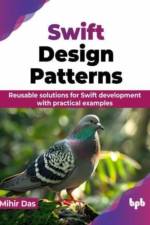
DESCRIPTION Swift, Apple's intuitive and feature-rich programming language, has revolutionized the landscape of app development. Its clear syntax and powerful capabilities make it a go-to choice for developers of all levels. Swift Design Patterns' brings an exciting set of design patterns that makes the process of app development simpler, quicker and error-free.Understand, implement, and run the various design patterns such as architectural patterns, creative patterns, behavioral patterns and structural patterns. The book teaches each of these patterns in detail, explores its coding, architecture, principle components and layers, and how they work together to build robust and efficient Swift applications. While doing so, it also explores the most effective design tools, Figma and Zeplin, and how to use them effectively.By the end of this book, you will be equipped with the knowledge and skills to design and implement complex Swift applications using proven design patterns. You will be able to write cleaner, more efficient, and reusable code, making you a more proficient Swift developer.KEY FEATURES ¿ Comprehensive coverage of essential Swift design patterns.¿ Learn to apply design patterns effectively in Swift projects through real-world examples and code snippets.¿ Learn proven techniques for writing clean, efficient, and maintainable Swift code.WHAT YOU WILL LEARN¿ Implement essential Swift design patterns in your projects.¿ Write clean, maintainable code and design scalable apps using SOLID and architectural patterns.¿ Reactive programming with RxSwift and testing with XCTest.¿ Collaborate effectively with design teams using Zeplin and Figma.WHO THIS BOOK IS FORApplication developer, Swift programmer, iOS Application Engineer and all software programmers who know Swift and want to develop efficient and high-performing applications with minimal time and high quality of codes.
While there has been growing interest in artificial intelligence worldwide, reading material on the subject within an international context remains scarce. International Perspectives on Artificial Intelligence assembles thought leaders from around the world to advance thinking on the state of affairs of artificial intelligence in key locations around the world.
Identifying four traditional approaches that have underpinned hate speech regulation in the contemporary digital landscape, Paloma Viejo Otero proposes a fifth approach called the Social Justice Approach (SJA), an original contribution to the field of research.
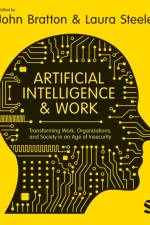
This thought-provoking book looks at how AI technologies are changing organizations, society and the world of work, combining breadth, critical analysis and academic rigour.
A critical, interdisciplinary exploration of the social, political and cultural consequences of big data, computation, data technologies and 'datafication'.This is not a handbook of data science, but an overview of the social and political implications, everyday effects, and unexpected impacts of our increasingly datafied lives.
This book guides the reader through power and sample size calculations for a variety of study outcomes and designs and illustrates their implementation in R. It is designed to be used as a learning tool for students as well as a resource for experienced statisticians and investigators.
The book provides the complete strategic understanding requisite to allow a person to create and use the RMF process recommendations for risk management. This will be the case both for applications of the RMF in corporate training situations, as well as for any individual who wants to obtain specialized knowledge in organizational risk managemen
This book explores the current developments and future implications of psychotherapeutic theories, research methodologies, and practices in this rapidly advancing digital economy. It was originally published as a special issue of the European Journal of Psychotherapy & Counselling.
This engaging narrative by Sébastien Deguy, the visionary founder and CEO of the company, chronicles the growth of Allegorithmic from its inception as a small startup to becoming a leader in digital content creation, pivotal in shaping the visual aesthetics of video games and films.
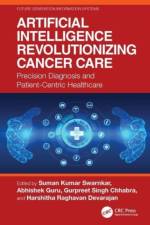
This book delves into the transformative power of AI, offering a comprehensive exploration of its role in enhancing cancer diagnosis, treatment, and patient management.
This cross-cultural edited volume presents a rich tapestry of experiences, challenges, and innovations, focusing on assessment, course and curriculum design, approaches to pedagogy and teacher professional development in Computer-assisted Language Learning (CALL) in the Global South.
Abonner på vårt nyhetsbrev og få rabatter og inspirasjon til din neste leseopplevelse.
Ved å abonnere godtar du vår personvernerklæring.