













Gjør som tusenvis av andre bokelskere
Abonner på vårt nyhetsbrev og få rabatter og inspirasjon til din neste leseopplevelse.
Ved å abonnere godtar du vår personvernerklæring.Du kan når som helst melde deg av våre nyhetsbrev.

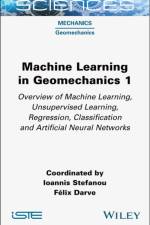
Machine learning has led to incredible achievements in many different fields of science and technology. These varied methods of machine learning all offer powerful new tools to scientists and engineers and open new paths in geomechanics. The two volumes of Machine Learning in Geomechanics aim to demystify machine learning. They present the main methods and provide examples of its applications in mechanics and geomechanics. Most of the chapters provide a pedagogical introduction to the most important methods of machine learning and uncover the fundamental notions underlying them. Building from the simplest to the most sophisticated methods of machine learning, the books give several hands-on examples of coding to assist readers in understanding both the methods and their potential and identifying possible pitfalls.
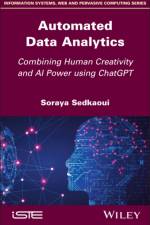
The human mind is endowed with a remarkable capacity for creative synthesis between intuition and reason; this mental alchemy is the source of genius. A new synergy is emerging between human ingenuity and the computational capacity of generative AI models. Automated Data Analytics focuses on this fruitful collaboration between the two to unlock the full potential of data analysis. Together, human ethics and algorithmic productivity have created an alloy stronger than the sum of its parts. The future belongs to this symbiosis between heart and mind, human and machine. If we succeed in harmoniously combining our strengths, it will only be a matter of time before we discover new analytical horizons. This book sets out the foundations of this promising partnership, in which everyone makes their contribution to a common work of considerable scope. History is being forged before our very eyes. It is our responsibility to write it wisely, and to collectively pursue the ideal of augmented intelligence progress.
This book presents some exceptional developments in chaotic attractor theory encompassing several new directions of research such as three-dimensional axiom A-diffeomorphisms, Shilnikov attractors, dendrites and finite graphs. The chapters in this book were originally published in Journal of Difference Equations and Applications.
This book aims to provide a systematic approach to the design, assessment, operation, and maintenance of safety barriers that are used for preventing accidents and protecting humans, equipment, and the environment.
Interdependent Human-Machine Teams: The Path to Autonomy examines the foundations, metrics, and applications of human-machine systems, the legal ramifications of autonomy, trust by the public, and trust by the users and AI systems of their users, integrating concepts from various disciplines such as AI, machine learning, social sciences, quantum mechanics, and systems engineering. In this book, world-class researchers, engineers, ethicists, and social scientists discuss what machines, humans, and systems should discuss with each other, to policymakers, and to the public. It establishes the meaning and operation of "shared contexts" between humans and machines, policy makers, and the public and explores how human-machine systems affect targeted audiences (researchers, machines, robots, users, regulators, etc.) and society, as well as future ecosystems composed of humans, machines, and systems.
Control systems are pervasive in our lives. Our homes have environmental controls. The appliances we use at home, such as the washing machine, microwave, etc. have embedded controllers. We fly in airplanes and drive automobiles, which make extensive use of control systems. The increasing automation in the past few decades has increased our reliance on control systems.A First Course in Control System Design discusses control systems design from a model-based perspective as applicable to single-input single-output systems. The emphasis in this book is on understanding and applying the techniques that enable the design of effective control systems. The book covers the time-domain and the frequency-domain design methods, as well as the design of continuous-time and discrete-time systems.Technical topics discussed in the book include: Modeling of physical systemsAnalysis of transfer function and state variable modelsControl system design via root locus Control system design in the state-spaceControl design of sampled-data systemsCompensator design via frequency response modification
The contributors cover autonomous vehicles as well as the frameworks for analyzing automation, modelling and methods for road users' interaction such as intelligent user interfaces, including brain-computer interfaces and simulation and analysis tools related to human factors.
In this context, this book focuses on the implications of digitalization for the domain of work. The book studies the changing nature of work as well as new forms of digitally enabled organizations, work practices and cooperation. The book sheds light on the technological, economic, and political forces shaping the new world of work.
The book addresses embedded electronics and tactile data processing and decoding, techniques for low power embedded computing, and the communication interface.Electronic Skin: Sensors and Systems is ideal for researchers, Ph.D. students, academic staff and Masters/research students in sensors/sensing systems, data processing and decoding.
A theoretical and critical manifesto on TikTok and its effect on cultural heritage, visual culture, AI, community organizing and top-down digital censorship as the ban on this massive online platform looms from writer, artist and popular creator Torey Akers (@whoreceress). In April 2024, President Biden signed a bill mandating that the Chinese company ByteDance sell TikTok to an American company, or face a nationwide ban of the app. Denigrated by lawmakers for (unfounded) data security concerns and mocked by many for being just another way that teenagers are rotting their brains, critics of the extraordinarily popular social media app have voiced their technophobia loudly. But as TikTok creator, artist and journalist Torey Akers argues, TikTok is far more than its detractors think: it is a powerful tool for archiving our digital and visual culture, as well as an immensely potent democratic, informative force at a time when communities’ ability to connect and organize online is vital. REVOLUTIONARY ALGORITHMS is a sharp, compelling manifesto on the cultural power of TikTok. Akers comes to the subject with a deep understanding of the app, as both a prolific creator and consumer of its content. In these thoughtful and cogent essays, she interrogates how the TikTok ban and the multiple genocides happening around the world are deeply intertwined; how the app can empower creators, amplify social movements, and document abuses of power; and how the popularity of the platform, the development of AI, and an environment of digital censorship have combined to create the socio-political momentum that pushed the ban through Congress with support from both parties. She writes for those who love the app and those who hate it, addressing the good, bad, and sometimes uncanny parts of maneuvering and communicating in a digital space. As a new era of social media looms, Akers makes the case for techno-progressivism, looking toward a future where TikTok continues to connect, inspiring and creating space for more intersectionality, equity, and joy.
This book presents a systematic, self-contained treatment of a new classification of Lipschitz mappings and its applications, particularly to metric fixed point theory. Suitable for readers interested in nonlinear analysis, metric fixed point theory, differential equations, ergodic theory, and dynamical systems.
This book provides, for the first time, a definitive source for the main theoretical notions underpinning this fascinating area of study. It also supplies several useful surveys of constructions using Coding Theory, Design Theory and Finite Geometry in the various families of distance regular graphs of large diameters.
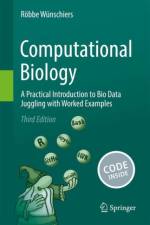
This extensively expanded third edition offers a practical introduction to Bio Data Science. With a hands-on approach to learning, this book offers ample opportunities to practice:- Installing and utilizing Linux as a virtual machine or remotely- Processing bio data with the programming language AWK- Managing data with the relational database system MariaDB- Analyzing and visualizing data with R- Implementing good bioinformatics practices with Jupyter Notebook and GitHubThis book targets both students and professionals in the life sciences. While it is aimed at beginners, it also provides valuable tips and tricks for experienced researchers dealing with large datasets. Worked examples illustrate how to utilize various bioinformatics tools such as BLAST, Clustal, PLINK, IGV, SAMtools, BCFtools, Mason2, Minimap, NCBI Datasets, Velvet, Jmol, and more for:- Identifying bacterial proteins potentially associated with pathogenicity- Querying molecular structures for redox-regulated enzymes- Mapping and assembling real or simulated sequence reads- Identifying and mapping molecular structure mutations in viruses- Conducting genome-wide association studiesAll software tools and datasets mentioned are freely available, and all code is accessible as Jupyter Notebooks on GitHub. Drawing from the author's experiences and knowledge gained from both academia and industry, this book provides a practical and comprehensive approach to bioinformatics.
This book is an essential reference guide for the use of artificial intelligence in orthopaedic surgery. It covers all related topics, from machine and deep learning, through practical applications in all orthopaedic sub-disciplines, to ethical issues and potential risks.International renowned experts equip the reader with solid scientific foundations and practical tips combining accurate literature reviews with high-quality original images. Addressing a hot topic for the present and next generation of medical specialists, this book is a must read for orthopaedic surgeons, radiologists and health informatic specialists alike.
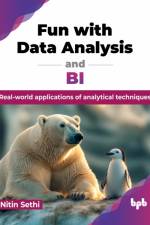
DESCRIPTION Fun with Data Analysis and BI teaches you how to turn raw data into actionable insights using business intelligence tools. It equips you with essential skills to make data-driven decisions and effectively communicate findings.This book is designed to guide you through learning SQL from the ground up. Starting with installation and environment setup, it covers everything from building databases and creating tables to mastering SQL queries. Alongside theoretical concepts, you will engage in hands-on projects that demonstrate practical applications, including market analysis using Python to track stock trends and churn analysis to understand customer behavior. Each chapter concludes with MCQs to test your knowledge. The book also introduces you to Tableau, a powerful tool for creating visualizations without writing code, with step-by-step instructions on how to use it for your data projects.By the end of this book, you will be equipped with the skills to extract valuable insights from complex datasets, visualize data in compelling ways, and make data-driven decisions that positively impact your organization. KEY FEATURES ¿ In-depth coverage of SQL, Python, ML, and Tableau for all skill levels.¿ Hands-on projects to transform raw information into valuable data insights.¿ Practical examples and end-to-end solutions for mastering data science concepts.WHAT YOU WILL LEARN¿ Install and set up SQL environments, create databases, develop tables, and write effective SQL queries.¿ Use Python to analyze stock market data, create clusters, and support data-driven decisions.¿ Apply ML to understand consumer behavior, predict churn, and improve retention.¿ Design striking data visuals with Tableau, enhancing data presentation skills without coding.¿ Gain hands-on experience by working on complete projects, from data preparation to final output.WHO THIS BOOK IS FORWhether you are a business analyst, data scientist, or aspiring data professional, this book provides the essential knowledge and practical guidance to excel in the field of data analysis.
This book explores the growing focus on artificial intelligence (AI) systems in both industry and academia. Key topics include an overview of explainable AI, black-box model understanding, interpretability techniques, practical XAI applications, and future trends and challenges in XAI.
This book covers all areas of high-power electromagnetics (HPEM), which includes nuclear electromagnetic pulse, intention EMI (IEMI) and other transient EM environments including lightning, power system transients and medical applications.
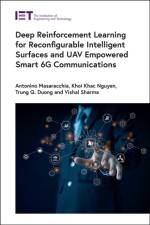
This co-authored book explores the many challenges arising from real-time and autonomous decision-making for 6G by covering crucial advanced signal control and real-time decision-making methods for UAV- and RIS-assisted 6G wireless communications including the serious constraints in real-time optimisation problems.
Remembering and (Re)remembering is a collection of essays examining 21st century social justice movements through the lens of preservation. Linking activism and archives, the book provides a discussion of strategies for the preservation of the 21st century with an emphasis on social justice movements.
Remembering and (Re)remembering is a collection of essays examining 21st century social justice movements through the lens of preservation. Linking activism and archives, the book provides a discussion of strategies for the preservation of the 21st century with an emphasis on social justice movements.
Accelerate deep learning and other number-intensive tasks with JAX, Google’s awesome high-performance numerical computing library.The JAX numerical computing library tackles the core performance challenges at the heart of deep learning and other scientific computing tasks. By combining Google’s Accelerated Linear Algebra platform (XLA) with a hyper-optimized version of NumPy and a variety of other high-performance features, JAX delivers a huge performance boost in low-level computations and transformations. In Deep Learning with JAX you will learn how to: • Use JAX for numerical calculations • Build differentiable models with JAX primitives • Run distributed and parallelized computations with JAX • Use high-level neural network libraries such as Flax • Leverage libraries and modules from the JAX ecosystem Deep Learning with JAX is a hands-on guide to using JAX for deep learning and other mathematically-intensive applications. Google Developer Expert Grigory Sapunov steadily builds your understanding of JAX’s concepts. The engaging examples introduce the fundamental concepts on which JAX relies and then show you how to apply them to real-world tasks. You’ll learn how to use JAX’s ecosystem of high-level libraries and modules, and also how to combine TensorFlow and PyTorch with JAX for data loading and deployment. Purchase of the print book includes a free eBook in PDF and ePub formats from Manning Publications. About the technology Google’s JAX offers a fresh vision for deep learning. This powerful library gives you fine control over low level processes like gradient calculations, delivering fast and efficient model training and inference, especially on large datasets. JAX has transformed how research scientists approach deep learning. Now boasting a robust ecosystem of tools and libraries, JAX makes evolutionary computations, federated learning, and other performance-sensitive tasks approachable for all types of applications. About the book Deep Learning with JAX teaches you to build effective neural networks with JAX. In this example-rich book, you’ll discover how JAX’s unique features help you tackle important deep learning performance challenges, like distributing computations across a cluster of TPUs. You’ll put the library into action as you create an image classification tool, an image filter application, and other realistic projects. The nicely-annotated code listings demonstrate how JAX’s functional programming mindset improves composability and parallelization. What's inside • Use JAX for numerical calculations • Build differentiable models with JAX primitives • Run distributed and parallelized computations with JAX • Use high-level neural network libraries such as Flax About the reader For intermediate Python programmers who are familiar with deep learning. About the author Grigory Sapunov holds a Ph.D. in artificial intelligence and is a Google Developer Expert in Machine Learning. The technical editor on this book was Nicholas McGreivy. Table of Contents Part 1 1 When and why to use JAX 2 Your first program in JAX Part 2 3 Working with arrays 4 Calculating gradients 5 Compiling your code 6 Vectorizing your code 7 Parallelizing your computations 8 Using tensor sharding 9 Random numbers in JAX 10 Working with pytrees Part 3 11 Higher-level neural network libraries 12 Other members of the JAX ecosystem A Installing JAX B Using Google Colab C Using Google Cloud TPUs D Experimental parallelization
"In this indispensable collection, digital humanities practitioners and scholars work with a wide range of archival materials to confront key challenges surrounding the adaptation and sustainability of digital editorial projects and their societal impact. From addressing outdated technical infrastructures to fostering new collaborations, Futures of Digital Scholarly Editing serves as a guide through the complexities of digital editing in an era of profound technological and societal transformation"--
Abonner på vårt nyhetsbrev og få rabatter og inspirasjon til din neste leseopplevelse.
Ved å abonnere godtar du vår personvernerklæring.