










Gjør som tusenvis av andre bokelskere
Abonner på vårt nyhetsbrev og få rabatter og inspirasjon til din neste leseopplevelse.
Ved å abonnere godtar du vår personvernerklæring.Du kan når som helst melde deg av våre nyhetsbrev.

In this tutorial, basic and advanced issues on the design of the future heterogeneous CPSoS are presented including relevant Blockchain technologies, reconfigurable systems, advanced sensor interfaces and human-centered design processes.
While the JPEG image standard was developed more than 25 years ago, it is still dominant in terms of image formation, manipulation and transmission over the internet and other media. As technology advances, new demands have arisen for the efficient transmission and storage of images causing other formats to emerge. Over the years, several extensions such as, JPEGLS, JPEG2K, JPEGXT, JPEGXR, JPEGXS and JPEG Pleno, have been added, constructing a series of standards for the compression and transmission of images. This book is the first to bring together most of the series of JPEG standards in a book.This book covers the descriptions of the JPEG standards and gives the reader an overview of the latest advances in the standards of the Joint Photographic Experts Group.Topics discussed include: * JEPG;* JPEG XR;* JPEG XT;* JPEG 2000;* JPEG XS;* JPEG Pleno;* JPEG AIC;* JPEG LS;* JPEG XL;* JPSearch;* JPEG Systems;* JBIG
This book demonstrates work related to malware analysis using machine learning and implementation of honeypots, network Intrusion Detection Systems in a security operation center environment. It is essential reading for cybersecurity professionals and advanced students.
Intelligent and Connected Vehicles (ICVs) are moving into the mainstream of the worldwide automotive industry. A lot of advanced technologies, like artificial intelligence, big data, millimeter wave radar, LiDAR and high-definition camera based real-time environmental perception, etc., are increasingly being applied in ICVs, making them more intelligent and connected with devices surrounding the vehicles. However, although the versatile connection and information exchange among ICVs, external devices and human beings provides vehicles with a better and faster perception of surrounding environments and a better driving experience for users, they also create a series of intrusion portals for malicious attackers which threaten the safety of drivers and passengers. This book is concerned with the recognition and protection against such threats.Security for ICVs includes information across the fields of automobile engineering, artificial intelligence, computer, microelectronics, automatic control, communication technology, big data, edge/cloud computing and others. This book comprehensively and systematically introduces security threats to ICVs coming from automotive technology development, on-board sensors, vehicle networking, automobile communications, intelligent transportation, big data, cloud computing, etc. Then, through discussion of some typical automobile cyber-attack cases studies, readers will gain a deeper understanding of the working principle of ICVs, so that they can test vehicles more objectively and scientifically. In this way they will find the existence of vulnerabilities and security risks and take the corresponding protective measures to prevent malicious attacks.
This book will sketch the dynamics of infrastructure in video games, focusing on the relationship between game rules, fictional world, and player interaction. It will discuss a variety of commercial video games, both mainstream and somewhat niche, that use infrastructure in different ways: Control, Wolfenstein, Fallout, This War of Mine, Exocolonist, Cyberpunk, and Frostpunk.Video games offer a particularly rich field for thinking about the relationship between narrative and infrastructure. The infrastructures that exist in the fictional worlds of these games define the experience of play in a very direct way: how players are instantiated in the game, how they move around the play space, the resources that are available, and so on. And those infrastructures in turn very directly definite the nature of the fictional world. In contrast to literary fiction, were infrastructures might remain on the periphery of some stories, by virtue of the centrality of player interaction video games are inherently infrastructural.
As artificial intelligence becomes an all-encompassing issue in education and beyond, this book seeks to answer how it will change the arc of educational leadership in K-12 schooling. Educators and leaders serve as the champions and gatekeepers of technology use in schools. They need to consider how AI can change education for the better while keeping in mind cultural, social, and emotional concerns that cannot be isolated from educational settings. Jackson and Papa examine existing literature and include insightful interviews with professionals in AI and education to understand how educators currently perceive and use AI. They also illustrate the similarities and differences in how educators and A.I.ED developers envision AI's present and future.
The growth and adoption of social media has significantly impacted the writing and publishing landscape, challenging traditional concepts of authorship and prompting a re-evaluation of how authors present themselves in digitally social spaces. This book explores how authors navigate the performance of their authorship in the digital age, focusing on the development of author identity, its relationship to performance, the value of authenticity, and how authors may self-censor based on who they think their audiences are. Drawing on qualitative surveys and interviews, and quantitative data scraping and mining for sentiment analysis, this research explores how authors project their identities within the consumer's cultural landscape. By investigating the performative nature of authorship in digitally social spaces, this study aims to deepen our understanding of the evolving dynamics between authors, their works, and readers in the digital era.
This book explores the relationship of natural and artificial intelligence in our rapidly evolving world. It does so anchored in an innovative multidisciplinary framework and the premise that society is a composition of multiple dimensions, with individuals (micro), communities (meso), countries (macro) and planet (meta) in the collective sphere, and individuals themselves as multidimensional beings (aspirations, emotions, thoughts, sensations). This perspective is applied to analyze the implications of our transition into a phase where online and offline realms are increasingly intertwined. Special attention is given to the influence of all pervasive technology on our perception of the self and society. The central message is that we must learn to harness Agency amid AI, which entails double literacy ¿ of artificial and natural intelligence.
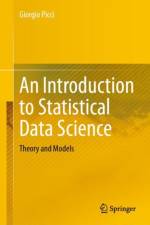
This graduate textbook on the statistical approach to data science describes the basic ideas, scientific principles and common techniques for the extraction of mathematical models from observed data. Aimed at young scientists, and motivated by their scientific prospects, it provides first principle derivations of various algorithms and procedures, thereby supplying a solid background for their future specialization to diverse fields and applications.The beginning of the book presents the basics of statistical science, with an exposition on linear models. This is followed by an analysis of some numerical aspects and various regularization techniques, including LASSO, which are particularly important for large scale problems. Decision problems are studied both from the classical hypothesis testing perspective and, particularly, from a modern support-vector perspective, in the linear and non-linear context alike. Underlying the book is the Bayesian approach and the Bayesian interpretation of various algorithms and procedures. This is the key to principal components analysis and canonical correlation analysis, which are explained in detail. Following a chapter on nonlinear inference, including material on neural networks, the book concludes with a discussion on time series analysis and estimating their dynamic models.Featuring examples and exercises partially motivated by engineering applications, this book is intended for graduate students in applied mathematics and engineering with a general background in probability and linear algebra.
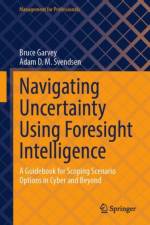
This book brings together a diverse range of findings on current and emerging business concerns when the authors were developing a series of 12 working Analytic Research Consortium (ARC) White Papers. It presents several, differently configured scenarios, drawing on cyber as an example; the use and further optimization of estimative/probabilistic language; communicating analytical insights and other findings concerning ¿(un)certainty¿ to decision-maker end-users; and mitigating risk. It also evaluates in detail today¿s rapidly evolving Gen-AI systems and technologies, e.g. those underlying OpenAI¿s ChatGPT and Google¿s Bard/Gemini. This includes their respective value concerning scenario development and other business-relevant methods, tools and techniques, e.g. ¿Red Teaming¿. The topics discussed are assessed using the multi-methodologies of, firstly, ¿Intelligence Engineering¿ (IE) and, secondly, ¿Strategic Options Analysis¿ (SOA). The latter half of the book introduces an alternative scenario planning process, including use of new computer-software and AI tools. In addition to Gen-AI, we identify that the emerging discipline of Causal AI may work better for foresight and scenario activities.The book is a valuable read for a diverse readership from the public and private sectors, spanning government, the military, law enforcement, education, industry, commerce, retail, and enterprises of all sizes. Also, students at business schools and high-level decision-makers, including politicians, military commanders, and C-Suite leaders in various fields, will benefit from it.
This book provides expert advice on the practical implementation of the European Union's General Data Protection Regulation (GDPR) and systematically analyses its various provisions.
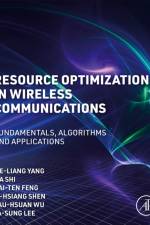
Resource Optimization in Wireless Communications: Fundamentals, Algorithms, and Applications provides an easy-to-understand overview of the fundamentals of resource optimization, along with the latest algorithms and applications for emerging 5G, and beyond, wireless systems offering a variety of services. Additionally, it covers the principles and resource optimization of some systems expected in 6G.This book is suitable for courses in wireless communications that cover the principles of multicarrier and OFDM, the theory of resource allocation, power allocation, and subcarrier allocation, as well as the principles and optimization of OTFS, ISAC, reflective intelligent surface (RIS)-assisted mmWave, and user-centric cell-free wireless systems. It is also an ideal self-study reference text for researchers and industry engineers who wish to deepen their knowledge while researching and developing wireless systems for 6G.
Advanced Sensors for Smart Healthcare provides an invaluable resource for researchers and healthcare practitioners who are eager to use technology to improve the lives of patients. Sections highlight data from sensor networks via the smart hospital framework, including data, insights, and access. This book shows how the use of sensors to gather data on a patient's condition and the environment their care takes place in can allow healthcare professionals to monitor well-being and make informed decisions about treatment.
Agent-Based Models with MATLAB introduces Agent-Based Modeling (ABM), one of the most important methodologies for complex systems modeling. The book explores computational implementations and accompanying MATLAB software code as a means of inspiring readers to apply agent-based models to solve a diverse range of problems. It comes with a large amount of software code that accompanies the main text, and the modeling systems described in the book are implemented using MATLAB as the programming language. Despite the heavy mathematical components of Agent-Based Models and complex systems, it is possible to utilize these models without in-depth understanding of their mathematical fundamentals. This book enables computer scientists, mathematicians, researchers, and engineers to apply ABM in a wide range of research and engineering applications. It gradually advances from basic to more advanced methods while reinforcing complex systems through practical, hands-on applications of various computational models.
This book covers all topics and requirements of the CompTIA A+ certification exam. It will allow readers to easily understand the concepts, information, and skills needed to obtain the associated certification. CompTIA A+ certification is at its core an entry-level certification to the information technology world, including cybersecurity. It is comprised of a set of two exams (Exams 220-1101 & 220-1102) created by IT industry professionals that validate skills needed for entry-level IT jobs, including cybersecurity. This certification stands as baseline proof of knowledge of these topics and is largely sought by recruiters. Main exam topics include hardware, networking, mobile devices, security, Windows operating system, other IOS technologies, software troubleshooting and operations procedures. This book has been designed to follow the core requirements for the full scope of the CompTIA A+ certification, covering both examination test requirements. It has been formatted to follow a logical and easy to follow order to allow a foundational level of understanding prior to moving onto more advanced topics. The book will provide all readers with the appropriate knowledge and information to have a foundational level of many Information Technology components. It will primarily serve the newer entrants to the field but will also support more experienced individuals that are looking towards certifications. What You Will Learn:Effective communication with clients and colleagues and interpersonal skills for collaboration in team environments. Understanding of motherboard components and architecture. Knowledge of CPU types and socket compatibility. Installation and configuration of operating systems. Software troubleshooting techniques. Installation and configuration of Windows, Linux, and macOS. Management of system settings and user accounts. Identification of laptop components and peripherals. Maintenance procedures for laptops, including cleaning and battery management. Configuration of mobile device settings and preferences. Understanding of mobile operating systems and app installation procedures. Troubleshooting common printer hardware and software issues. Basic networking concepts, including IP addressing and subnetting. Configuration of network devices such as routers and switches. Configuration and management of wireless access points. Implementation of wireless security protocols such as WPA2 and WPA3. Understanding of cloud service models (IaaS, PaaS, SaaS). Deployment and management of virtual machines in the cloud. Recognition of common security threats and vulnerabilities. Implementation of security best practices for data protection. Who this book is for:Anyone that is looking to get into the information technology or cybersecurity fields. This would also include academics looking to pursue bachelor's or master's degrees, as often programs include the A+ certification. There is no necessary prior skill experience or knowledge needed.
VMware Workstation is a software solution that provides a type-2 hypervisor, or desktop hypervisor, that runs on x64 Windows and Linux-based operating systems. It enables users to create and run virtual machines, containers, and Kubernetes clusters simultaneously on their physical devices without having to reformat or dual-boot the underlying device.There are several use cases for VMware Workstation. For IT pros, it allows them to test applications andoperating system builds, as well as enable remote control of vSphere datacenter infrastructure. Developers can run multiple different operating systems or different versions of operating systems on a single device giving them the platform flexibility to test, develop, and troubleshoot applications cost-effectively.Finally, for the greater workforce, VMware Workstation can enable BYOD device initiatives allowing employees to run a full corporate environment on their device without deleting or reformatting it. Learning VMware Workstation Pro for Windows - Part 2 provides the reader with a practical, step-by-step guide to creating and managing virtual machines using VMware Workstation, starting with an overview of hypervisors and desktop hypervisors. Next, it talks about each resource, such as CPU, memory, and networking, and how these are configured in a virtual environment. After that, it demonstrates the installation of VMware Workstation, configuration, and then building and managing different virtual machines running on different operating systems such as ChromeOS, and Linux, and building an ESXi lab environment. Towards the end, readers will learn how to use command line tools, such as the REST API, and vmrun, before going on to discuss upgrading and troubleshooting your VMware Workstation environment. By the end of this book, readers will have full knowledge of VMware Workstation Pro. This book is a continuation of " Learning VMware Workstation Pro for Windows - Part 1 " where readers learn how to build and manage different virtual machines running on different operating systems and build an ESXi lab environment with VMware Workstation. You Will: Learn how to run containers on a VMware workstation Understand how to use the command line to configure and control Workstation Pro and virtual machines Practice the use of REST API for Workstation Pro
Master the intricacies of Unity's character controllers with a deep dive into Unity's Starter Assets. This book is an essential resource for game developers looking to elevate their skills in Unity game development, offering detailed insights and practical examples to help you create complete, sophisticated, high-performance systems.Part of the Apress cookbook series, the recipes in this book provide a comprehensive guide to creating dynamic and immersive character interactions, equipping developers with the skills necessary to build responsive character controllers for both first-person and third-person perspectives. By leveraging pre-configured assets, developers can streamline the creation process, ensuring optimized performance and enhanced player experiences.Explore Unity's New Input System, a revolutionary framework designed to enhance control and flexibility in game development. Delve into the art of architecting enemy AI using Finite State Machines (FSMs) to create intelligent and responsive behaviors. Build a sophisticated melee combat system inspired by top-tier action games. Unlock the potential of advanced player movement with a focus on parkour mechanics. Implement a robust shooter weapon system that enhances gameplay through strategic weapon interactions. Optimize game performance through efficient object pooling techniques.You will: Implement re-bindable controls and create sophisticated input schemes that elevate gameplay interactions. Set up navigation and pathfinding, creating AI that can dynamically navigate, pursue, and interact with players. Craft a melee combat system that offers a dynamic and engaging player experience Create fluid and responsive parkour mechanics that enhance the realism and excitement of your game. Build a comprehensive shooter weapon system Develop object pooling systems that enhance performance and resource management, ensuring a seamless and immersive gaming experience.
Embark on a journey to build an augmented reality world. This book puts theory into practical application by building unique augmented reality apps specific to each chapter's topic. You'll learn to engineer successful, well-designed, and comprehensive augmented reality applications for iOS devices. This updated edition has been thoroughly revised to cover the latest advancements in iOS 17 and Xcode 15, equipping you with the knowledge and tools to build cutting-edge augmented reality experiences. Starting with the foundation of augmented reality on Apple platforms, you will understand the building blocks and inner workings of the technologies that power augmented reality. Then, delve into the practicalities of building AR apps using ARKit, SceneKit, SpriteKit, RealityKit, and integrating with SwiftUI and advanced features like ReplayKit for recording experiences. Explore augmented reality app business models, designs, and content for the ultimate user experience. This book covers a wide range of ARKit APIs and topics, including surface detection, 3D objects implementation, horizontal plane detection with raycast, physics by launching rocket ships, light estimation, 2D image recognition, world-mapping data for persistence, immersive audio experiences, real-time image analysis, machine learning, face and body motion capture, people occlusion, and more. Chapter by chapter, this book guides you to become an advanced augmented reality engineer for Apple's platforms. By the end of the book, you'll have acquired the necessary mental models and tools to engineer delightful experiences in Apple's augmented reality ecosystem. What You'll Learn Construct AR apps using SceneKit, SpriteKit, RealityKit, and integrate with SwiftUI. Leverage ARKit for advanced features like face and body motion capture, people occlusion, and world tracking. Incorporate 3D objects, surface detection, computer vision, and body motion capture in your apps. Implement persistence in AR experiences and create shared experiences using Multipeer Connectivity.
Build working implementations of hash tables, written in the C programming language. The new and revised Second Edition has been enhanced with simplified code and more comprehensive explanations, aimed at improving clarity and comprehension while exploiting the latest features in C programming.This book starts with simple first attempts devoid of collision resolution strategies. It then progresses through improvements and extensions illustrating different design ideas and approaches, followed by experiments to validate the choices. You will learn how hash tables, when implemented and used appropriately, are exceptionally efficient data structures for representing sets and lookup tables, providing low overhead, constant time, insertion, deletion, and lookup operations. The Joys of Hashing walks you through the implementation of efficient hash tables and the pros and cons of different design choices when building tables. The source code used in the book is available on GitHub for your re-use and experiments.What You Will Learn Master the basic ideas behind hash tables Carry out collision resolution, including strategies for handling collisions and their consequences for performance Resize or grow and shrink tables as needed Store values by handling when values must be stored with keys to make general sets and maps
Delve deep into the forefront of technological advancements shaping the future of supply chain safety and resilience. In an era where software supply chains are the backbone of global technology ecosystems, securing them against evolving threats has become mission critical. This book offers a comprehensive guide to understanding and implementing next-generation strategies that protect these intricate networks from most pressing risks.This book begins by laying the foundation of modern software supply chain security, exploring the shifting threat landscape and key technologies driving the future. Delve into the heart of how AI and IoT are transforming supply chain protection through advanced predictive analytics, real-time monitoring, and intelligent automation. Discover how integrating application security practices within your supply chain can safeguard critical systems and data.Through real-world case studies and practical insights, learn how to build resilient supply chains equipped to defend against sophisticated attacks like dependency confusion, backdoor injection, and adversarial manipulation. Whether yoüre managing a global software operation or integrating DevSecOps into your CI/CD pipelines, this book offers actionable advice for fortifying your supply chain end-to-end.You Will: Learn the role of AI and machine learning in enhancing supply chain threat detection Find out the best practices for embedding application security within the supply chain lifecycle Understand how to leverage IoT for secure, real-time supply chain monitoring and controlWho Is This Book ForThe target audience for a book would typically include professionals and individuals with an interest or involvement in cloud-native application development and DevOps practices. It will cover fundamentals of cloud-native architecture, DevOps principles, and provide practical guidance for building and maintaining scalable and reliable applications in a cloud-native environment. The book's content will cater to beginner to intermediate level professionals seeking in-depth insights.
Abonner på vårt nyhetsbrev og få rabatter og inspirasjon til din neste leseopplevelse.
Ved å abonnere godtar du vår personvernerklæring.