







Gjør som tusenvis av andre bokelskere
Abonner på vårt nyhetsbrev og få rabatter og inspirasjon til din neste leseopplevelse.
Ved å abonnere godtar du vår personvernerklæring.Du kan når som helst melde deg av våre nyhetsbrev.

Advances in Computer Communications and Networks: from Green, Mobile, Pervasive Networking to Big Data Computing studies and presents recent advances in communication and networking technologies reflecting the state-of-the-art research achievements in novel communication technology and network optimization.
Over the recent years, few books have been published covering all the subjects needed to understand the very fundamental concepts of cell planning. Most books which deal with this topic are destined to very specific audiences, and the vast majority introduce the subject at a very basic, or technical, level, or are destined to an academic audience. Cellular Network Planning begins with an introduction to the subject, covering conventional and contemporary wireless systems. Spectral allocation and the frequency plan are discussed, along with the essential characteristics of wireless systems. The design of mobile cellular systems includes cell planning, traffic and channel problems. The book presents a review of existing models, considering both green field dimensioning and network expansion strategies, and discusses multi-objective optimization and base station deployment based on artificial immune systems. It also discusses a cost-effective base station deployment approach based on artificial immune systems, and introduces the modified MO-AIS algorithm.
Computer Systems for Healthcare and Medicine presents a novel look at the introduced problems, including proposed solutions in the form of automated data acquisition and processing systems, which were tested in various environments.
Both the theoretical foundations and how to implement your own INTUITEL system are discussed in this book.
Breakthroughs in Smart City Implementation should give answers on a wide variety of present social, political and technological problems.
Datacenter Connectivity Technologies: Principles and Practice provides a comprehensive and in-depth look at the development of various optical connectivity technologies which are making an impact on the building of data centers.
This book is suitable for industrial and maintenance managers that want to implement a new strategy for maintenance in their companies. It should give readers a basic idea on the first steps to implementing a maintenance-oriented platform or information system.
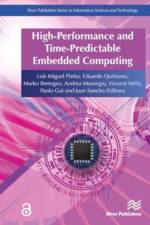
The work reflected in this book was done in the scope of the European project P SOCRATES, funded under the FP7 framework program of the European Commission.
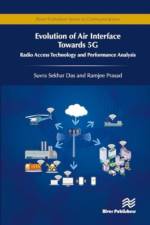
Over the past few decades, wireless access networks have evolved extensively to support the tremendous growth of consumer traffic. This superlative growth of data consumption has come about due to several reasons, such as evolution of the consumer devices, the types of telephone and smartphone being used, convergence of services, digitisation of economic transactions, tele-education, telemedicine, m-commerce, virtual reality office, social media, e-governance, e-security, to name but a few.Not only has the society transformed to a digital world, but also the expectations from the services provided have increased many folds. The last mile/meters of delivery of all e-services is now required to be wireless. It has always been known that wireless links are the bottleneck to providing high data rates and high quality of service. Several wireless signalling and performance analysis techniques to overcome the hurdles of wireless channels have been developed over the last decade, and these are fuelling the evolution of 4G towards 5G. Evolution of Air Interface Towards 5G attempts to bring out some of the important developments that are contributing towards such growth.
This white paper provides an insight regarding interoperability in the IoT platforms and ecosystems created and used by IoT-EPI. The scope of this document covers the interoperability aspects, challenges and approaches that cope with interoperability in the current existing IoT platforms.
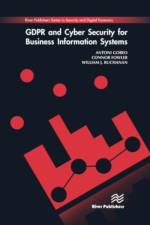
The General Data Protection Regulation is the latest, and one of the most stringent, regulations regarding Data Protection to be passed into law by the European Union. Fundamentally, it aims to protect the Rights and Freedoms of all the individuals included under its terms; ultimately the privacy and security of all our personal data. This requirement for protection extends globally, to all organisations, public and private, wherever personal data is held, processed, or transmitted concerning any EU citizen. Cyber Security is at the core of data protection and there is a heavy emphasis on the application of encryption and state of the art technology within the articles of the GDPR. This is considered to be a primary method in achieving compliance with the law. Understanding the overall use and scope of Cyber Security principles and tools allows for greater efficiency and more cost effective management of Information systems.GDPR and Cyber Security for Business Information Systems is designed to present specific and practical information on the key areas of compliance to the GDPR relevant to Business Information Systems in a global context.
Dependable IoT for Human and Industry covers the main aspects of Internet of Things and IoT based systems such as global issues of applications, modeling, development and implementation of dependable IoT for different human and industry domains.
This book provides an overview of the next generation Internet of Things (IoT), ranging from research, innovation, development priorities, to enabling technologies in a global context. It is intended as a standalone in a series covering the activities of the Internet of Things European Research Cluster (IERC).
Over the past years, a considerable amount of effort has been devoted, both in industry and academia, towards the development of basic technology as well as innovative applications for the Internet of Things. Adaptive Middleware for the Internet of Things introduces a scalable, interoperable and privacy-preserving approach to realize IoT applications and discusses abstractions and mechanisms at the middleware level that simplify the realization of services that can adapt autonomously to the behavior of their users. Technical topics discussed in the book include:Behavior-driven Autonomous ServicesGAMBAS Middleware ArchitectureGeneric and Efficient Data AcquisitionInteroperable and Scalable Data ProcessingAutomated Privacy PreservationAdaptive Middleware for the Internet of Things summarizes the results of the GAMBAS research project funded by the European Commission under Framework Programme 7. It provides an in-depth description of the middleware system developed by the project consortium. In addition, the book describes several innovative mobility and monitoring applications that have been built, deployed and operated to evaluate the middleware under realistic conditions with a large number of users. Adaptive Middleware for the Internet of Things is ideal for personnel in the computer and communication industries as well as academic staff and research students in computer science interested in the development of systems and applications for the Internet of Things.
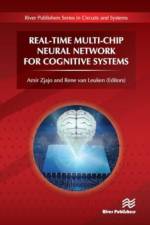
Real-Time Multi-Chip Neural Network for Cognitive Systems presents novel real-time, reconfigurable, multi-chip SNN system architecture based on localized communication, which effectively reduces the communication cost to a linear growth.
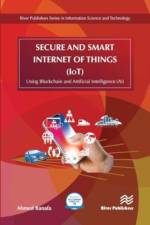
By 2020, experts forecast that up to 28 billion devices will be connected to the Internet, with only one third of them being computers, smartphones, smartwatches, and tablets. The remaining two thirds will be other "e;devices"e; - sensors, terminals, household appliances, thermostats, televisions, automobiles, production machinery, urban infrastructure and many other "e;things"e;, which traditionally have not been Internet enabled.This "e;Internet of Things"e; (IoT) represents a remarkable transformation of the way in which our world will soon interact. Much like the World Wide Web connected computers to networks, and the next evolution mobile devices connected people to the Internet and other people, IoT looks poised to interconnect devices, people, environments, virtual objects and machines in ways that only science fiction writers could have imagined. In a nutshell the Internet of Things (IoT) is the convergence of connecting people, things, data and processes; it is transforming our life, business and everything in between. Secure and Smart IoT explores many aspects of the Internet of Things and explains many of the complicated principles of IoT and the new advancements in IoT including using Fog Computing, AI and Blockchain technology.
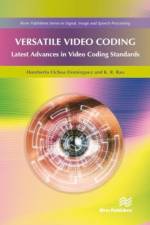
Video is the main driver of bandwidth use, accounting for over 80 per cent of consumer Internet traffic. Video compression is a critical component of many of the available multimedia applications, it is necessary for storage or transmission of digital video over today's band-limited networks. The majority of this video is coded using international standards developed in collaboration with ITU-T Study Group and MPEG. The MPEG family of video coding standards begun on the early 1990s with MPEG-1, developed for video and audio storage on CD-ROMs, with support for progressive video. MPEG-2 was standardized in 1995 for applications of video on DVD, standard and high definition television, with support for interlaced and progressive video. MPEG-4 part 2, also known as MPEG-2 video, was standardized in 1999 for applications of low- bit rate multimedia on mobile platforms and the Internet, with the support of object-based or content based coding by modeling the scene as background and foreground. Since MPEG-1, the main video coding standards were based on the so-called macroblocks. However, research groups continued the work beyond the traditional video coding architectures and found that macroblocks could limit the performance of the compression when using high-resolution video. Therefore, in 2013 the high efficiency video coding (HEVC) also known and H.265, was released, with a structure similar to H.264/AVC but using coding units with more flexible partitions than the traditional macroblocks. HEVC has greater flexibility in prediction modes and transform block sizes, also it has a more sophisticated interpolation and de blocking filters. In 2006 the VC-1 was released. VC-1 is a video codec implemented by Microsoft and the Microsoft Windows Media Video (VMW) 9 and standardized by the Society of Motion Picture and Television Engineers (SMPTE). In 2017 the Joint Video Experts Team (JVET) released a call for proposals for a new video coding standard initially called Beyond the HEVC, Future Video Coding (FVC) or known as Versatile Video Coding (VVC). VVC is being built on top of HEVC for application on Standard Dynamic Range (SDR), High Dynamic Range (HDR) and 360(deg) Video. The VVC is planned to be finalized by 2020. This book presents the new VVC, and updates on the HEVC. The book discusses the advances in lossless coding and covers the topic of screen content coding. Technical topics discussed include: Beyond the High Efficiency Video CodingHigh Efficiency Video Coding encoderScreen contentLossless and visually lossless coding algorithmsFast coding algorithmsVisual quality assessmentOther screen content coding algorithmsOverview of JPEG Series
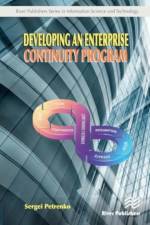
The book discusses the activities involved in developing an Enterprise Continuity Program (ECP) that will cover both Business Continuity Management (BCM) as well as Disaster Recovery Management (DRM). The creation of quantitative metrics for BCM are discussed as well as several models and methods that correspond to the goals and objectives of the International Standards Organisation (ISO) Technical Committee ISO/TC 292 "e;Security and resilience"e;. Significantly, the book contains the results of not only qualitative, but also quantitative, measures of Cyber Resilience which for the first time regulates organizations' activities on protecting their critical information infrastructure.The book discusses the recommendations of the ISO 22301: 2019 standard "e;Security and resilience - Business continuity management systems - Requirements"e; for improving the BCM of organizations based on the well-known "e;Plan-Do-Check-Act"e; (PDCA) model. It also discusses the recommendations of the following ISO management systems standards that are widely used to support BCM. The ISO 9001 standard "e;Quality Management Systems"e;; ISO 14001 "e;Environmental Management Systems"e;; ISO 31000 "e;Risk Management"e;, ISO/IEC 20000-1 "e;Information Technology - Service Management"e;, ISO/IEC 27001 "e;Information Management security systems"e;, ISO 28000 "e;Specification for security management systems for the supply chain"e;, ASIS ORM.1-2017, NIST SP800-34, NFPA 1600: 2019, COBIT 2019, RESILIA, ITIL V4 and MOF 4.0, etc. The book expands on the best practices of the British Business Continuity Institute's Good Practice Guidelines (2018 Edition), along with guidance from the Disaster Recovery Institute's Professional Practices for Business Continuity Management (2017 Edition). Possible methods of conducting ECP projects in the field of BCM are considered in detail. Based on the practical experience of the author there are examples of Risk Assessment (RA) and Business Impact Analysis (BIA), examples of Business Continuity Plans (BCP) & Disaster Recovery Plans (DRP) and relevant BCP & DRP testing plans.This book will be useful to Chief Information Security Officers, internal and external Certified Information Systems Auditors, senior managers within companies who are responsible for ensuring business continuity and cyber stability, as well as teachers and students of MBA's, CIO and CSO programs.
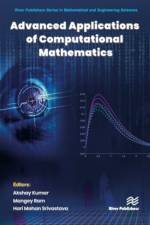
This book "Advanced Applications of Computational Mathematics" covers multidisciplinary studies containing advanced research in the field of computational and applied mathematics. The book includes research methodology, techniques, applications, and algorithms.
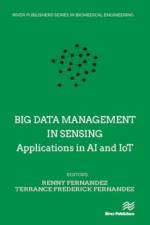
The book is centrally focused on human computer Interaction and how sensors within small and wide groups of Nano-robots employ Deep Learning for applications in industry.
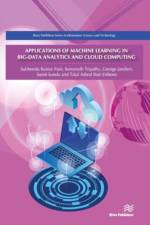
This book introduces the state-of-the-art trends and advances in the use of Machine Learning in Cloud and Big Data Analytics. The book will serve as a reference for Data Scientists, systems architects, developers, new researchers and graduate level students in Computer and Data science.
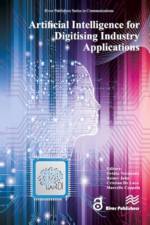
This book provides in-depth insights into use cases implementing artificial intelligence (AI) applications at the edge. It covers new ideas, concepts, research, and innovation to enable the development and deployment of AI, the industrial internet of things (IIoT), edge computing, and digital twin technologies in industrial environments.
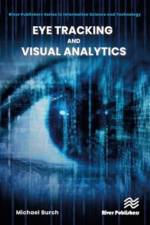
Visualization and visual analytics are powerful concepts for exploring data from various application domains. The endless number of possible parameters and the many ways to combine visual variables as well as algorithms and interaction techniques create lots of possibilities for building such techniques and tools.The major goal of those tools is to include the human users with their tasks at hand, their hypotheses, and research questions to provide ways to find solutions to their problems or at least to hint them in a certain direction to come closer to a problem solution. However, due to the sheer number of design variations, it is unclear which technique is suitable for those tasks at hand, requiring some kind of user evaluation to figure out how the human users perform while solving their tasks.The technology of eye tracking has existed for a long time; however, it has only recently been applied to visualization and visual analytics as a means to provide insights to the users' visual attention behavior. This generates another kind of dataset that has a spatio-temporal nature and hence demands for advanced data science and visual analytics concepts to find insights into the recorded eye movement data, either as a post process or even in real-time.This book describes aspects from the interdisciplinary field of visual analytics, but also discusses more general approaches from the field of visualization as well as algorithms and data handling. A major part of the book covers research on those aspects under the light and perspective of eye tracking, building synergy effects between both fields - eye tracking and visual analytics - in both directions, i.e. eye tracking applied to visual analytics and visual analytics applied to eye tracking data. Technical topics discussed in the book include: * Visualization; * Visual Analytics; * User Evaluation; * Eye Tracking; * Eye Tracking Data Analytics;Eye Tracking and Visual Analytics includes more than 500 references from the fields of visualization, visual analytics, user evaluation, eye tracking, and data science, all fields which have their roots in computer science.Eye Tracking and Visual Analytics is written for researchers in both academia and industry, particularly newcomers starting their PhD, but also for PostDocs and professionals with a longer research history in one or more of the covered research fields. Moreover, it can be used to get an overview about one or more of the involved fields and to understand the interface and synergy effects between all of those fields. The book might even be used for teaching lectures in the fields of information visualization, visual analytics, and/or eye tracking.
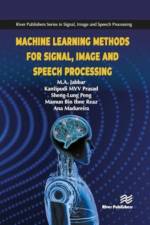
The signal processing (SP) landscape has been enriched by recent advances in artificial intelligence (AI) and machine learning (ML), yielding new tools for signal estimation, classification, prediction, and manipulation. Layered signal representations, nonlinear function approximation and nonlinear signal prediction are now feasible at very large scale in both dimensionality and data size. These are leading to significant performance gains in a variety of long-standing problem domains like speech and Image analysis. As well as providing the ability to construct new classes of nonlinear functions (e.g., fusion, nonlinear filtering).This book will help academics, researchers, developers, graduate and undergraduate students to comprehend complex SP data across a wide range of topical application areas such as social multimedia data collected from social media networks, medical imaging data, data from Covid tests etc. This book focuses on AI utilization in the speech, image, communications and yirtual reality domains.
Abonner på vårt nyhetsbrev og få rabatter og inspirasjon til din neste leseopplevelse.
Ved å abonnere godtar du vår personvernerklæring.