











Gjør som tusenvis av andre bokelskere
Abonner på vårt nyhetsbrev og få rabatter og inspirasjon til din neste leseopplevelse.
Ved å abonnere godtar du vår personvernerklæring.Du kan når som helst melde deg av våre nyhetsbrev.

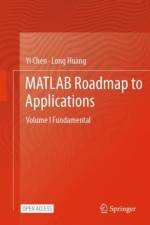
This open access book presents a comprehensive guide to MATLAB programming, catering to students, engineers, and researchers seeking to harness MATLAB as a powerful tool for their work. The text meticulously covers fundamental concepts, progressing from basic elements such as types and operators to more complex structures like arrays and matrices. It elucidates key programming constructs including selection statements, loop structures, scripts, and functions, providing readers with a solid foundation in MATLAB programming.The book's structure is carefully crafted to facilitate step-by-step learning, with each chapter building upon previous knowledge. Abundant examples and exercises reinforce understanding, while dedicated sections on data visualisation, algorithm development, and practical applications in engineering, science, and finance demonstrate MATLAB's versatility across disciplines.A distinguishing feature of this volume is its inclusion of laboratory work and coursework, allowing readers to apply theoretical concepts to real-world scenarios. This hands-on approach enhances the learning experience and prepares users for practical implementation of MATLAB in their respective fields.In the current era of artificial intelligence, this book serves as an essential resource for those seeking to leverage MATLAB's capabilities. It not only equips readers with programming skills but also illustrates how MATLAB can be integrated into cutting-edge research and industry applications.
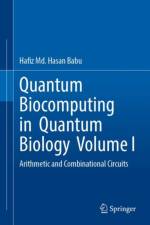
The book starts with the basics of Quantum Computing, Biocomputing, Quantum Biology, Quantum-DNA Computing, and DNA-Quantum Computing. It also discusses the fundamental operations in quantum computing and Biocomputing. Different types of quantum arithmetic circuits, quantum-DNA arithmetic circuits and DNA-quantum arithmetic circuits such as basic and universal gate operations, half-adder, full-adder, half subtractor, full subtractor, N-qubit adders, multipliers, dividers, etc., are explained clearly. Nuclear Magnetic Resonance (NMR), NMR relaxation, quantum cache memory, heat conduction circuit, and trap ion are also discussed. The readers can get a clear idea about different types of quantum, quantum-DNA and DNA-quantum circuits such as arithmetic, combinational, sequential, memory devices, programmable logic devices, nano-processors and will be able to design their own circuits. Then, it discusses Heat Measurement, Speed Calculation, Heat Transfer, Data Conversion, and Data Management in Quantum Computing and Quantum Biocomputing (Quantum-DNA Computing and DNA-Quantum Computing). As a whole, this book is a great resource for quantum, quantum-DNA and DNA-Quantum Computing, it is the book where computing in quantum biology is introduced for the quantum biology researchers, students, and academicians. This is a novel approach to writing a book in this field. This book quenches the thirst of beginners to advanced-level readers.
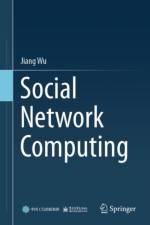
In the era of digital economy with highly-connected world, the ability to comprehend social network computing has become an indispensable skill. This book serves as a vital guide for academics and professionals engaged in research within this rapidly expanding field.The book is organized into three parts, each dedicated to different facets of social network computing. The journey commences with an exploration of foundational principles, encompassing triadic closure, strong and weak ties, network homophily, and positive and negative balance. This lays the groundwork for an in-depth examination of fundamental theories governing social networks. Subsequently, the focus shifts to the laws dictating social networks, elucidating phenomena like the small world effect, power law distribution, community detection, diffusion processes, game theory dynamics, and hypernetworks, also including multiplex networks, multi-mode networks and temporal networks. The final section of the book centers on the practical aspects of social network analysis, delving into topics such as link prediction, influence evaluation, dynamic analysis, random experiments, modeling and simulation, and representation learning. This provides a comprehensive exploration of the applicability of social network analysis in real-world scenarios.This book seamlessly integrates theory with practice by incorporating popular social network computing software, including igraph, Gephi, Ucinet, and Netlogo. By mastering the computational thinking methods presented in this book, readers will deepen their understanding of social network computing and acquire the skills to effectively apply it in various real-world contexts.
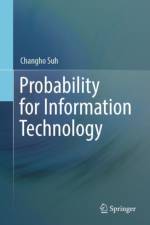
This book introduces probabilistic modelling and explores its role in solving a broad spectrum of engineering problems that arise in Information Technology (IT). Divided into three parts, it begins by laying the foundation of basic probability concepts such as sample space, events, conditional probability, independence, total probability law and random variables. The second part delves into more advanced topics including random processes and key principles like Maximum A Posteriori (MAP) estimation, the law of large numbers and the central limit theorem. The last part applies these principles to various IT domains like communication, social networks, speech recognition, and machine learning, emphasizing the practical aspect of probability through real-world examples, case studies, and Python coding exercises.A notable feature of this book is its narrative style, seamlessly weaving together probability theories with both classical and contemporary IT applications. Each concept is reinforced with tightly-coupled exercise sets, and the associated fundamentals are explored mostly from first principles. Furthermore, it includes programming implementations of illustrative examples and algorithms, complemented by a brief Python tutorial.Departing from traditional organization, the book adopts a lecture-notes format, presenting interconnected themes and storylines. Primarily tailored for sophomore-level undergraduates, it also suits junior and senior-level courses. While readers benefit from mathematical maturity and programming exposure, supplementary materials and exercise problems aid understanding. Part III serves to inspire and provide insights for students and professionals alike, underscoring the pragmatic relevance of probabilistic concepts in IT.
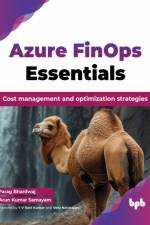
DESCRIPTION Azure FinOps, the intersection of finance, operations, and technology, has become paramount in optimizing cloud spending. "Azure FinOps Essentials "is a guide to help you navigate easily with cost management and optimization within Microsoft Cloud. This book is a practical guide to cutting cloud costs in Microsoft Azure. It covers everything from understanding Azure services and cost management to advanced strategies like Infrastructure as Code and serverless computing. You will learn to set up Azure Cost Management, optimize resources with tools like Reserved Instances, and enforce governance using Azure Policy. The book also highlights case studies and best practices to help you build a FinOps culture, streamline costs, and enhance cost-efficiency in your cloud environment.If you are new to cloud financial management or need a refresher on some of the best practices, Azure FinOps Essentials is designed for anyone running an operational workload in both public and private clouds who wants to improve their expense management within the environment.KEY FEATURES ¿ An in-depth guide to the fundamentals of Azure cost management.¿ Detailed instructions for creating cost alerts and establishing budgets.¿ Practical strategies to enhance cloud resource efficiency.WHAT YOU WILL LEARN¿ Establish and enforce standards for Azure cloud cost management through auditing.¿ Learn cost-saving tactics like rightsizing and using Reserved Instances.¿ Master Azure tools for monitoring spending, budgeting, and setting up alerts.¿ Build custom dashboards to accurately display key financial metrics.WHO THIS BOOK IS FORThis book is for cloud architects, DevOps engineers and IT professionals managing costs in Azure environments. It provides the necessary knowledge and skills to optimize cloud spending, improve efficiency, and drive business value.
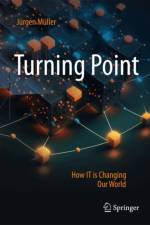
Modern information technology permeates and transforms our world-far more intensely than most of us realize. The book describes its origin, history, and essential drivers. It elaborates on the substantial importance the new world power of IT has gained for our social, economic, and political lives. It provides the reader with interesting, easily understandable, and balanced guidance on a complex topic. It highlights major development lines and explains concepts such as artificial intelligence, algorithms, and blockchains.Dr. Jürgen Müller studied history and political science in Trier, Vienna, and Rome, and then "accidentally" found his way into IT. He has spent more than 30 years there, primarily in Europe and the USA. In this book, he combines his extensive international experience in the computer industry with humanities-related questions, resulting in a very rare and worthwhile synthesis.The translation was done with the help of artificial intelligence. A subsequent human revision was done primarily in terms of content.This book is a translation of an original German edition. The translation was done with the help of artificial intelligence (machine translation by the service DeepL.com). A subsequent human revision was done primarily in terms of content, so that the book will read stylistically differently from a conventional translation.
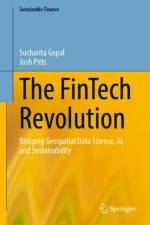
In a world of unprecedented challenges and opportunities, Fintech stands as a pivotal force, at the crossroads of technology, finance, and sustainability. This book invites readers to the forefront of a revolutionary convergence, where economic growth and environmental stewardship align. Whether the reader is a decision-maker, innovator, entrepreneur, or investor within the Fintech industry, this is a guide to a future where finance and technology serve our planet.Authored by experts in GIS, AI, and remote sensing, who are also seasoned entrepreneurs, this unique work offers both theory and practical guidance, discovers sources often overlooked in ESG analytics, dives into specific, not general, KPIs for industry professionals, and navigates global regulations and frameworks with ease.Real-world case studies unveil the value of applied methods, supported by insights from leading practitioners, explore the latest developments in AI and machine learning, and uncover a step-by-step data science analysis framework.
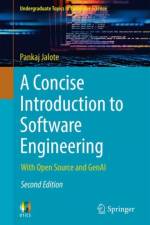
Software engineering has changed: A software project today is likely to use large language models (LLMs) for some tasks and will employ some open-source software. It is therefore important to integrate open source and use of LLMs in teaching software engineering - a key goal of this textbook.This reader-friendly textbook/reference introduces a carefully curated set of concepts and practices essential for key tasks in software projects. It begins with a chapter covering industry-standard software, open-source tools, and the basics of prompt engineering for LLMs. The second chapter delves into project management, including development process models, planning, and team-working. Subsequent chapters focus on requirements analysis and specification, architecture design, software design, coding, testing, and application deployment.Each chapter presents concepts, practical methods, examples, the application of LLMs, and the role of open-source software. A companion website provides some comprehensive case studies, as well as teaching material including presentation slides.This textbook is ideal for an introductory course on software engineering where the objective is to develop knowledge and skills to execute a project-specifically in a team employing contemporary software engineering practices and using open source and LLMs. It is also suitable for professionals who want to be introduced to the systematic approach of software engineering and/or use of open source and LLMs.The author is a distinguished professor at IIIT-Delhi and a well-known academic in software engineering. He has served as vice president in Infosys Technologies Limited and as a visiting researcher at Microsoft Corporation.
Exceptional short stories featuring young millennial women, blending dark fantasy and quasi-horror with humour and intellectual dashAnnouncing the arrival of a major talent, I HOPE YOU'RE HAPPY is more a warning than a wish. Photos of women eating go viral, a cookie communicates a threat, and women working dead-end jobs become entangled in the performances around them. Everyday experiences of friendship, family, dating and desire catapult the reader into a creepy vortex of horror. Characters reveal themselves in slippery glimpses, through positive affirmations, social media accounts and secret appetites. With this collection of haunting and haunted stories, Marni Appleton immerses us in a world of fleeting encounters, empty couplings, break ups, bust ups, threesomes and ghosts, giving us a kaleidoscopic overview of twenty-first century life. 'These beautifully written, female-focused stories stayed with me long past closing the cover. Sensual, alive and haunting. Dark wisps of womanhood.' Lucy Prebble, Executive Producer and writer on the Bafta, Golden Globe and Emmy award-winning HBO drama Succession'This collection of wry and incisive stories explores navigating the sticky, glorious and more-often-than-not absolutely horrific terrain of late girlhood and early womanhood.' Ayesha Manazir Siddiqi, author of The Centre'Truthful, dark, and walking the line between delicious and disturbing, I HOPE YOU'RE HAPPY is a rich and haunting read. Savour or gorge, this is a very special collection of deceptively cutting stories.' Lottie Hazell, author of Piglet'Smart, surprising, and witty, these stories are a joy to read.' Naomi Booth, author of Animals at Night'These tense stories of the zeitgeist show how the conditions of late capitalism promise women freedom while keeping them trapped in their economic and social circumstances. Clever, convincing and wry, they bowled me over. Like Mary Gaitskill and Miranda July before her, Marni Appleton writes about how it is to live now.' Julia Bell, author of Hymnaland Radical Attention'Marni Appleton writes with insight, honesty and inventiveness into the raw, brutal spaces of girlhood and early womanhood. A powerful, political collection that maps intimately the minds and bodies of its characters, these stories stayed with me long after I'd finished.' Fran Littlewood, author of Amazing Grace Adams'Such a wonderful collection, the writing so sharp, witty, dark, carefully observed and full of the realities of present day life.' Gerard Woodward, author ofLegolandandI'll Go to Bed at Noon'Raw, fluid, intimate and believable.' Mariel Franklin, author of Bonding'Deliciously dark, incisive and original, Marni Appleton has clearly mastered the short story, but more than that, she has mastered the art of winding her readers in ribbons of mess and mundanity that make up both fantastical and real life in a truly compelling collection.' Ore Agbaje-Williams, author of The Three of Us'Glittering behind every fixed-on smile in this collection is a crystallised seam of horror. An illegally acquired cocktail of weirdness, body laughs, love and spite. I could not have liked it more.' Ben Pester, author of Am I in the Right Place?'Tender, skewed and affecting stories told with a keen eye for the absurd and unsettling nature of being alive. A bewitching and twisted kaleidoscope of stories.' Isy Suttie, award-winning comedian and writer'Appleton knows all the ways that women are seen, surveilled, and regarded. These excellent stories stare right back, and they brim over with insight and sharp intelligence.' Manuel Muoz, author ofThe Consequences'Marni Appleton's debut collection of short stories is like a shot fired across the bow of contemporary feminism. Prophetic and profound at once, her stories are oblique glimpses of girls' and womens' lives in the age of Instagram, anxiety and heightened scrutiny of women and especially of their bodies. Fresh, surprising and invigorating, Appleton's stories resonate long after finishing them with a restless energy and a humane heart.' Jean McNeil, author ofDay for Night: A Novel
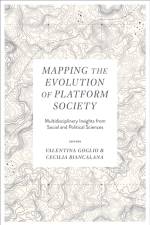
Our society is becoming inextricably intertwined with digital platforms. Mapping the Evolution of Platform Society brings together a team of multidisciplinary scholars from across Europe to delve into the intricate web of challenges and opportunities posed by the digital landscape.
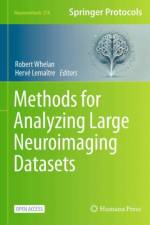
This Open Access volume explores the latest advancements and challenges in standardized methodologies, efficient code management, and scalable data processing of neuroimaging datasets. The chapters in this book are organized in four parts. Part One shows the researcher how to access and download large datasets, and how to compute at scale. Part Two covers best practices for working with large data, including how to build reproducible pipelines and how to use Git. Part Three looks at how to do structural and functional preprocessing data at scale, and Part Four describes various toolboxes for interrogating large neuroimaging datasets, including machine learning and deep learning approaches. In the Neuromethods series style, chapters include the kind of detail and key advice from the specialists needed to get successful results in your laboratory.Authoritative and comprehensive, Methods for Analyzing Large Neuroimaging Datasets is a valuable resource that will help researchers obtain the practical knowledge necessary for conducting robust and reproducible analyses of large neuroimaging datasets.
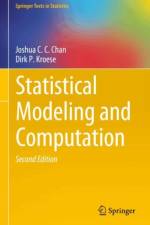
This book, Statistical Modeling and Computation, provides a unique introduction to modern statistics from both classical and Bayesian perspectives. It also offers an integrated treatment of Mathematical Statistics and modern statistical computation, emphasizing statistical modeling, computational techniques, and applications.The 2nd edition changes the programming language used in the text from MATLAB to Julia. For all examples with computing components, the authors provide data sets and their own Julia codes. The new edition features numerous full color graphics to illustrate the concepts discussed in the text, and adds three entirely new chapters on a variety of popular topics, including: Regularization and the Lasso regression Bayesian shrinkage methods Nonparametric statistical tests Splines and the Gaussian process regression
There's no such thing as a quiet year in video games, and 2024 has been no different. For players, a steady stream of high-profile game releases has meant there's always been something new to play regardless of what console, handheld, PC or mobile device they were using. Meanwhile, behind the scenes 2024 has been one of the most turbulent years in the history of the games industry, with widespread job losses, studio cuts, acquisitions and other controversies. Video Games Chronicle, the expert source for video game news, has covered 2024's goings-on every step of the way, and this book summarises the entire year in one handy volume. Designed like an old-school games magazine, this book presents the VGC website's best coverage of 2024 in a more traditional format. Our News section takes you through all the major stories that took place throughout the year, allowing you to relive every moment (for better or worse). Our Reviews section contains every notable VGC game review from 2024, 'remastered' and presented to you in physical form (we're big on preservation, you see). Our Features section offers some of our best long-form articles from the past year. Finally, our Previews section takes a look at some of the games coming in 2025. The world of online games media is a fast-moving one, and news and reviews usually arrive at breakneck speed then disappear from our consciousness to be replaced with the latest stories. With this book, we hope to provide a more permanent summary of the year, while also harking back to the days of the games magazines we loved so much.
The aim of this book is to identify some of the challenges that need to be addressed to accelerate the deployment and adoption of smart health technologies for ubiquitous healthcare access especially in wearable devices.
This book aims to prospectively conjecture about what the coming decades may hold for human rights. The authors in this volume discern where current trends are likely to lead and try to make sense of the future they herald. The chapters in this book were originally published as a special issue of Nordic Journal of Human Rights.
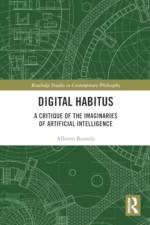
This book proposes a new theoretical framework for approaching the causes and effects that digital technologies and the imaginaries related to them have on the processes of self-interpretation and subjectivation.
The text discusses the use of optimization algorithms in determining the optimal planning of both distributed generation units and capacitor banks in distribution systems. It also showcases the measure in selecting the optimal parameters of the single tuned filter to mitigate a specific harmonic passband based on a parametric analysis.
This anthology contributes to creating awareness on how digital ageism operates in relation to the widely spread symbolic representations of old and young age, the (lack of) representation of diverse older individuals in the design, development, and discourses and in the actual algorithms and datasets.
The aim of this book is to draw a holistic picture of ongoing online teaching-activities before and during the lockdown period and present the meaning and future of e-learning from students' points of view, taking into consideration their attitudes and expectations as well as industry 4.0 and society 5.0 aspects.
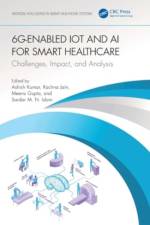
6G-enabled IoT and AI for Smart Healthcare: Challenges, Impact, and Analysis offers the fundamentals, history, reality, and challenges faced in the smart healthcare industry today. It discusses the concepts, tools, and techniques of smart healthcare as well as the analysis used.
This book presents different tools and techniques used for Decision Support Systems (DSS) including decision tree and table, and their modifications, multi-criteria decision analysis techniques, network tools of decision support and various case-based reasoning methods supported by examples and case studies.
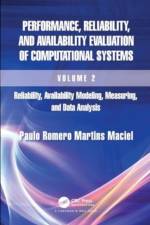
This textbook intends to be a comprehensive and substantially self-contained two-volume book covering performance, reliability, and availability evaluation subjects. The second volume encompasses Chapter 15 to Chapter 25 and has the subtitle ``Reliability and Availability Modeling, Measuring and Workload, and Lifetime Data Analysis".
Abonner på vårt nyhetsbrev og få rabatter og inspirasjon til din neste leseopplevelse.
Ved å abonnere godtar du vår personvernerklæring.