







Gjør som tusenvis av andre bokelskere
Abonner på vårt nyhetsbrev og få rabatter og inspirasjon til din neste leseopplevelse.
Ved å abonnere godtar du vår personvernerklæring.Du kan når som helst melde deg av våre nyhetsbrev.

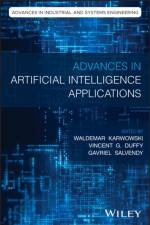
Comprehensive guide offering actionable strategies for enhancing human-centered AI, efficiency and productivity in industrial and systems engineering through the power of AI. Advances in Artificial Intelligence Applications is the first book in the Advances in Industrial and Systems Engineering series, offering insights into AI techniques, challenges, and applications across various industrial and systems engineering (ISE) domains. Not only does the book chart current AI trends and tools for effective integration, but it also raises pivotal ethical concerns and explores the latest methodologies, tools, and real-world examples relevant to today's dynamic ISE landscape. Readers will gain a practical toolkit for effective integration and utilization of AI in system design and operation. The book also presents the current state of AI across big data analytics, machine learning, artificial intelligence tools, cloud-based AI applications, neural-based technologies, modeling and simulation in the metaverse, intelligent systems engineering, and more, and discusses future trends. With by renowned international contributors written for an international audience, Advances in Artificial Intelligence Applications includes information on: Reinforcement learning, computer vision and perception, and safety considerations for autonomous systems (AS) (NLP) topics including language understanding and generation, sentiment analysis and text classification, and machine translation AI in healthcare, covering medical imaging and diagnostics, drug discovery and personalized medicine, and patient monitoring and predictive analysis Cybersecurity, covering threat detection and intrusion prevention, fraud detection and risk management, and network security Social good applications including poverty alleviation and education, environmental sustainability, and disaster response and humanitarian aid. Advances in Artificial Intelligence Applications is a timely, essential reference for engineering, computer science, and business professionals worldwide.
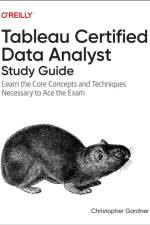
Gaining a Tableau Certified Data Analyst title is key to advertising your skill set in a data-hungry world. It advertises your ability to connect to, analyze, and describe data in an industry-leading data-visualization tool. This study guide provides example questions, terminology, walkthroughs, and best practices to help you learn key topics covered by this certification exam. Christopher Gardner, business intelligence analyst and lead Tableau developer for the University of Michigan, provides guidelines for first-time test-takers and a comprehensive review for Tableau veterans. You'll start by learning how to use Tableau's data Prep Builder and the Tableau Desktop software to connect to, prepare, manipulate, and combine datasets. Then you'll dive into the build interface to develop simple yet compelling data visualizations before moving into more complex topics such as table calculations, level-of-detail expressions, parameters, and predictive analytics tools. This book shows you how to: Read, understand, build, and explain data Manipulate data to prepare it for analysis Combine datasets to expand potential insights Navigate through the Tableau Prep and Tableau Desktop interface to work with your data Set up basic data visualizations and write calculations to perform functions for data enhancement Explore and analyze your data through visualization Publish your work to private or public audiences and properly secure access And much more
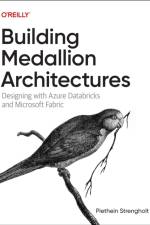
In today's data-driven world, organizations must manage and analyze vast amounts of information to deliver the insights that give them a competitive advantage. Many turn to the medallion architecture because it's a proven and well-known design. Yet implementing a robust data pipeline can be difficult, particularly when it comes to using the medallion architecture's bronze, silver, and gold layers--done wrong, it can hamper your ability to make data-driven decisions. This practical guide helps you build a medallion architecture the right way with Azure Databricks and Microsoft Fabric. Drawing on hands-on experience from the field, Piethein Strengholt demystifies common assumptions and complex problems you'll face when embarking on a new data architecture. Architects and engineers of all stripes will find answers to the most typical questions along with insights from real organizations about what's worked, what hasn't, and why. You'll learn: Lakehouse and medallion architecture fundamentals and key concepts Design considerations for Azure Databricks and Microsoft Fabric Scaling considerations, including governance, security, automation, and more How to make informed decisions when designing or implementing new data architectures Proven patterns for success that align with broader organizational objectives
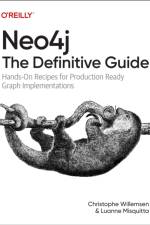
Looking to improve the performance of Cypher queries or learn how to model graphs to support business use cases? A graph database like Neo4j can help. In fact, many enterprises are leveraging Neo4j to power their business-critical applications. This book offers practical and concise recipes on how and when to successfully leverage Neo4j into architectures. Authors Christophe Willemsen and Luanne Misquitta walk you through typical Neo4j implementation strategies from proof of concept to iterative improvements and, finally, to production readiness and beyond. By the end of this book, you should understand how to: Make practical decisions in the proof of concept stage to maximize value Revisit and revise your decisions when transitioning to production Configure and implement observability features for in-production data graphs Integrate graph databases into existing enterprise architectures
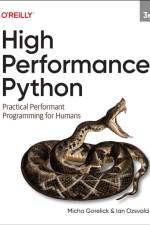
Your Python code may run correctly, but you need it to run faster. By exploring the fundamental theory behind design choices, this practical guide helps you gain a deeper understanding of Pythons implementation. Youll learn how to locate performance bottlenecks and significantly speed up your code in high-data-volume programs.How can you take advantage of multi-core architectures or clusters? Or build a system that can scale up and down without losing reliability? Experienced Python programmers will learn concrete solutions to these and other issues, along with war stories from companies that use high performance Python for social media analytics, productionized machine learning, and other situations.Get a better grasp of numpy, Cython, and profilersLearn how Python abstracts the underlying computer architectureUse profiling to find bottlenecks in CPU time and memory usageWrite efficient programs by choosing appropriate data structuresSpeed up matrix and vector computationsUse tools to compile Python down to machine codeManage multiple I/O and computational operations concurrentlyConvert multiprocessing code to run on a local or remote clusterSolve large problems while using less RAM
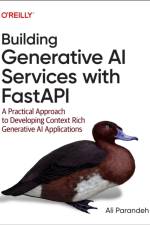
Ready to build applications using generative AI? This practical book outlines the process necessary to design and build production grade AI services with a FastAPI web server that communicate seamlessly with databases, payment systems, and external APIs. You'll learn how to develop autonomous generative AI agents that stream outputs in real-time and interact with other models. Web developers, data scientists, and DevOps engineers will learn to implement end-to-end production-ready services that leverage generative AI. You'll learn design patterns to manage software complexity, implement FastAPI lifespan for AI model integration, handle long-running generative tasks, perform content filtering, cache outputs, implement retrieval augmented generation (RAG) with a vector database, implement usage/cost monitoring and tracking, protect services with your own authentication and authorization mechanisms, and effectively control stream outputs directly from GenAI models. You'll explore efficient testing methods for AI outputs, validation against databases, and deployment patterns using Docker for robust microservices in the cloud. Build generative services that interact with databases, external APIs, and more Learn how to load AI models into a FastAPI lifecycle memory Monitor and log model requests and responses within services Use authentication and authorization patterns hooked with generative models Handle and cache long-running inference tasks Stream model outputs via streaming events and WebSockets into browsers or files Automate the retraining process of generative models by exposing event-driven endpoints Ali Parandeh is a Chartered Engineer with the UK Engineering Council and a Microsoft and Google certified developer, data engineer, and data scientist.
The definitive story of the streaming platform Twitch told through the lives of its biggest creators, providing a portrait of how the booming livestream ecosystem is reshaping technology, entertainment, business, and culture.
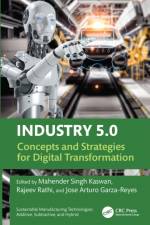
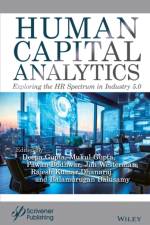
Industry 5.0 is a new paradigm aiming to address social and environmental sustainability in future industries. This book explores various models and execution frameworks across different sectors, enabling organizations to stay competitive by integrating digital technologies with human creativity.
This second edition continues to present meaningful and practical solutions for teaching mathematics and statistics online, focusing on the problems observed by mathematics instructors currently working in the field. With its set of standard practices, instructors will benefit from learning many new techniques and approaches.
This second edition continues to present meaningful and practical solutions for teaching mathematics and statistics online, focusing on the problems observed by mathematics instructors currently working in the field. With its set of standard practices, instructors will benefit from learning many new techniques and approaches.
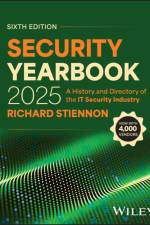
A fascinating history of the cybersecurity industry as well as an up-to-date collection of leading cybersecurity vendors from around the globe In the newly revised 2025 edition of Security Yearbook: A History and Directory of the IT Security Industry, celebrated author and information security expert Richard Stiennon delivers the latest complete desk reference for the entire cybersecurity industry. In the book, you'll find a comprehensive directory of cybersecurity vendors, updated for 2025, complete with headquarters location, category, sub-category, number of employees, and growth trends. The author has also included an insightful and concise history of important and relevant sub-sectors of the cybersecurity industry, including Distributed Denial-of-Service defense, network security, endpoint detection, identity and access management, data security, and governance risk compliance. Case studies and stories of key personalities supplement the history, showcasing the stories of significant characters who had their hands in landscape-altering events in the field. You'll also find: Discussions of substantial IT security failures that had an impact on the industry, and on society as a whole Major mergers and acquisitions, company failures and closures, and funding events in the cybersecurity sector Significant developments in open-source projects with an impact on cybersecurity practitioners around the world Perfect for security architects, CISOs, freelance cybersecurity professionals, and other technical specialists, Security Yearbook 2025 is also a must-read resource for the managers, executives, and directors responsible for guiding and leading the efforts of technology professionals. New entrants to the field will want to read Security Yearbook 2025 cover-to-cover to understand how we got to where we are today. Students will enjoy Stiennon's breezy style as they learn everything the author has gleaned in his 30-year career.
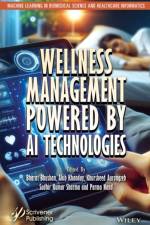
This book is an essential resource on the impact of AI in medical systems, helping readers stay ahead in the modern era with cutting-edge solutions, knowledge, and real-world case studies. Wellness Management Powered by AI Technologies explores the intricate ways machine learning and the Internet of Things (IoT) have been woven into the fabric of healthcare solutions. From smart wearable devices tracking vital signs in real time to ML-driven diagnostic tools providing accurate predictions, readers will gain insights into how these technologies continually reshape healthcare. The book begins by examining the fundamental principles of machine learning and IoT, providing readers with a solid understanding of the underlying concepts. Through clear and concise explanations, readers will grasp the complexities of the algorithms that power predictive analytics, disease detection, and personalized treatment recommendations. In parallel, they will uncover the role of IoT devices in collecting data that fuels these intelligent systems, bridging the gap between patients and practitioners. In the following chapters, readers will delve into real-world case studies and success stories that illustrate the tangible benefits of this dynamic duo. This book is not merely a technical exposition; it serves as a roadmap for healthcare professionals and anyone invested in the future of healthcare. Readers will find the book: Explores how AI is transforming diagnostics, treatments, and healthcare delivery, offering cutting-edge solutions for modern healthcare challenges; Provides practical knowledge on implementing AI in healthcare settings, enhancing efficiency and patient outcomes; Offers authoritative insights into current AI trends and future developments in healthcare; Features real-world case studies and examples showcasing successful AI integrations in various medical fields. Audience This book is a valuable resource for researchers, industry professionals, and engineers from diverse fields such as computer science, artificial intelligence, electronics and electrical engineering, healthcare management, and policymakers.
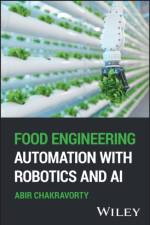
Revolutionize food manufacturing with the latest in automating technology Virtually every area of industry has been transformed by robotics and AI, which have automated production and increased efficiency in myriad ways. Until recently, food manufacturing was an exception to the trend. At present, however, the food manufacturing industry is in the process of a transformation which will see automation deliver the same levels of productivity and uniformity that have revolutionized other sectors of the economy. Food Engineering Automation with Robotics and AI is a comprehensive introduction to the areas of intersection between cutting-edge technologies and food manufacturing. Beginning with an overview of the basic principles of food engineering, the book then details applications of robotics and AI in this field, along with the way automation is integrated at every stage of food production. The structure of the book seamlessly blends theory and practice to maximize reader capacity to put its lessons into motion. Food Engineering Automation with Robotics and AI readers will also find: Content aligning with several UN Sustainable Development Goals, including Zero Hunger; Industry, Innovation, and Infrastructure; and Responsible Consumption and Production Real-world case studies throughout to show automating technologies revolutionizing food production A consistent focus on sustainable food engineering, with attention to resource conservation, waste reduction, environmental impact mitigation, and more Food Engineering Automation with Robotics and AI is ideal for the growing, global market for food automation technologies in the coming years.
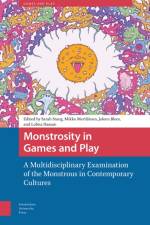
Monsters fascinate us. From ancient folklore to contemporary digital games, they are at the core of the stories we tell. They reflect our fears, deepest desires, and the monstrosity hidden within ourselves. Monsters hold a mirror to our contemporary society and reveal who we truly are. This edited collection examines monsters and monstrosity in games and play. Monsters are a key feature of most games: we fight, kill, and eat them-and sometimes, we become them. However, monsters in games and play are not only entertaining but also a reflection of the monstrosity of our world. In this book, twenty-two scholars explore how themes such as mental health, colonialism, individualism, disability, gender, sexuality, racism, and exclusion are reflected in the monsters we interact with in games, play, and our daily lives both online and offline. Monstrosity in Games and Play is recommended to readers interested in the monstrous in contemporary game cultures and their surrounding societies.
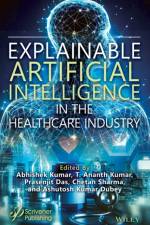
Discover the essential insights and practical applications of explainable AI in healthcare that will empower professionals and enhance patient trust with Explainable AI in the Healthcare Industry, a must-have resource. Explainable AI (XAI) has significant implications for the healthcare industry, where trust, accountability, and interpretability are crucial factors for the adoption of artificial intelligence. XAI techniques in healthcare aim to provide clear and understandable explanations for AI-driven decisions, helping healthcare professionals, patients, and regulatory bodies to better comprehend and trust the AI models' outputs. Explainable AI in the Healthcare Industry presents a comprehensive exploration of the critical role of explainable AI in revolutionizing the healthcare industry. With the rapid integration of AI-driven solutions in medical practice, understanding how these models arrive at their decisions is of paramount importance. The book delves into the principles, methodologies, and practical applications of XAI techniques specifically tailored for healthcare settings.
Medical Device Cybersecurity for Engineers and Manufacturers, Second Edition removes the mystery from cybersecurity engineering and regulatory processes and practices, showing medical device manufacturers how to produce and maintain devices that meet evolving regulatory expectations and reduce cybersecurity risks to business and patients. It represents a complete guide for medical device manufacturers seeking to implement lifecycle processes that secure their premarket and postmarket activities.This step-by-step guide educates manufacturers about the implementation of security best practices in accordance with industry standards and expectations, advising the reader about everything from high-level concepts to real-world solutions and tools. It focuses on the security aspects of every lifecycle phase of the product, including concept, design, implementation, supply chain, manufacturing, postmarket maintenance, and end of life. It details the practices, processes, and outputs necessary to create a secure medical device capable of gaining regulatory approval and meeting market entry requirements.Reflecting rapid industry developments, regulatory changes, and technology advances, this new edition equips manufacturers with the knowledge to produce secure products that meet regulatory and market requirements while anticipating threats from sophisticated cyber adversaries. It's an indispensable resource for a wide range of professionals involved in medical device manufacturing, including engineering management, software/firmware engineers, business managers, regulatory professionals, contract manufacturers, FDA regulators, product/project managers, sales and marketing teams, and healthcare delivery organizations.
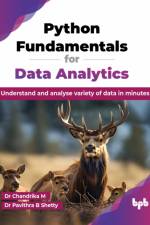
DESCRIPTIONPython is a simple, easy-to-learn, and one of the top programming languages across the globe. As a result of advancements in AI, data mining, and numerical computing fields, Python has become a popular programming language catering to various stakeholders. It is a powerful tool for working with a variety of data. This book provides the basics of Python and an introduction to data analytics.This book offers a complete introduction to Python programming, covering everything from the basics to the advanced topics. It starts by explaining core concepts like syntax and the Python interpreter, then dives into data structures, control flow, functions, and modules. You will also learn about data analysis and visualization with popular libraries like NumPy, Pandas, Matplotlib, and Seaborn. It wraps up with practical case studies, showing how to apply Python in real-world scenarios effectively.The book serves as a step-by-step guide to performing data analysis. Its content is designed so that even a novice can learn and perform data analysis and visualization simply by following the instructions in the book.KEY FEATURES¿ The book covers a wide range of topics, from Python fundamentals to advanced data analysis techniques.¿ It includes practical exercises and real-world case studies to illustrate the applications of Python for data analysis.WHAT YOU WILL LEARN¿ Understand the basics of programming languages and the role of the Python interpreter.¿ Read about different data structures like lists, sets, tuples, and dictionaries, and understand their applications.¿ Learn how to work with files in Python, including reading, writing, and appending data.¿ Discover how to use NumPy and Pandas for efficient data manipulation and analysis.¿ Learn how to create informative visualizations using Matplotlib and Seaborn.WHO THIS BOOK IS FORThis book is designed for students studying UG or PG courses in the computer science and applications domain. Learning Python is a simple way to begin the journey of data analytics. One of the in-demand domains in the job market, and research is data analytics. This book will be helpful for students interested in this domain.
A fully illustrated guide to sixty top multiplayer titles, offering game details, facts, and tips for competitive play.Video games can be truly rewarding experiences whether you're knocking Bowser into a fiery inferno, scrapping seconds off a lap time around Silverstone to turn it into a record breaker, or solving a head-scratching Picross puzzle after a quiet and focused half hour. When that accomplishment happens to involve besting a friend sitting on the very same couch or a stranger (or ninety-nine for that matter) halfway round the world it's made all the more sweeter. Knowing you've bested not just the video game, but another hungry competitor too.So put on your meanest game face as The Best Competitive Multiplayer Games guides you through sixty of the best multiplayer titles around. From burning rubber across Rainbow Road to deceiving and hunting your friends aboard a space ship, there's plenty of ways to flex your gaming skills (not to mention ample chance to celebrate with your favourite victory dance). Featuring games released over the past thirty years and covering all sorts of genres including online shooters, face kicking fighters, score-chasing puzzlers and a few unexpected surprises too, this fully illustrated guide includes detailed explanations of every entry, fascinating facts and what makes them a top candidate to settle a score with friends or rivals.
Abonner på vårt nyhetsbrev og få rabatter og inspirasjon til din neste leseopplevelse.
Ved å abonnere godtar du vår personvernerklæring.