












Gjør som tusenvis av andre bokelskere
Abonner på vårt nyhetsbrev og få rabatter og inspirasjon til din neste leseopplevelse.
Ved å abonnere godtar du vår personvernerklæring.Du kan når som helst melde deg av våre nyhetsbrev.

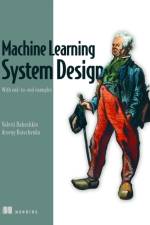
Get the big picture and the important details with this end-to-end guide for designing highly effective, reliable machine learning systems.From information gathering to release and maintenance, Machine Learning System Design guides you step-by-step through every stage of the machine learning process. Inside, you’ll find a reliable framework for building, maintaining, and improving machine learning systems at any scale or complexity. In Machine Learning System Design: With end-to-end examples you will learn: • The big picture of machine learning system design • Analyzing a problem space to identify the optimal ML solution • Ace ML system design interviews • Selecting appropriate metrics and evaluation criteria • Prioritizing tasks at different stages of ML system design • Solving dataset-related problems with data gathering, error analysis, and feature engineering • Recognizing common pitfalls in ML system development • Designing ML systems to be lean, maintainable, and extensible over time Authors Valeri Babushkin and Arseny Kravchenko have filled this unique handbook with campfire stories and personal tips from their own extensive careers. You’ll learn directly from their experience as you consider every facet of a machine learning system, from requirements gathering and data sourcing to deployment and management of the finished system. Purchase of the print book includes a free eBook in PDF and ePub formats from Manning Publications. About the technology Designing and delivering a machine learning system is an intricate multistep process that requires many skills and roles. Whether you’re an engineer adding machine learning to an existing application or designing a ML system from the ground up, you need to navigate massive datasets and streams, lock down testing and deployment requirements, and master the unique complexities of putting ML models into production. That’s where this book comes in. About the book Machine Learning System Design shows you how to design and deploy a machine learning project from start to finish. You’ll follow a step-by-step framework for designing, implementing, releasing, and maintaining ML systems. As you go, requirement checklists and real-world examples help you prepare to deliver and optimize your own ML systems. You’ll especially love the campfire stories and personal tips, and ML system design interview tips. What's inside • Metrics and evaluation criteria • Solve common dataset problems • Common pitfalls in ML system development • ML system design interview tips About the reader For readers who know the basics of software engineering and machine learning. Examples in Python. About the author Valerii Babushkin is an accomplished data science leader with extensive experience. He currently serves as a Senior Principal at BP. Arseny Kravchenko is a seasoned ML engineer currently working as a Senior Staff Machine Learning Engineer at Instrumental. Table of Contents Part 1 1 Essentials of machine learning system design 2 Is there a problem? 3 Preliminary research 4 Design document Part 2 5 Loss functions and metrics 6 Gathering datasets 7 Validation schemas 8 Baseline solution Part 3 9 Error analysis 10 Training pipelines 11 Features and feature engineering 12 Measuring and reporting results Part 4 13 Integration 14 Monitoring and reliability 15 Serving and inference optimization 16 Ownership and maintenance
Build resilient and scalable, cloud-native enterprise Java applications using the Quarkus framework.Quarkus lets you live-reload your Java code, deliver continuous background testing, and automatically provide database instances—plus tons more productivity-boosting features! Quarkus in Action quickly gets you up to speed with Quarkus by building a real-world business application. In Quarkus in Action, you will: • Use Quarkus Dev mode to speed up and enhance Java development • Understand how to use the Dev UI to observe and troubleshoot running applications • Automatic background testing using the Continuous Testing feature • New frameworks and libraries such as Quarkus Messaging, gRPC, and GraphQL • Simplify deployment of applications into Kubernetes and OpenShift • Automatic management of remote services such as databases and message brokers via Docker containers • Set up observability for applications by using metrics, health checks and distributed tracing Quarkus in Action is written by Martin Štefanko and Jan Martiška, Red Hat engineers who are both active contributors to the Quarkus project. In it, you’ll learn how Quarkus works and how you can integrate it into your stack for more productive Java development. Discover what makes Quarkus different from classic enterprise Java frameworks, how Quarkus streamlines creating cloud-native applications, and makes deployment easy. Foreword by Markus Eisele. Purchase of the print book includes a free eBook in PDF and ePub formats from Manning Publications. About the technology Choose a Java framework that’s as modern as your applications! Quarkus is a cloud-first framework designed for speed and cost optimization. It’s Kubernetes-aware by default and includes amazing productivity features like live reloading, continuous testing, and a developer-friendly UI that lets you code fluidly without tedious setup. About the book Quarkus in Action provides a carefully designed learning path through Quarkus’ key features and use cases. You’ll learn hands-on by implementing a working car rental application with a cloud-native microservices design that includes Kubernetes, SQL and NoSQL databases, messaging, and observability. Along the way, you’ll learn how Quarkus simplifies deployment on cloud platforms like OpenShift. What's inside • Speed up development with Quarkus Dev mode • Troubleshoot running apps with Dev UI • Continuous testing in the background • Automatic startup of development databases About the reader For intermediate Java developers who have experience deve- loping server-side Java applications. About the author Martin Štefanko and Jan Martiška are Red Hat engineers and active contributors to the Quarkus project. Table of Contents Part 1 1 What is Quarkus? 2 Your first Quarkus application 3 Enhancing developer productivity with Quarkus Part 2 4 Handling communications 5 Testing Quarkus applications 6 Exposing and securing web applications 7 Database access 8 Reactive programming 9 Quarkus messaging Part 3 10 Cloud-native application patterns 11 Quarkus applications in the cloud 12 Custom Quarkus extensions A Alternative languages and build tooling B Tools installations C Alternatives for developing frontend applications with Quarkus
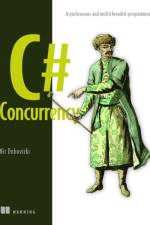
Supercharge your applications with the ultimate guide to asynchronous and multithreaded programming in C#!C# Concurrency teaches you how to write effective multithreaded and asynchronous software in C#. Practical techniques, real-world examples, and useful code samples cut through the confusion around async/await and help you write rapid, reliable, and bug-free code. In C# Concurrency: Asynchronous and Multithreaded Programming you’ll learn how to: • Take full advantage of async/await • Write bug-free multithreaded code every time • Create multithreaded code that delivers real performance improvements • Grok C# and .NET multithreading and asynchronous primitives • Know when to use concurrency techniques—and when not to use them! In C# Concurrency Nir Dobovizki, a seasoned C# veteran with over 30 years of high-performance programming experience, shares his deep knowledge and expert techniques. Say goodbye to frustrating pitfalls and impossible-to-find bugs that slow down your applications. Nir's careful approach will teach you how to navigate these challenges with ease, allowing you to achieve lightning-fast performance like never before! Purchase of the print book includes a free eBook in PDF and ePub formats from Manning Publications. About the technology Asynchronous and multithreaded programs can perform multiple tasks simultaneously without losing speed or reliability. But getting concurrency right can challenge even experienced developers. This practical book teaches you to deliver concurrent C# apps that are lighting fast and free of the deadlocks and other synchronization issues that undermine performance and take forever to find. About the book C# Concurrency equips programmers with a comprehensive understanding of multithreading and asynchronous programming, focusing on the practical use of the C# async-await feature to simplify asynchronous tasks. It teaches how to avoid common pitfalls, addresses classic multithreading issues like deadlocks and race conditions, and advanced topics such as controlling thread of execution and using thread-safe collections. What's inside • .NET multithreading and asynchronous primitives • When to use concurrency techniques—and when not to! • Confidently use async/await About the reader For experienced C# programmers. No knowledge of asynchro- nous programming required. About the author Nir Dobovizki is a senior software architect and consultant who has worked on concurrent and asynchronous systems since the late 90s. Table of Contents 1 Asynchronous programming and multithreading 2 The compiler rewrites your code 3 The async and await keywords 4 Multithreading basics 5 async/await and multithreading 6 When to use async/await 7 Classic multithreading pitfalls and how to avoid them Part 2 8 Processing a sequence of items in the background 9 Canceling background tasks 10 Await your own events 11 Controlling on which thread your asynchronous code runs 12 Exceptions and async/await 13 Thread-safe collections 14 Generating collections asynchronously/await foreach and IAsyncEnumerable
"DuckDB is a cutting-edge SQL database that makes it incredibly easy to analyze big data sets right from your laptop. In DuckDB in Action you'll learn everything you need to know to get the most out of this awesome tool, keep your data secure on prem, and save you hundreds on your cloud bill. From data ingestion to advanced data pipelines, you'll learn everything you need to get the most out of DuckDB--all through hands-on examples."
Tested and pragmatic methods for writing blogs, articles, and other technical pieces that stand out from the crowd!
This book offers a comprehensive new analysis of the contemporary media landscape, looking at the central theories of the digital society, and the hot topics and key research methods in the field.
Calling attention to the unseen mediation and re-mediation of life narratives in online and physical spaces, this ground-breaking exploration uncovers the ever-changing strategies that authors, artists, publishers, curators, archivists and social media corporations adopt to shape, control or resist the auto/biographical in these texts. Concentrating on contemporary life texts found in the material book, museums, on social media and archives that present perceptions of individuality and autonomy, Reading Mediated Life Narratives exposes the traces of personal, cultural, technological, and political mediation that must be considered when developing reading strategies for such life narratives. Amy Carlson asks such questions as what agents act upon these narratives; what do the text, the creator, and the audience gain, and what do they lose; how do constantly evolving technologies shape or stymie the auto/biographical "I"; and finally, how do the mediations affect larger issues of social and collective memory? An examination of the range of sites at which vulnerability and intervention can occur, Carlson does not condemn but stages an intercession, showing us how it is increasingly necessary to register mediated agents and processes modifying the witnessing or recuperation of original texts that could condition our reception. With careful thought on how we remember, how we create and control our pictures, voices, words, and records, Reading Mediated Life Narratives reveals how we construct and negotiate our social identities and memories, but also what systems control us.
This edited volume examines the transformative impact of AI technologies on global healthcare systems, with a focus on enhancing efficiency and accessibility. A comprehensive guide for healthcare professionals, AI researchers, and those seeking to develop effective AI-driven healthcare solutions that address global health challenges.
This edited volume examines the transformative impact of AI technologies on global healthcare systems, with a focus on enhancing efficiency and accessibility. A comprehensive guide for healthcare professionals, AI researchers, and those seeking to develop effective AI-driven healthcare solutions that address global health challenges.
This book offers a multi-perspectival exploration of how imaginaries and knowledge of the future are constructed in and through various media. It will interest media studies, STS, history, philosophy, intersection of engineering, humanities and social sciences, sustainability, ethics, and responsible innovation.
Volumes have been written on the need for high-quality data to support organizational decision-making. Navigating the Data Minefields: Management's Guide to Better Decision-Making provides executives and SMEs with a 'reasonable' set of (useful) tools they can adapt to their specific organization and operating environment.
Smart Applications of Artificial Intelligence and Big Data covers a wide range of topics related to AI and big data, including machine learning, deep learning, natural language processing, computer vision, data analytics, and data mining.
This book explores the impact of technology on HR practices and how organisations can effectively incorporate these advancements to improve HR processes. It provides a comprehensive overview of the various technologies that are transforming HR, including artificial intelligence, machine learning, big data, and blockchain.
The book explores the intersection of cutting-edge technologies and industrial trends. Researching Artificial Intelligence, machine learning, and data analytics, it examines the transformative potential of computational intelligence in shaping the future of manufacturing and services.
This book explores intelligent systems in computing and informatics, focusing specifically on their role in advancing Sustainable Development Goal (SDG) No. 11 - Sustainable Cities and Communities.
Abonner på vårt nyhetsbrev og få rabatter og inspirasjon til din neste leseopplevelse.
Ved å abonnere godtar du vår personvernerklæring.