
Gjør som tusenvis av andre bokelskere
Abonner på vårt nyhetsbrev og få rabatter og inspirasjon til din neste leseopplevelse.
Ved å abonnere godtar du vår personvernerklæring.Du kan når som helst melde deg av våre nyhetsbrev.

Hybrid Computational Intelligent Systems-Modeling, Simulation and Optimization unearths the latest advances in evolving hybrid intelligent modeling and simulation of human-centric data-intensive applications optimized for real-time use thereby enabling researchers to come up with novel breakthroughs in this ever-growing field.
Despite DRL, there are still domain-specific challenges in complex wireless network virtualization requiring further study covered in this book; DNN architectures design with 5G network optimization, developing intelligent mechanism for automated management of virtual communications in SDNs, etc
This outlines a method for dynamic pricing of high-occupancy toll lanes based on non-linear programming techniques, finite difference stochastic approximation, genetic algorithms and simulated annealing stochastic algorithms, coupled with vector autoregressive techniques, producing a solution for optimal flows and optimal tolls.
The book offers insight into the healthcare system by exploring emerging technologies and AI-based applications and implementation strategies. It includes current developments for future directions as well as covering the concept of the healthcare system along with its ecosystem.
This book is a reference on digital technology and its impact on sustainability, providing insight into sustainable practices globally among various organizations and communities. It describes the green computing paradigms and the impact of a circular economy with a focus on sustainable practices in a post-pandemic world.
This book cover wireless communication, security issues, advanced wireless sensor networks, routing protocols of WSNs with cross-layer solutions, emerging trends, power management, distributed sensing and data gathering techniques, WSNs Security, applications, research of advanced WSNs with simulation results, and simulation tools for WSNs.
This book provides an overview of basic concepts of Society 5.0 and contains the most recent research analysis in the domain of computer vision, signal processing and computing sciences for facilitating the smart homes, buildings, transport, facilities, environmental conditions and cities, etc.
This book covers understanding of the data, while telling a story with visualization including basic concepts about the data, the relationship, and the visualizations through Tableau. All the technical details that include installation and building the different visualizations are explained in clear and systematic way.
This book focusses on recent and emerging techniques for enhancement of smart healthcare, smart communication, and smart transportation system. It covers topics ranging from Machine learning techniques, IoT, Security aspects of medical documents, Performance of various protocols used in the communication and transportation environment.
The book comprises original articles on topical issues in risk theory, rational decision making, statistical decisions, and control of stochastic systems.
We are in the era of the fourth Industrial Revolution where AI plays vital roles in human development by enabling extraordinary technological advances and making fundamental changes to the way we live, work and relate to one another.
Based on archival research, personal interviews, published memoirs, but also perceptive analyses of Khitruk's production of films for children and adults, this study is a must-read for scholars in Soviet art and culture as well as readers fascinated by traditional animation art of the second half of the 20th century.
This edited volume explores the intersection between the coded realm of the video game and the equally codified space of law through an insightful collection of critical readings.
This book examines the mediated shift in the contemporary human condition, focusing on the ways in which we synthesize with media content in daily life, essentially transmediating ourselves into new forms and (re)creating ourselves across media.
DESCRIPTIONIntroducing "Salesforce Automation with Salesforce Flow and Apex", a practical guide designed for anyone wanting to learn Salesforce automation. Whether you are just starting out or looking to build on your existing skills, this book is here to help you navigate the world of Salesforce flow and automation techniques.This book provides a comprehensive guide to Salesforce flow, a powerful automation tool within the Salesforce platform. It covers foundational concepts like flow types, elements, and debugging techniques. The book explains advanced topics such as screen flows, record-triggered flows, schedule-triggered flows, and platform event-triggered flows. It also explores the integration of flows with Apex to enhance functionality. Additionally, the book covers best practices for performance optimization, error handling, and security. It provides guidance on migrating from traditional automation tools like workflow rule and process builder to flow.By the end of this book, you will be ready to make a real impact with your Salesforce skills, driving efficiency and innovation in your organization.KEY FEATURES¿ A comprehensive introduction to Salesforce flow and automation with Apex and its benefits.¿ Practical guidance on creating and configuring user-friendly interfaces with screen flows.¿ Best practices for optimizing flow performance, handling errors, and ensuring security.WHAT YOU WILL LEARN¿ Grasp the importance of Salesforce automation and its transformative impact on business efficiency.¿ Explore Salesforce flow features and learn to create, debug, and optimize various flows, including screen and record-triggered flows.¿ Master autolaunched flows, integrate them with Apex, and enhance automation using platform events and scheduled flows.¿ Implement secure flow sharing, migrate from legacy automation tools, and integrate flows with external systems for seamless data exchange.¿ Combine flows and Apex triggers to build advanced, real-time automation solutions tailored to business needs.WHO THIS BOOK IS FORThis book is intended for Salesforce professionals, beginners, and students eager to learn automation within the Salesforce ecosystem. It is ideal for those pursuing roles such as Salesforce administrators, developers, business analysts, testers/QA, consultants, and architects.
Details salient features of grid computing, introduces grid and its architecture and also discusses advances to the complex hybridized model of grid computing, grid scheduling, and grid resource management. It addresses problems causing grid bottlenecks, the formulation of solution strategies, implementation of grid scheduling, and more.
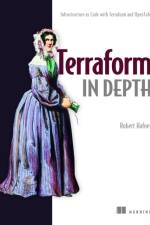
An in-depth guide to everything Terraform, complete with newly established best practices and experienced insights into Infrastructure as Code.Terraform and its open-source fork OpenTofu’s “Infrastructure as Code (IaC)” approach has redefined the way you manage your infrastructure. Its premise is simple-yet-awesome: provision, update, scale, and replicate your infrastructure with the same ease as your application code. In Terraform in Depth, you’ll discover absolutely everything you need to automate and manage your infrastructure with just a few lines of code. Inside Terraform in Depth, you’ll learn how to: • Understand and write basic Terraform code • Avoid vendor lock-in with the open source OpenTofu • Switch between OpenTofu and Terraform as needed • Construct continuous integration and continuous delivery (CI/CD) pipelines for Terraform • Organize Terraform projects and modules for team-based, production use • Develop and test robust Terraform modules • Create custom Terraform providers Terraform in Depth is fully up to date with the latest versions, standards, and approaches of Terraform and OpenTofu. Complete and comprehensive, its one-stop approach covers everything from Terraform and OpenTofu’s absolute basics all the way to advanced production uses. Every technique is illustrated with the kind of real-world examples infrastructure engineers encounter every day. Forewords by Anton Babenko and Christian Mesh. Purchase of the print book includes a free eBook in PDF and ePub formats from Manning Publications. About the technology Terraform and its open-source fork OpenTofu practically eliminate manual infrastructure configuration. With the Terraform infrastructure management tool, even complex operations that used to require kludgy scripts and time-sucking tinkering can be created, managed, and shared as an organized codebase. Master Terraform, and you’ll be able to update a fleet of machines with just a few lines of code. About the book Terraform in Depth teaches Terraform techniques and Infrastructure as Code (IaC) practices that you can use to deploy and manage applications in the cloud or your on-prem data center. Each chapter includes interesting hands-on examples, such as creating a flexible Terraform module and debugging Terraform plans. You’ll quickly learn to define your infrastructure with Terraform. Then, you’ll dive into advanced applications, including CI/CD pipelines, creating tools for documentation and security, and Terraform code management. What's inside • Understand and write basic Terraform code • Avoid vendor lock-in with OpenTofu • Construct CI/CD pipelines • Develop and test Terraform modules About the reader For sysadmins, software developers, and cloud engineers famil- iar with the CLI. About the author Robert Hafner has led engineering efforts at numerous startups, including Malwarebytes, Vicarious AI, and Rad AI. He is currently a Distinguished Engineer at a Fortune 100 Telecom. Table of Contents Part 1 1 A brief overview of Terraform 2 Terraform HCL components 3 Terraform variables and modules 4 Expressions and iterations 5 The Terraform plan Part 2 6 State management 7 Code quality and continuous integration 8 Continuous delivery and deployment 9 Testing and refactoring Part 3 10 Advanced Terraform topics 11 Alternative interfaces 12 Terraform providers
Speed up common data science tasks with AI assistants like ChatGPT and Large Language Models (LLMs) from Anthropic, Cohere, AI21, Hugging Face, and more!Using ChatGPT and other AI-powered tools, you can analyze almost any kind of data with just a few short lines of plain English. In LLMs in Action, you’ll learn important techniques for streamlining your data science practice, expanding your skillset and saving you hours—or even days—of time. Inside, you’ll learn how to use AI assistants to: • Analyze text, tables, images, and audio files • Extract information from multi-modal data lakes • Classify, cluster, transform, and query multimodal data • Build natural language query interfaces over structured data sources • Use LangChain to build complex data analysis pipelines • Prompt engineering and model configuration This practical book takes you from your first prompts through advanced techniques like building automated analysis pipelines and fine-tuning existing models. You’ll learn how to create meaningful reports, generate informative graphs, and much more. Purchase of the print book includes a free eBook in PDF and ePub formats from Manning Publications. About the book LLMs in Action teaches you to use a new generation of AI assistants and Large Language Models (LLMs) to simplify and accelerate common data science tasks. Cornell professor and long-time LLM advocate Immanuel Trummer reveals techniques he’s pioneered for getting the most out of LLMs in data science, including model selection and specialization, techniques for tuning parameters, and reliable prompt templates. You’ll start with an in-depth exploration of how LLMs work. Then, you’ll dive into no-code data analysis with LLMs, creating custom operators with the OpenAI Python API, and building complex data analysis pipelines with the cutting edge LangChain framework. About the reader For data scientists, data analysts, and others who are interested in making their work easier through the use of artificial intelligence techniques. Readers should have a basic understanding of the Python programming language. About the author Immanuel Trummer is an assistant professor for computer science at Cornell University and leader of the Cornell Database Group. His papers have been selected for “Best of VLDB”, “Best of SIGMOD”, for the ACM SIGMOD Research Highlight Award, and for publication in CACM as CACM Research Highlight. Immanuel’s online course on data management has reached over a million views on YouTube. Over the past few years, his group has published extensively on projects that apply large language models in the context of data science.
A friendly illustrated guide to designing and implementing your first database.Data is the backbone of computer science, and databases are the main way that data is stored, exchanged, manipulated, and managed. Whether you’re a software developer, a data scientist, or an enthusiastic business user looking to up your data analysis skills, it pays to learn how to create and query relational databases like MySQL, SQL Server, PostgreSQL, and Oracle. Grokking Relational Database Design will get you started! In Grokking Relational Database Design, you’ll learn how to: • Query and create databases using Structured Query Language (SQL) • Design databases from scratch • Implement and optimize database designs • Take advantage of generative AI when designing databases A well-constructed database is easy to understand, query, manage, and scale when your app needs to grow. In Grokking Relational Database Design you’ll learn the basics of relational database design including how to name fields and tables, which data to store where, how to eliminate repetition, good practices for data collection and hygiene, and much more. You won’t need a computer science degree or in-depth knowledge of programming—the book’s practical examples and down-to-earth definitions are beginner-friendly. About the book Grokking Relational Database Design teaches the art of database design through real-world projects, insightful illustrations, and action-oriented learning. Unlike many beginning database books that focus on the technical details of SQL and formal database theory, this book teaches you how to think about relational database design from the ground up, so you’ll create databases that are a joy to use for a long time. Everything in this book is reinforced by hands-on exercises and examples. You’ll quickly design, implement, and optimize a database for an e-commerce application like the ones you use every day. You’ll also explore how generative AI tools such as ChatGPT radically simplify the mundane tasks of database design. About the reader Suitable for self-taught programmers, engineers, data scientists, and business data users. No previous experience with relational databases required. About the author Qiang Hao is an associate professor of Computer Science at Western Washington University. He is a recognized expert in computing education research and has extensive experience in teaching a variety of computer science courses, such as software engineering and database systems. Michail Tsikerdekis is an associate professor of Computer Science at Western Washington University. He holds a Ph.D. in Informatics from Masaryk University, Czechia. Additionally, he is recognized as an IEEE Senior Member, and his expertise covers over a decade of teaching experience in Computer Science and Cybersecurity.
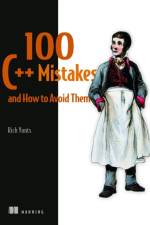
Learn how to handle errors, inefficiencies, and outdated paradigms by exploring the most common mistakes you’ll find in production C++ code.100 C++ Mistakes and How To Avoid Them reveals the problems you’ll inevitably encounter as you write new C++ code and diagnose legacy applications, along with practical techniques you need to resolve them. Inside 100 C++ Mistakes and How To Avoid Them you’ll learn how to: • Design solid classes • Minimize resource allocation/deallocation issues • Use new C++ features • Identify the differences between compile and runtime issues • Recognize C-style idioms that miss C++ functionality • Use exceptions well 100 C++ Mistakes and How To Avoid Them gives you practical insights and techniques to improve your C++ coding kung fu. Author Rich Yonts has been using C++ since its invention in the 1980s. This book distills that experience into practical, reusable advice on how C++ programmers at any skill level can improve their code. Unlike many C++ books that concentrate on language theory and toy exercises, this book is loaded with real examples from production codebases. Purchase of the print book includes a free eBook in PDF and ePub formats from Manning Publications. About the technology Over ten billion lines of C++ code are running in production applications, and 98-developers find and fix mistakes in them every day. Even mission-critical applications have bugs, performance inefficiencies, and readability problems. This book will help you identify them in the code you’re maintaining and avoid them in the code you’re writing. About the book 100 C++ Mistakes and How To Avoid Them presents practical techniques to improve C++ code, from legacy applications to modern codebases that use C++ 11 and beyond. Author Rich Yonts provides a concrete example to illustrate each issue, along with a step-by-step walkthrough for improving readability, effectiveness, and performance. Along the way, you’ll even learn how and where to replace outdated patterns and idioms with modern C++. What's inside • Design solid classes • Resource allocation/deallocation issues • Compile and runtime problems • Replace C-style idioms with proper C++ About the reader Covers C++ 98 through 23, with an emphasis on diagnosing and improving legacy code. About the author Rich Yonts is a Senior Software Engineer at Teradata and a long-time software engineer using C++, Java, and Python. He has held a number of technical and leadership roles during his many years at IBM and Sony. Table of Contents 1 C++: With great power comes great responsibility Part 1 2 Better modern C++: Classes and types 3 Better modern C++: General programming 4 Better modern C++: Additional topics Part 2 5 C idioms 6 Better premodern C++ Part 3 7 Establishing the class invariant 8 Maintaining the class invariant 9 Class operations 10 Exceptions and resources 11 Functions and coding 12 General coding
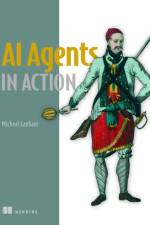
Create LLM-powered autonomous agents and intelligent assistants tailored to your business and personal needs.From script-free customer service chatbots to fully independent agents operating seamlessly in the background, AI-powered assistants represent a breakthrough in machine intelligence. In AI Agents in Action, you'll master a proven framework for developing practical agents that handle real-world business and personal tasks. Author Micheal Lanham combines cutting-edge academic research with hands-on experience to help you: • Understand and implement AI agent behavior patterns • Design and deploy production-ready intelligent agents • Leverage the OpenAI Assistants API and complementary tools • Implement robust knowledge management and memory systems • Create self-improving agents with feedback loops • Orchestrate collaborative multi-agent systems • Enhance agents with speech and vision capabilities You won't find toy examples or fragile assistants that require constant supervision. AI Agents in Action teaches you to build trustworthy AI capable of handling high-stakes negotiations. You'll master prompt engineering to create agents with distinct personas and profiles, and develop multi-agent collaborations that thrive in unpredictable environments. Beyond just learning a new technology, you'll discover a transformative approach to problem-solving. Purchase of the print book includes a free eBook in PDF and ePub formats from Manning Publications. About the technology Most production AI systems require many orchestrated interactions between the user, AI models, and a wide variety of data sources. AI agents capture and organize these interactions into autonomous components that can process information, make decisions, and learn from interactions behind the scenes. This book will show you how to create AI agents and connect them together into powerful multi-agent systems. About the book In AI Agents in Action, you’ll learn how to build production-ready assistants, multi-agent systems, and behavioral agents. You’ll master the essential parts of an agent, including retrieval-augmented knowledge and memory, while you create multi-agent applications that can use software tools, plan tasks autonomously, and learn from experience. As you explore the many interesting examples, you’ll work with state-of-the-art tools like OpenAI Assistants API, GPT Nexus, LangChain, Prompt Flow, AutoGen, and CrewAI. What's inside • Knowledge management and memory systems • Feedback loops for continuous agent learning • Collaborative multi-agent systems • Speech and computer vision About the reader For intermediate Python programmers. About the author Micheal Lanham is a software and technology innovator with over 20 years of industry experience. He has authored books on deep learning, including Manning’s Evolutionary Deep Learning. Table of Contents 1 Introduction to agents and their world 2 Harnessing the power of large language models 3 Engaging GPT assistants 4 Exploring multi-agent systems 5 Empowering agents with actions 6 Building autonomous assistants 7 Assembling and using an agent platform 8 Understanding agent memory and knowledge 9 Mastering agent prompts with prompt flow 10 Agent reasoning and evaluation 11 Agent planning and feedback A Accessing OpenAI large language models B Python development environment
Abonner på vårt nyhetsbrev og få rabatter og inspirasjon til din neste leseopplevelse.
Ved å abonnere godtar du vår personvernerklæring.