












Gjør som tusenvis av andre bokelskere
Abonner på vårt nyhetsbrev og få rabatter og inspirasjon til din neste leseopplevelse.
Ved å abonnere godtar du vår personvernerklæring.Du kan når som helst melde deg av våre nyhetsbrev.

NIS2 Directive in Sweden: A Report on the Readiness of Swedish Critical Infrastructure
The book presents a unique and structured interdisciplinary approach, integrating insights from medicine, computer science, bioengineering, and other relevant fields. Due to this distinctive feature, the book offers a comprehensive exploration of the intricate relationship between potential AI applications and pain research and management. For example, one of its key aims is to provide valuable knowledge about AI for clinicians who may have limited familiarity with the subject, as well as for professionals in computer science and engineering. This approach is aimed at bridging the existing gap between these fields, offering clinicians insights into AI's potential applications, and providing computer scientists and engineers with a translational perspective on the practical needs in the clinical context. As widely demonstrated, the practical application of research faces a serious obstacle related to the limited communication and collaboration between research areas that are often very distant from each other. Therefore, this dual perspective could be useful to collocate the book as a valuable tool for fostering collaboration and understanding between these traditionally distinct domains.Furthermore, the structured framework of the book could not only facilitate learning but also serve as a foundation for future projects in the realm of AI and medicine. Specifically, it will be developed by following a framework useful for additional editorial projects, focusing more acutely on AI applications in anesthesia and critical care. By doing so, the book aims to contribute to the ongoing discourse and advancements in these specialized areas, filling a gap in the current literature. Therefore, the book seeks to make a meaningful contribution to the integration of AI in pain medicine, but also in other medical fields.
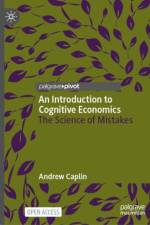
"Brilliant, original, and packed with fresh ideas. Andrew Caplin has written a manifesto, calling for a 'science of mistakes,' using large data sets to understand what people are doing and why. Full of important findings and terrific insights, Caplin's book paves the way toward a revolution in social science-something we have never seen before."-Cass R. Sunstein, Robert Walmsley University Professor, Harvard University and coauthor of Nudge"One of the most brilliant, creative, and brave thinkers in economics and really all of the social sciences, Andrew Caplin has produced a masterwork in this beautifully written book.... All social scientists should read and ponder this wonderful book."-Steven Durlauf, Frank P. Hixon Distinguished Service Professor and Director of the Stone Center for Research on Wealth Inequality and Mobility, Harris School of Public Policy, University of ChicagoThis book introduces readers to "cognitive economics," a rapidly emerging interdisciplinary science built on economic, psychological, and data scientific foundations. Throughout the book, economist Andrew Caplin provides new approaches to help scholars collaborate and solve problems that can shape economic outcomes and bridge the gap between theoretical knowledge and the real world.Divided into two parts, the first section brings readers up to speed on economic concepts that underlie decision-making mistakes, such as utility functions, subjective beliefs, and costs of learning. It explores real-world applications, including improvements in legal decision-making, online privacy protection, and optimizing human-AI collaboration. The book discusses the future impact of AI on the workforce and emphasizes the need for decision-making skills and financial literacy in navigating this evolving landscape. In the second section of the book, Caplin addresses the barriers to progress within social sciences, advocating for interdisciplinary cooperation and innovative measurement techniques to advance the field.The book invites readers to contribute to the development of cognitive economics. Whether you are a socially-conscious and hard-working citizen, business leader, scholar, or policymaker, this book will help you understand why cognitive economics matters to you and how you can contribute to its takeoff.This book is open access.Andrew Caplin is Silver Professor of Economics at New York University and a fellow of the Econometric Society.
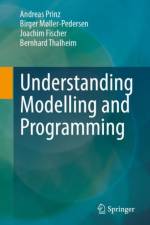
This book provides a concise overview of modelling and programming by presenting their essential concepts. It enables the reader to better understand the relationships between modelling and programming by describing abstract properties, desired behaviours, intended structures, needed interactions, and other specific viewpoints on the overall system under development.After an introduction to the importance of modelling and programming in the scope of system engineering in chapter 1, the book provides four main chapters covering systems, models, specifications, and programs, each of them with a set of reflection exercises. Chapter 2 explores how systems relate to reality, exploring different perspectives related to the purpose of the system. Chapter 3 explains what it takes to be a model and how models and systems are related and concludes with discussing model semantics, meaning, and correctness. In Chapter 4, specifications are debated which are precise descriptions of models and systems. It presents the language constructs needed to describe systems and shows how the constructs can be expressed in concrete languages, considering both the structure and the behaviour of models. Chapter 5 considers the creation, simulation, and correct execution of specifications (model descriptions or programs). Eventually, Chapter 6 presents a collection of real-world modelling cases. Apart from describing the case, the concepts of the book are applied to the case, thus giving a better understanding of the concepts.The book is carefully designed to explain modelling and programming concepts, their relationships, and their use. Written for computer science students and lecturers, it covers systems, modelling, programming, simulation, and semantics.
As social media keeps changing, so does the representation of World Englishes across the wide range of platforms available. This edited volume explores the different varieties of English on various social media platforms, including Facebook, Instagram, TikTok, WhatsApp, and YouTube.Social media platforms showcase an ever-increasing diversity in languages and varieties of languages used on them. Divided into several parts, the book focuses in turn on language variation in digital contexts, identities and social meaning making, and metalinguistic commentary, and ends with a discussion section providing an overview of World Englishes and social media. Investigating these areas in detail, the book covers a wealth of topics, including ethical questions and research methodology, linguistic features and creativity, and meta-discourse. By offering up-to-date coverage of English use across different platforms, it provides an in-depth insight into the dynamic space of language variation online.
This book delves into the core of education's digital transformation, presenting a thorough and empirical examination of Generative Artificial Intelligence (GenAI)'s impact, beyond the theoretical and fragmented insights prevalent in current discourse.
This book offers a critical perspective on the digital landscape, and examines how societies can ensure technology serves the public good and does not exacerbate existing inequalities. It advocates for a proactive approach to address challenges presented by digital media.
This book offers a critical perspective on the digital landscape, and examines how societies can ensure technology serves the public good and does not exacerbate existing inequalities. It advocates for a proactive approach to address challenges presented by digital media.
The broad coverage and engaging discussion format make this an ideal textbook for undergraduate and postgraduate students and an accessible reference for enthusiasts with elementary knowledge. In guiding readers from the basic concepts through to individual methodologies and printing techniques.
It is divided in four parts - supply chain management, production planning and inventory management, signal processing and social sciences in such a way that researchers can follow up to date progress in the field while observing various applications with large datasets.
The current centralized education system is highly restrictive and riddled with various challenges such as single point of failure, data privacy, security, transparency, adaptive learning etc. To address this, a newer/modern educational system provides fast and efficient data analytics is imperative for the modern education system.
Quantum Computing in Logistics and Supply Chain Management discusses the transformative potential of quantum computing in reshaping the landscape of supply chain management.
The book examines the unique challenges and opportunities that emerged because of the pandemic. It provides a comprehensive roadmap for healthcare institutions seeking to leverage digital solutions for improved patient care, public health, and crisis response. It offers a balanced blend of theoretical insights and practical applications.
The book examines the unique challenges and opportunities that emerged because of the pandemic. It provides a comprehensive roadmap for healthcare institutions seeking to leverage digital solutions for improved patient care, public health, and crisis response. It offers a balanced blend of theoretical insights and practical applications.
This book provides practical challenges encountered, solutions and future scope to be adopted in the fields of renewable energy. Applications of varieties advanced optimization and AI techniques on design and development of renewable energy integrated systems have been discussed.
In recent years, deep learning has shown great potential in transforming various fields, including healthcare. With the abundance of healthcare data being generated daily, there is a pressing need to develop efficient algorithms that can process and analyze this data to improve patient care and treatment outcomes.
This book provides an overview of the theory and practical applications of swarm intelligence in fog computing, beyond 5G networks, and information security.
This book explores the ethical challenges of the fourth industrial revolution-mass unemployment, new colonialism, and pervasive surveillance-while acknowledging its benefits to productivity and quality of life.
Blockchain for Good: The Transformative Impacts on Industry, Community, and the Planet explores how blockchain technology can drive ethical, social, and environmental advancements.
explores the production of multimedia, multisensory "research-creation" pieces using a variety of methods, tools, and techniques. It will be a valuable for researchers, educators, and students in digital ethnography and anthropology.
explores the production of multimedia, multisensory "research-creation" pieces using a variety of methods, tools, and techniques. It will be a valuable for researchers, educators, and students in digital ethnography and anthropology.
Modern software systems operate under an unprecedented degree of uncertainties, making them hard to specify, model, test, analyze, and verify. Safety assurance of such systems requires efforts that unite different disciplines such as formal methods, software science, software engineering, control theory, machine learning.
Abonner på vårt nyhetsbrev og få rabatter og inspirasjon til din neste leseopplevelse.
Ved å abonnere godtar du vår personvernerklæring.