

















Gjør som tusenvis av andre bokelskere
Abonner på vårt nyhetsbrev og få rabatter og inspirasjon til din neste leseopplevelse.
Ved å abonnere godtar du vår personvernerklæring.Du kan når som helst melde deg av våre nyhetsbrev.

ClearRevise illustrated revision and practice. This guide has combined revision with examinations tips and more practice questions.
Explores the role of functional food applications in prevention and management of various diseases, including diabetes, obesity, microbial infections, ulcers, mental disorders, cardiac health, bone health, and more. It discusses using bioactive compounds in the prevention, management, or treatment of diseases, with case studies.
Discusses the immune-boosting properties of nutraceuticals and functional foods toward human health, exploring dietary antioxidants, vitamins, minerals, edible microalgae, herbs, phytonutrients, omega 3-fatty acids, and probiotics of herbs and vegetables and the pharmacological and therapeutic importance of commonly used medicinal herbs.
Examines the nutritional and pharmacological properties of polyphenols and flavonoids, including their ability to prevent the development of diseases and how they manage of chronic pathological illnesses. Topics include natural food dyes as nutraceuticals, flavonoid-rich diets to prevent chronic noncommunicable diseases.
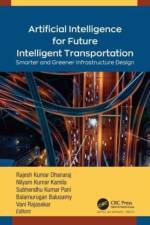
Presents an overview of state-of-the-art AI strategies for solving transportation challenges around the world, with a focus on traffic management, traffic safety, public transportation, urban mobility, and pollution mitigation. It examines modern AI technologies such as IoT, cloud computing, machine learning, and neural networking.
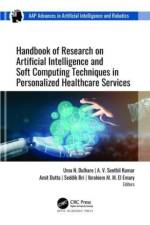
Presents new applications, techniques, and algorithms in AI and soft computing for intelligent, such as deep learning, robotics, machine learning, blockchain, emerging cloud, edge computing, Practical Byzantine Fault Tolerance consensus, CNN architecture, Splunk, genetic algorithms, and more.
Discusses food byproducts as value-added renewable sources using biotechnologies that avoid hazardous chemicals. It explores the value-added properties of food wastes and looks at waste byproducts of various crops, their health-benefiting bioactive compounds, and biotechnological strategies to extract, produce, and recover compounds.
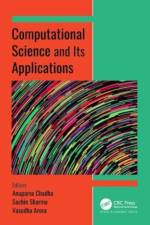
Explores the overlapping behavior of some aspects of the computational intelligence, focusing on real-life applications. It discusses how computational science interacts with AI, machine learning, data science, quantum computing, image processing, evolutionary algorithms, process simulation, big data, and intelligent algorithms.
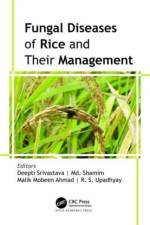
Examines the bacterial and fungal pathogens that can cause rice diseases and explores how to manage these diseases, focusing on diagnostic methods for rice fungal pathogens, traditional and molecular techniques for detection, such as biotechnology and biological methods for the effective management of rice fungal diseases.
This book sets out to amend the superficial treatment of Asian America histories in U.S. textbooks and curriculum by providing elementary teachers with a more nuanced, thematically driven account.
In Literacy for All, Shawna Coppola shows how a literacy pedagogy founded on anti-oppressive principles can transform the experiences of teachers and students alike.
In this fresh look at trauma-informed practice, Alex Shevrin Venet urges educators to shift equity to the center as they consider policies and professional development. Using a framework of six principles for equity-centered trauma-informed education, she offers practical action steps for teachers and school leaders.
Dr. Gillian Parekh unpacks the realities of how ability and disability play out within schooling, including insights from students, teachers, and administrators about the barriers faced by students on the basis of ability. Parekh shows how ableism is inextricably linked to other forms of bias.
Jenna Chandler-Ward and Elizabeth Denevi share how white educators can gain greater consciousness of their own white racial identity and rethink pedagogical approaches.
Drawing on more than forty interviews with teachers, principals, and district leaders, Manya C. Whitaker offers educators guidance for leading a school or district grounded in social justice that centers teachers¿not just teaching practices¿and that focuses on the belief systems that shape decision-making.
This text presents a variety of ways for students to meet traditional instructional goals in writing while also learning how writing can help them become stewards of the natural world and advocates for their own communities.
This text presents a variety of ways for students to meet traditional instructional goals in writing while also learning how writing can help them become stewards of the natural world and advocates for their own communities.
fills the gap in the existing body of research, ensuring that a social justice perspective is included in the World Language curriculum.
fills the gap in the existing body of research, ensuring that a social justice perspective is included in the World Language curriculum.
Abonner på vårt nyhetsbrev og få rabatter og inspirasjon til din neste leseopplevelse.
Ved å abonnere godtar du vår personvernerklæring.