





Gjør som tusenvis av andre bokelskere
Abonner på vårt nyhetsbrev og få rabatter og inspirasjon til din neste leseopplevelse.
Ved å abonnere godtar du vår personvernerklæring.Du kan når som helst melde deg av våre nyhetsbrev.

This volume of essays addresses traditional and contemporary thought on theory and practice in music education for all age groups, from the very young to the elderly. The material spans a broad range of subject areas from history and philosophy to art and music, and considers issues such as curriculum, pedagogy, assessment and evaluation, as well a
This book lays bare the dialogue between Shakespeare and critics of the stage, and positions it as part of an ongoing cultural, ethical, and psychological debate about the effects of performance on actors and on spectators.
This book examines four distinct areas of education that suffered as a result of the COVID-19 pandemic in Asian and African regions, and tackles the challenges and barriers that came as a result of the shift to online learning.
Knowledge and Music Education: A Social Realist Account explores current challenges for music education in relation to wider philosophical and political debates, and seeks to find a way forward for the field by rethinking the nature and value of epistemic knowledge in the wake of postmodern critiques.
Additive Manufacturing and Tissue Engineering applications are a field of science and technology that manufactures biocompatible, customized, reliable, and cost-effective parts to restore functionality of a failed human body part. This book offers a platform for recent breakthroughs in additive manufacturing related to biomedical applications.
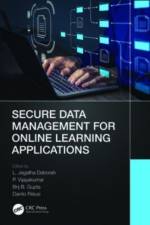
This book talks about the theoretical frameworks, technical methodologies, Information security, and empirical research findings in the field to protect your computers and information from adversaries. Solution to secure data management issues for online learning applications will keep you interested and involved throughout.
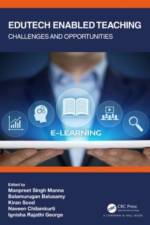
The book addresses the issues faced by teachers in the adoption of digital tools into their teaching. It presents theoretical perspectives of teaching students with technology and proposes a pragmatic and sustainable framework for teachers' professional learning to embed digital technologies into their repertoire of teaching strategies.
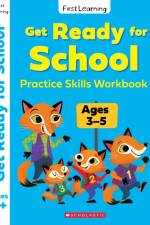
The perfect activity book for little learners aged 4+ who are preparingto start school.
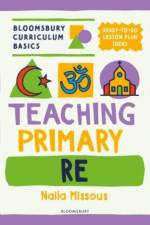
The Bloomsbury Curriculum Basics series provides non-specialist primary school teachers with subject knowledge and teaching plan ideas in a variety of key primary curriculum subjects. _____________Teaching Primary RE offers an exciting new approach to planning and delivering effective primary lessons in a fun and refreshing way, with engaging lesson plan ideas in each chapter. Covering Christianity, Islam, Judaism, Hinduism, Sikhism and Buddhism, each topic includes a helpful summary, relevant vocabulary for RE and worldviews, substantive and disciplinary knowledge and a wealth of interesting discussion topics to engage, excite and extend pupil knowledge at all levels. Every section is in line with national requirements and can be adapted to your individual school context. With links to online resources, further ideas for lesson sequencing, trips, discussions and apps - as well as exciting activities based around religious festivals and opportunities for cross-curricular links - this book will bring philosophical and spiritual topics to life in your classroom. A must-have resource for primary practitioners and subject leads.
No matter what you teach, there is a 100 Ideas title for you!The 100 Ideas series offers teachers practical, easy-to-implement strategies and activities for the classroom. Each author is an expert in their field and is passionate about sharing best practice with their peers. Each title includes at least ten additional extra-creative Bonus Ideas that won't fail to inspire and engage all learners. From playful learning advocate Blair Minchin, this book provides a rich toolbox of inclusive activities for using play to engage pupils in the primary classroom throughout Key Stages 1 and 2. With a section dedicated to each major curriculum area, this book offers a broad range of fun and flexible ideas. Discover activities such as Coding Cones, which teaches the principles of coding without using a computer, mental maths hopscotch, and Magnet Mazes to teach physics. The ideas are easy to try and to adapt, and have all been trialled - and enjoyed! - with pupils. Studies have shown that engaged, playful learning can improve academic performance at all ages (not just early years) and reduce absenteeism. Use these 100 ideas to provide your pupils with creativity, curiosity, resilience and plenty of fun, and boost enthusiasm in your classroom!
Nanomaterials contain some unique properties due to their nanometric size and surface functionalization. Nanomaterial functionalization also affects their compatibility to biocompatibility and toxicity behaviors. environment and living organism. This makes functionalized nanomaterials a material with huge scope and few challenges.
This book challenges prevailing and dominant Global North frameworks on moral education by showing how an African perspective may be employed to address seemingly intractable problems such as the legacies of ethnic conflict, genocide, Apartheid, poverty and HIV/AIDS. This book was published as a special issue of the Journal of&nb
The brain is one of most exciting and complex organs in the universe. In this interactive book, you'll learn what the brain is made of, what it does, and how it works!This book includes cool trivia, real and lively illustrations, and fun-filled do-it-yourself activities.
Bond 11+ English Assessment Practice Book 1 for age 10-11+ years offers exam-style practice questions for children preparing for the 11+ test. This revised edition includes essential guidance and full answer explanations and will develop the skills that are vital for success.
Bond 11+ English Assessment Practice Book 1 for age 9-10 years Book 1 offers exam-style practice questions for children preparing for the 11+ test. This revised edition includes essential guidance and full answer explanations and will develop the skills that are vital for success.
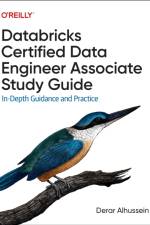
Data engineers proficient in Databricks are currently in high demand. As organizations gather more data than ever before, skilled data engineers on platforms like Databricks become critical to business success. The Databricks Data Engineer Associate certification is proof that you have a complete understanding of the Databricks platform and its capabilities, as well as the essential skills to effectively execute various data engineering tasks on the platform. In this comprehensive study guide, you will build a strong foundation in all topics covered on the certification exam, including the Databricks Lakehouse and its tools and benefits. You'll also learn to develop ETL pipelines in both batch and streaming modes. Moreover, you'll discover how to orchestrate data workflows and design dashboards while maintaining data governance. Finally, you'll dive into the finer points of exactly what's on the exam and learn to prepare for it with mock tests. Author Derar Alhussein teaches you not only the fundamental concepts but also provides hands-on exercises to reinforce your understanding. From setting up your Databricks workspace to deploying production pipelines, each chapter is carefully crafted to equip you with the skills needed to master the Databricks Platform. By the end of this book, you'll know everything you need to ace the Databricks Data Engineer Associate certification exam with flying colors, and start your career as a certified data engineer from Databricks! You'll learn how to: Use the Databricks Platform and Delta Lake effectively Perform advanced ETL tasks using Apache Spark SQL Design multi-hop architecture to process data incrementally Build production pipelines using Delta Live Tables and Databricks Jobs Implement data governance using Databricks SQL and Unity Catalog Derar Alhussein is a senior data engineer with a master's degree in data mining. He has over a decade of hands-on experience in software and data projects, including large-scale projects on Databricks. He currently holds eight certifications from Databricks, showcasing his proficiency in the field. Derar is also an experienced instructor, with a proven track record of success in training thousands of data engineers, helping them to develop their skills and obtain professional certifications.
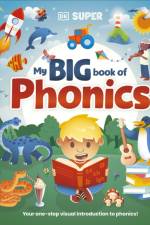
My Big Book of Phonics is a one-stop visual reference book for children aged 4-7. Each page is packed full of fun illustrations of words that include the target sound for children to point to and sound out. Mouth placement photos help guide pronunciation and handy illustrated mnemonics - such as an s-shaped snake for s - help children remember the letter shapes and their corresponding sounds. Decodable or easy-to-read words are also included in word banks for children to practise blending sounds and reading aloud, and to help boost their spelling and vocabulary. This book also includes a sound chart, introductory pages full of information about phonics for parents and caregivers, and a glossary. Covers all the main target sounds included in the curriculum for children aged 4-7.
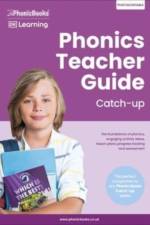
This teacher guide is an essential resource for using the Phonic Books Catch-up range for intervention sessions with older readers. This guide designed for teachers provides an overview of phonics, including explanations of key phonic concepts, terms and methodologies; an overview of the Phonic Books programme; assessment; and guidance for pronunciation and teaching of high-frequency words. There are also structured lesson plans for varying amounts of time. These plans are full of engaging and effective activities which are easy to implement. This phonics catch-up teacher guide features: A time-saving guide for teachers to help with lesson planning and preparation. Teaching material aimed at children aged 9-12. Jargon-busting explanations and step-by-step easily implemented lessons, especially for anyone new to teaching phonics. Activities included, such as word building and word chains, that will engage pupils and implement previously taught skills. This guide conveniently breaks down each lesson into five main sections: Revision, Preparation, Application, Consolidation and Tracking Progress. This enables each lesson to meet the phonics requirements, as well as more general literacy requirements and ensures pupils are concurrently learning how to read for meaning from the start. What is phonics?Phonics is a way of teaching children to read by understanding the sounds that individual letters make and blending them to make a word. Children can learn to read using this skill to decode new words. Phonic Books specialises in publishing decodable, systematic books supporting this structured literacy instruction.
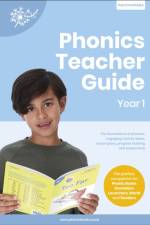
This teacher guide is an essential resource for using Dandelion Launchers and Dandelion Readers for children in Year 1 learning to readThis guide designed for teachers provides an overview of phonics, including explanations of key phonic concepts, terms and methodologies; an overview of the Phonic Books programme; assessment; and guidance for pronunciation and teaching of high-frequency words. There are also structured lesson plans for varying amounts of time. These plans are full of engaging and effective activities which are easy to implement. This phonics teacher guide features: A time-saving guide for teachers to help with lesson planning and preparation. Teaching material aimed at children aged 5-7. Jargon-busting explanations and step-by-step easily implemented lessons, especially for anyone new to teaching phonics. Activities included, such as word building and word chains, that will engage pupils and implement previously taught skills. This guide conveniently breaks down each lesson into five main sections: Revision, Preparation, Application, Consolidation and Tracking Progress. This enables each lesson to meet the phonics requirements, as well as more general literacy requirements and ensure pupils are concurrently learning how to read for meaning from the start. What is phonics?Phonics is a way of teaching children to read by understanding the sounds that individual letters make and blending them to make a word. Children can learn to read using this skill to decode new words. Phonic Books specialises in publishing decodable, systematic books supporting this structured literacy instruction.
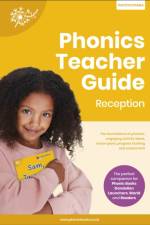
This teacher guide is an essential resource for using Dandelion Launchers and Dandelion Readers for children in Reception learning to readThis guide designed for teachers provides an overview of phonics, including explanations of key phonic concepts, terms and methodologies; an overview of the Phonic Books programme; assessment; and guidance for pronunciation and teaching of high-frequency words. There are also structured lesson plans for varying amounts of time. These plans are full of engaging and effective activities which are easy to implement. This phonics teacher guide features: A time-saving guide for teachers to help with lesson planning and preparation. Teaching material aimed at children aged 3-5. Jargon-busting explanations and step-by-step easily implemented lessons, especially for anyone new to teaching phonics. Activities included, such as word building and word chains, that will engage pupils and implement previously taught skills. This guide conveniently breaks down each lesson into five main sections: Revision, Preparation, Application, Consolidation and Tracking Progress. This enables each lesson to meet the phonics requirements, as well as more general literacy requirements and ensure pupils are concurrently learning how to read for meaning from the start. What is phonics?Phonics is a way of teaching children to read through understanding the sounds that individual letters make and blending them to make a word. Children can learn to read using this skill to decode new words. Phonic Books specialises in publishing decodable, systematic books supporting this structured literacy instruction.
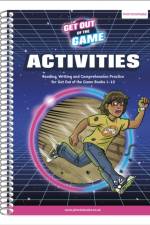
Photocopiable activities to accompany the set of 12 books in the Phonic Books Get Out of the Game series, decodable phonics books for structured literacy intervention with older readers. This activity book includes activities for word building, blending, spelling and comprehension linked to the Get Out of the Game series.
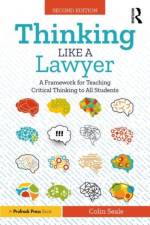
Critical thinking is the essential tool for ensuring that students fulfill their promise. This bestselling book introduces a powerful but practical framework to close the critical thinking gap, gives teachers the tools and knowledge to teach critical thinking to all students, and empowers students to tackle 21st-century problems.
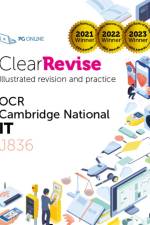
ClearRevise Illustrated revision and practice for OCR Cambridge National in IT J836
The practical guide to building an engaging, evidence-led geography curriculum through the power of enquiry. The Power of Geographical Enquiry is an accessible guide to transforming your geography curriculum through the enquiry approach, using investigation to engage students and bring geography to life from Year 7 to A Level. In addition to being a key skill of the discipline, the enquiry approach is aligned with scientific research on how we learn, equipping you to create the most effective lessons and boost learning outcomes. In this accessible guide, geography expert David Rogers breaks down exactly how to harness the power of enquiry in your classroom, including:- tried-and-tested strategies and guidance for building an engaging, evidence-led geography curriculum throughout the secondary years- the science of how we learn and how this links to the enquiry approach- sequences of lessons and tools that can be embedded across the curriculum, along with real-life examples, practical strategies and top tips- guidance on planning entire units of work, including the compulsory elements at GCSE and A Level, and for progression between levels. This book empowers teachers to use the enquiry approach for any topic or theme in geography. Inspire your students to plan investigations, problem-solve and tackle real-world issues through the enquiry approach, providing rich learning experiences while maintaining the awe and wonder that makes the subject so enjoyable. In addition, the book illustrates how the enquiry approach can help schools decolonise the curriculum and ensure that a diverse range of peoples, places and perspectives are covered.
Abonner på vårt nyhetsbrev og få rabatter og inspirasjon til din neste leseopplevelse.
Ved å abonnere godtar du vår personvernerklæring.