
















Gjør som tusenvis av andre bokelskere
Abonner på vårt nyhetsbrev og få rabatter og inspirasjon til din neste leseopplevelse.
Ved å abonnere godtar du vår personvernerklæring.Du kan når som helst melde deg av våre nyhetsbrev.

Ariel (1922) is an essay by José Enrique Rodó. Originally published in Spanish in 1900, Ariel was translated into English just five years after the author¿s death by F. J. Stimson, the former U. S. Ambassador to Argentina. The essay was immediately influential in Uruguay and across Latin America as an essential document of modernismo, a literary movement which sought to unite classical values and contemporary culture through a devotion to beauty and form. ¿The gifts of the youthful spirit¿enthusiasm and hope¿correspond in the harmonies of history and natural history to movement and to light. Wherever you shall turn your eyes you will find these, the natural atmosphere in which move all things that are strong and beautiful.¿ Captivated by a bronze statue of Ariel from Shakespeare¿s The Tempest, a teacher known as Prospero speaks passionately to his young students on the eve of summer vacation. Taking a historical view of human civilization, José Enrique Rodó applies the teachings of the Enlightenment to the political reality facing Latin America in the early twentieth century. Promoting morality and idealism over the encroaching utilitarianism of North America, Rodó crafted what one critic called ¿the ethical gospel of the Spanish-speaking new world.¿ With a beautifully designed cover and professionally typeset manuscript, this edition of José Enrique Rodó¿s Ariel is a classic of Uruguayan literature reimagined for modern readers.
The White Wampum (1895) is the debut poetry collection of E. Pauline Johnson. Originally published in London, The White Wampum launched her career as one of Canadäs most distinguished artists. Revered as one the foremost indigenous poets of her time, Johnson was a prolific writer whose works explored her Mohawk heritage while shedding light on the racism and persecution faced by indigenous peoples across North America. The White Wampum captures Johnson¿s range as a poet in tune with the Romantic tradition without erasing her dualistic sense of identity as a woman of Mohawk and English heritage. Choosing to emphasize the former, Johnson, who also went by Tekahionwake, her great-grandfather¿s name, adopts the persona of a Mohawk wife devoted to her husband, a powerful warrior: ¿I am Ojistoh, I am she, the wife / Of him whose name breathes bravery and life / And courage to the tribe that calls him chief. / I am Ojistoh, his white star, and he / Is land, and lake, and sky¿and soul to me.¿ When members of the rival Huron tribe capture Ojistoh, their plan for retribution fails to account for her own strength and willpower. Outnumbered and unarmed, she remains certain she will return to her husband alive. In ¿The Camper,¿ Johnson invokes the beauty and simplicity of life on the plains, erasing for a moment all distinction between man and god, heaven and earth: ¿Night neath the northern skies, lone, black, and grim: / Nought but the starlight lies twixt heaven, and him. / Of man no need has he, of God, no prayer; / He and his Deity are brothers there.¿ With a beautifully designed cover and professionally typeset manuscript, this edition of E. Pauline Johnson¿s The White Wampum is a classic of Canadian literature reimagined for modern readers.
Aboard the Narcissus, a merchant ship bound from Bombay to London, a West Indian sailor lies ill from a severe case of tuberculosis. While some of the crew are happy to take on more work in order to let him rest, others debate the seriousness of the man¿s condition. The Children of the Sea is a novella by Joseph Conrad.
Chitra: A Play in One Act (1914) is a play by Rabindranath Tagore. Published following his ascension to international fame with the 1912 Nobel Prize in Literature, the play is based on the story of Chitrangada and Arjuna from Sanskrit epic Mahabharata. ¿I am Chitra, the daughter of the kingly house of Manipur. With godlike grace Lord Shiva promised to my royal grandsire an unbroken line of male descent. Nevertheless, the divine word proved powerless to change the spark of life in my mother's womb¿so invincible was my nature, woman though I be.¿ Her whole life, Chitra has tried to live up to her father¿s name. Raised as the son he never had, she becomes a fearsome warrior and legendary hero, yet still longs for something more. When she meets the handsome Arjuna, Chitra petitions the god of love to make her beautiful. Mercifully, they allow her to be with her lover for one whole year. With a beautifully designed cover and professionally typeset manuscript, this edition of Rabindranath Tagore¿s Chitra: A Play in One Act is a classic of Indian literature reimagined for modern readers.
The Post Office (1914) is a play by Rabindranath Tagore. Published following his ascension to international fame with the 1912 Nobel Prize in Literature, the play was introduced to an international audience by W. B. Yeats. When the Irish poet discovered Tagore¿s work in translation, he felt an intense kinship with a man whose work was similarly grounded in spirituality and opposition to the British Empire. Brought to Dublin¿s Abbey Theatre in 1913, The Post Office remains one of Tagore¿s most influential literary works. ¿The doctor says all the organs of his little body are at loggerheads with each other, and there isn't much hope for his life. There is only one way to save him and that is to keep him out of this autumn wind and sun.¿ Under doctor¿s orders, Amal is confined to his uncle¿s home and courtyard, encouraged in his studies despite his desire to experience the world beyond books. Standing at the front gate, he watches life pass him by along the road, speaking with whoever will stop to listen. When construction begins on a new post office nearby, Amal dreams of one day serving as a messenger for the king. With a beautifully designed cover and professionally typeset manuscript, this edition of Rabindranath Tagore¿s The Post Office is a classic of Indian literature reimagined for modern readers.
The Gardener (1915) is a collection of poems by Rabindranath Tagore. Translated into English by Tagore and dedicated to Irish poet W. B. Yeats, The Gardener is a collection of earlier poems republished following his ascension to international fame with the 1912 Nobel Prize in Literature. When Yeats discovered Tagore¿s work in translation, he felt an intense kinship with a man whose work was similarly grounded in spirituality and opposition to the British Empire. For the Irish poet, Tagore¿s poems were at once deeply personal and essentially universal, like a secret kept by all and shared regardless. Whether or not we admit it, his words never fail to remind us: to be human is to be vulnerable. ¿In the morning I cast my net into the sea. I dragged up from the dark abyss things of strange aspect and strange beauty¿some shone like a smile, some glistened like tears, and some were flushed like the cheeks of a bride. [¿] Then the whole night through I flung them one by one into the street. In the morning travellers came; they picked them up and carried them into far countries.¿ In his landmark collection Gitanjali, Tagore explored the realm of the spirit, paring down language to its clearest, purest form. In The Gardener, he gives expression to more worldly themes. Here, he is a fisherman, a restless wanderer, a servant and queen, an observer of life in all forms. With a beautifully designed cover and professionally typeset manuscript, this edition of Rabindranath Tagore¿s The Gardener is a classic of Indian literature reimagined for modern readers.
Stray Birds (1916) is a collection of poems by Rabindranath Tagore. Translated into English by Tagore after he received the 1913 Nobel Prize in Literature, Stray Birds is a powerful collection of short poems by a master of Indian literature. ¿Stray birds of summer come to my window to sing and fly away. And yellow leaves of autumn, which have no songs, flutter and fall there with a sigh.¿ The poems of Stray Birds are a masterclass in clarity and concision. Like birds themselves, they flutter across the sky of the page before passing beyond the limit of sight. In prayer, in celebration, and in evocations of the natural world, Tagore comes as close to the truth as possible, catching a glimpse before it can fly away forever: ¿Let me live truly, my Lord, so that death to me become true.¿ In plainspoken language, Tagore gives voice to the soul. With a beautifully designed cover and professionally typeset manuscript, this edition of Rabindranath Tagore¿s Stray Birds is a classic of Indian literature reimagined for modern readers.
Gitanjali (1912) is a collection of poems by Rabindranath Tagore. Translated into English by Tagore and published with a groundbreaking introduction by Irish poet W. B. Yeats, Gitanjali is the collection that earned Tagore the 1912 Nobel Prize in Literature. When Yeats discovered Tagore¿s work in translation, he felt an intense kinship with a man whose work was similarly grounded in spirituality and opposition to the British Empire. For the Irish poet, Tagore¿s poems were at once deeply personal and essentially universal, like a secret kept by all and shared regardless: ¿I have carried the manuscript of these translations about with me for days, reading it in railway trains, or on the top of omnibuses and in restaurants, and I have often had to close it lest some stranger would see how much it moved me.¿ Whether or not we admit it, his words never fail to remind us: to be human is to be vulnerable. ¿Thou hast made me endless, such is thy pleasure. This frail vessel thou emptiest again and again, and fillest it ever with fresh life. This little flute of a reed thou hast carried over hills and dales, and hast breathed through it melodies eternally new.¿ The essence of Gitanjali is humility. Written following the deaths of his wife and two children, the collection unites poetry and prayer in search of peace. Grounded in Hindu tradition, his poems remain recognizable to readers of all faiths and nations. His subjects are love and loss, life and death, belief and despair. Through them, he approaches truth. With a beautifully designed cover and professionally typeset manuscript, this edition of Rabindranath Tagore¿s Gitanjali is a classic of Indian literature reimagined for modern readers.
Sadhana: The Realisation of Life (1916) is a collection of essays by Rabindranath Tagore. Published after Tagore received the 1913 Nobel Prize in Literature, Sadhana: The Realisation of Life contains the author¿s thoughts on selfhood, the universe, morality, and beauty. Inspired by the Upanishads, the sacred foundational texts of Hinduism, Tagore¿s collection bridges the gap between East and West, ancient and modern, in its search for universal truth. ¿The west seems to take a pride in thinking that it is subduing nature [¿] This sentiment is the product of the city-wall habit and training of mind. For in the city life man naturally directs the concentrated light of his mental vision upon his own life and works, and this creates an artificial dissociation between himself and the Universal Nature within whose bosom he lies.¿ In this collection of essays, Tagore is at his philosophical, poetic best, reflecting earnestly and with ease on matters public and private. Grounded in the teachings of the Upanishads, Sadhana: The Realisation of Life is a text engaged with the role of tradition in an increasingly alienated and individualistic modern world. With a beautifully designed cover and professionally typeset manuscript, this edition of Rabindranath Tagore¿s Sadhana: The Realisation of Life is a classic of Indian literature reimagined for modern readers.
The Spirit of Japan (1916) is a speech by Rabindranath Tagore. Published after he received the 1913 Nobel Prize in Literature, The Spirit of Japan is a powerful lecture on Japanese culture in relation to the modernizing forces of the West. Delivered at the Keio Gijuku University in Tokyo, The Spirit of Japan is a testament to Tagore¿s gifts as an artist and intellectual. ¿True modernism is freedom of mind, not slavery of taste. It is independence of thought and action, not tutelage under European schoolmasters. It is science, but not its wrong application in life,¿a mere imitation of our science teachers who reduce it into a superstition absurdly invoking its aid for all impossible purposes.¿ Invigorated by a tour of Japan, Rabindranath Tagore reflects on a culture which, to his mind, has ¿realized nature¿s secrets, not by methods of analytical knowledge, but by sympathy.¿ Before he returns to his native country, he makes sure to warn the gathering of Japanese students who have come to hear him speak of the dangers of modernization and the encroachment of European values. With a beautifully designed cover and professionally typeset manuscript, this edition of Rabindranath Tagore¿s The Spirit of Japan is a classic of Indian literature reimagined for modern readers.
The Fugitive (1921) is a collection of poems by Rabindranath Tagore. Translated into English by Tagore after he received the 1913 Nobel Prize in Literature, The Fugitive is a powerful collection of poems, dialogues, and songs by a master of Indian literature. "Darkly you sweep on, Eternal Fugitive, round whose bodiless rush stagnant space frets into eddying bubbles of light. Is your heart lost to the Lover calling you across his immeasurable loneliness?" The Fugitive is an intoxicating blend of prose poetry, verse dialogue, and songs that investigates themes of faith, love, death, and friendship. Here, Tagore is at the height of his creative powers, providing brilliant original lyrics alongside adaptations from the Hindu epics and his own translations of traditional Bengali songs. Filled with visions of flight, words between lovers torn apart, and powerful evocations of the natural world, The Fugitive is one of his most original works. With a beautifully designed cover and professionally typeset manuscript, this edition of Rabindranath Tagore's The Fugitive is a classic of Indian literature reimagined for modern readers.
The Cycle of Spring (1919) is a play by Rabindranath Tagore. Translated into English by Tagore after he received the 1913 Nobel Prize in Literature, The Cycle of Spring is a powerful and playful meditation on the cycle of nature, the ethics of leadership, and the regenerative function of art. Spring has arrived and the people are joyous, making music and preparing to celebrate the end of a harsh winter. At the palace, however, the King has discovered two grey hairs, cause for despair in a man obsessed with maintaining a youthful image. As his advisors attempt to focus his attention¿a famine in Nagapatam requires his immediate intervention; an ambassador from China has arrived¿the King summons the court Poet. Tasked with staging a performance for his majesty, the bard puts on a symbolic performance with the hope of inspiring a renewed sense of energy in the palace. With a beautifully designed cover and professionally typeset manuscript, this edition of Rabindranath Tagore¿s The Cycle of Spring is a classic of Indian literature reimagined for modern readers.
The King of the Dark Chamber (1918) is a play by Rabindranath Tagore. Translated into English by Tagore after he received the 1913 Nobel Prize in Literature, The King of the Dark Chamber is a symbolic drama exploring themes of faith, power, citizenship, and love. Part meditation on human government, part reflection on humanity¿s connection to god, Tagore¿s play is a masterpiece of Indian literature. ¿My faith is, to go on obeying the King¿it does not matter whether he is a real one or a pretender. What do we know of Kings that we should judge them! It is like throwing stones in the dark¿you are almost sure of hitting your mark. I go on obeying and acknowledging¿if it is a real King, well and good: if not, what harm is there?¿ What is the nature of kingship? If a nation is prosperous, and its people happy, should they question their ruler? Such questions abound in The King of the Dark Chamber, a symbolic story of a King who rules through absence alone. While he is more widely known as a poet, Tagore was also a gifted playwright who used the stage to explore timeless, universal themes. With a beautifully designed cover and professionally typeset manuscript, this edition of Rabindranath Tagore¿s The King of the Dark Chamber is a classic of Indian literature reimagined for modern readers.
The Book of Tea (1906) is a book-length essay by Okakura Kakuz¿. Connected to the author¿s overall project of celebrating Japanese culture and emphasizing the role of the East in creating the modern world, The Book of Tea is considered a classic work on the subject. His description of chad¿, or teaism, remains incredibly influential in England and around the Western world. ¿[Teaism] insulates purity and harmony, the mystery of mutual charity, the romanticism of the social order. It is essentially a worship of the Imperfect, as it is a tender attempt to accomplish something possible in this impossible thing we know as life.¿ Part philosophy, part history, The Book of Tea explores the role of tea in shaping the arts and culture of Japan, China, and the world. Beginning with an investigation of the historical uses of tea, Okakura reflects on the specific techniques of tea brewing, the connections between tea and religion, and the interconnection of tea and the creative arts. Informative and meditative, The Book of Tea is an essential work for tea drinkers everywhere. With a beautifully designed cover and professionally typeset manuscript, this edition of Okakura Kakuz¿¿s The Book of Tea is a classic of Japanese literature reimagined for modern readers.
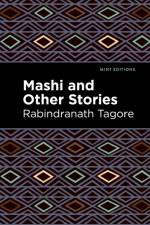
Mashi and Other Stories (1918) is a collection of short stories by Rabindranath Tagore. Published after Tagore received the 1913 Nobel Prize in Literature, Mashi and Other Stories contains some of the author¿s most beloved works of short fiction, including ¿Mashi,¿ ¿The Skeleton,¿ ¿The Postmaster,¿ and ¿The River Stairs.¿ ¿Mashi remained silent, suppressing a sigh. Not once, but often she had seen Jotin spending the night on the verandah wet with the splashing rain, yet not caring to go into his bedroom. Many a day he lay with a throbbing head, longing, she knew, that Mani would come and soothe his brow, while Mani was getting ready to go to the theatre. Yet when Mashi went to fan him, he sent her away petulantly.¿ On his deathbed, Jotin experiences heartache like no other as his young wife Mani neglects him for her own friends and family. Cared for by his aunt Mashi, the young man spends his final days in sorrow, longing for his love to return to him one last time. ¿Mashi,¿ the title story of the collection, is one of fourteen stories of romance, faith, and tragedy by Bengali polymath and Nobel laureate Rabindranath Tagore. With a beautifully designed cover and professionally typeset manuscript, this edition of Rabindranath Tagore¿s Mashi and Other Stories is a classic of Indian literature reimagined for modern readers.
Anno Domini 2000; Or, Woman's Destiny (1889) is a novel by Sir Julius Vogel. Written by the former prime minister of New Zealand, the novel sold poorly upon publication. In recent years, however, the novel has been recognized as a groundbreaking work of science fiction that uncannily predicted many of the social developments that would define New Zealand's contribution to human civilization in the twentieth century, notably its status as the first nation to grant women the right to vote. "The barriers which man in his own interest set to the occupation of woman having once been broken down, the progress of woman in all pursuits requiring judgment and intellect has been continuous; and the sum of that progress is enormous." In the year 2000, the British Empire is an Imperial Federation apart from an independent Ireland. Having granted women the right to vote, British society has enjoyed a revolution in gender roles from the top down. Hilda Fitzherbert, the young and charismatic Prime Minister of New Zealand, is a shining example of the new woman of the twenty-first century. When her burgeoning romance with Emperor Albert threatens diplomatic relations with the United States, the peaceful world order faces the threat of war.Since our inception in 2020, Mint Editions has kept sustainability and innovation at the forefront of our mission. Each and every Mint Edition title gets a fresh, professionally typeset manuscript and a dazzling new cover, all while maintaining the integrity of the original book. With thousands of titles in our collection, we aim to spotlight diverse public domain works to help them find modern audiences. Mint Editions celebrates a breadth of literary works, curated from both canonical and overlooked classics from writers around the globe.
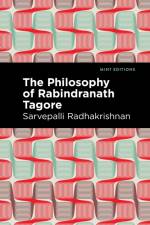
The Philosophy of Rabindranath Tagore (1918) is an academic study by Sarvepalli Radhakrishnan. Published at the beginning of his career as one of India's leading professors of comparative religion, the work is a masterful investigation of the teachings of poet-philosopher Rabindranath Tagore. In 1913, Tagore was awarded the Nobel Prize in Literature, making him the first lyricist and non-European to be awarded the distinction. Over the next several decades, Tagore wrote his influential novel The Home and the World (1916), toured dozens of countries, and advocated on behalf of Dalits and other oppressed peoples. "Rabindranath's teaching, with its vital faith in the redeeming power of the spiritual forces and their up-building energy, has a particular value at the present moment, when the civilized world is passing through the crucible of a ghastly war which, whether or not it purges the nations of their pride and hate, lust for gold and greed of land, at least proclaims, in no uncertain tones, the utter bankruptcy of materialism." In this masterwork of twentieth century criticism, Sarvepalli Radhakrishnan explores the philosophical teachings of Rabindranath Tagore, a leading artist and intellectual of modern India. Divided into five chapters, the book explores the interrelation of poetry and philosophy in Tagore's work, his influence on Indian culture, and the meaning of his contribution to the nations of the world.Since our inception in 2020, Mint Editions has kept sustainability and innovation at the forefront of our mission. Each and every Mint Edition title gets a fresh, professionally typeset manuscript and a dazzling new cover, all while maintaining the integrity of the original book. With thousands of titles in our collection, we aim to spotlight diverse public domain works to help them find modern audiences. Mint Editions celebrates a breadth of literary works, curated from both canonical and overlooked classics from writers around the globe.
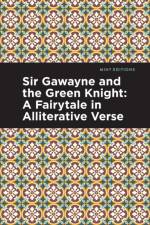
Sir Gawayne and the Green Knight: A Fairytale in Alliterative Verse is a heroic romance published anonymously in the 14th century by the ¿Gawayne Poet.¿ One of the best known Arthurian stories, Sir Gawayne and the Green Knight: A Fairytale in Alliterative Verse has been translated by the likes J.R.R. Tolkien and adapted four times for film. At a New Year¿s Eve celebration in King Arthur¿s court, a mysterious and looming figure cast entirely in green appears unexpectedly. With no intentions to fight, the stranger presents the following challenge: take his axe and strike him but submit to an equal blow in one year and a day, with the victor being awarded his giant axe as a reward. When it seems that the stranger has no takers, King Arthur steps forth¿only to be stopped by his youngest knight and nephew who requests to take on the task himself. Taking the axe in his hand, Sir Gawayne moves to strike and in doing so begins a path of adventure and intrigue leading him to solve the mystery of the Green Knight. With an eye-catching new cover, and professionally typeset manuscript, this edition of Sir Gawayne and the Green Knight: A Fairytale in Alliterative is a classic of Middle English literature reimagined for the modern reader.
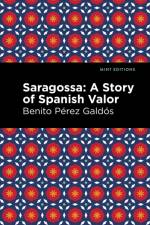
Saragossa: A Story of Spanish Valor (1899) is a novel by Benito Pérez Galdós. Published at the height of Pérez Galdós' career, Saragossa: A Story of Spanish Valor is the sixth in of 46 historical novels in the author's monumental, career spanning series of National Episodes. Set during the bloody naval battle of Trafalgar in 1805, Pérez Galdós' novel is a story of heroism, growth, and adventure that manages to find humanity in history. "It was, I believe, the evening of the eighteenth when we saw Saragossa in the distance. As we entered by the Puerta de Sancho we heard the clock in the Torre Nueva strike ten. We were in an extremely pitiful condition as to food and clothing. The long journey we had made [...], climbing mountains, fording rivers, making short cuts until we arrived at the high road of Gallur and Alagon, had left us quite used up, worn out, and ill with fatigue." Having survived the disastrous defeat of the Spanish Armada at Trafalgar by the British Royal Navy, Gabriel de Araceli makes his way to Saragossa. There, he must fight for his life and the future of his nation as the army of Napoleon Bonaparte lays siege to the city. Painstakingly researched by its author, Saragossa: A Story of Spanish Valor is a detailed fictional retelling of one history's most iconic conflicts.Since our inception in 2020, Mint Editions has kept sustainability and innovation at the forefront of our mission. Each and every Mint Edition title gets a fresh, professionally typeset manuscript and a dazzling new cover, all while maintaining the integrity of the original book. With thousands of titles in our collection, we aim to spotlight diverse public domain works to help them find modern audiences. Mint Editions celebrates a breadth of literary works, curated from both canonical and overlooked classics from writers around the globe.
Since our inception in 2020, Mint Editions has kept sustainability and innovation at the forefront of our mission. Each and every Mint Edition title gets a fresh, professionally typeset manuscript and a dazzling new cover, all while maintaining the integrity of the original book. With thousands of titles in our collection, we aim to spotlight diverse public domain works to help them find modern audiences. Mint Editions celebrates a breadth of literary works, curated from both canonical and overlooked classics from writers around the globe.
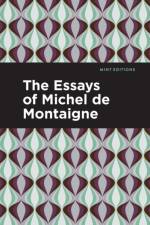
The Essays of Michel de Montaigne (1877) is a collection of essays and letters by Michel de Montaigne. Originally published in French as Essais (1580), this edition was translated by English poet Charles Cotton in the late-17th century and republished by William Carew Hazlitt, the grandson of renowned English essayist and critic William Hazlitt. ¿No man living is more free from this passion [of sorrow] than I, who yet neither like it in myself nor admire it in others, and yet generally the world, as a settled thing, is pleased to grace it with a particular esteem, clothing therewith wisdom, virtue, and conscience. Foolish and sordid guise!¿ In his masterful essays, Michel de Montaigne eschews the typical distancing required of the authorial voice in order to investigate public matters through a personal lens. As the subject of his own musings, he provides both a stirring self-portrait and an invaluable new voice that will resonate throughout Western literature. Unlike the Enlightenment thinkers who would follow in his footsteps, Montaigne is skeptical of the possibility of human certainty and takes an ethical stand against the European colonial project in the Americas and elsewhere. At times serious, at others tongue-in-cheek, his wide-ranging topics include conscience, politics, sorrow, solitude, fear, friendship, war, and poetry. The Essays of Michel de Montaigne were written at a crossroads in human history¿between Renaissance and Enlightenment, Catholicism and Protestantism, Montaigne argues that to look outward requires we first look within, and that the quest for happiness requires us to accept what we cannot know. With a beautifully designed cover and professionally typeset manuscript, this edition of The Essays of Michel de Montaigne is a classic of French philosophy reimagined for modern readers.
The Fatal Secret: Or, Constancy in Distress (1724) is a novel by Eliza Haywood. Blending tragedy and comedy, Haywood explores the intersection of ambition, family, and desire to reveal how women so often fall victim to the whims of villainous men. The Fatal Secret: Or, Constancy in Distress is considered a prime example of the popular genre of amatory fiction, which often used love triangles to expose the imbalance between male and female desire in a patriarchal society. ¿Nothing is so generally coveted by Womankind, as to be accounted Beautiful; yet nothing renders the Owner more liable to inconveniences.¿ Getting by on looks alone, young Anadea has managed to secure herself a marriage proposal from a wealthy gentleman. Pressured by her father, she believes it is up to her to renew her once-prominent family¿s fortune and status in eighteenth century Paris. One night, she falls in love with the handsome Count Blessure. Although he reciprocates her feelings, he is keenly aware of his own family¿s prejudice against the poor, no matter the nobility of their ancestors. With a beautifully designed cover and professionally typeset manuscript, this edition of Eliza Haywood¿s The Fatal Secret: Or, Constancy in Distress is a classic of English literature reimagined for modern readers.
Abonner på vårt nyhetsbrev og få rabatter og inspirasjon til din neste leseopplevelse.
Ved å abonnere godtar du vår personvernerklæring.